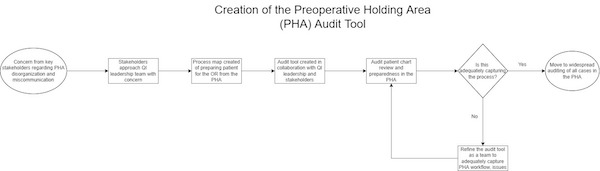
Introduction: Broken processes in the preoperative progression are dangerous and expose patients to unnecessary risks in the operating room (OR). A better understanding of issues is paramount to appropriately scope the intervention. We hypothesized creation of a preoperative audit tool would better identify unnecessary risk within the preoperative holding area (PHA) to allow for future quality improvement (QI). Methods: Frontline stakeholders noted potential patient safety issues, frequent case delays, and redundant work in the PHA. Using lean methodology, problems within the PHA were evaluated through engagement with key stakeholders and the OR QI team, led by a QI experienced urology faculty member. A current-state process map of patient preparation for surgery in the PHA was constructed and was used create an audit tool aimed to measure patient readiness in the PHA. Following a pilot, stakeholders reassessed the components of the audit tool until issues within the PHA were adequately captured (Figure). Results: PHA audit tool creation occurred from 4/2022 to 6/2022. The initial Plan-Do-Study-Act (PDSA) cycle of audit tool implementation included questions regarding appropriate paperwork and lab work, equipment readiness, medication administration, imaging completeness, and OR delays. After reengaging stakeholders, this was refined to include further information regarding preoperative chart issues, including reasons for incorrect consent, detailed equipment issues to identify specific departmental issues, and room for additional comments to capture redundant work or other issues experienced. A total of 4 PDSA cycles were completed to adequately refine the audit tool to assess if the patient chart was sufficiently reviewed and completed by the operative service prior to proceeding to the operating room. Subsequently, this tool identified 250 incomplete patient charts out of 377 (66.3%) cases audited between 6/2022 and 8/2022. Conclusions: Using lean methodology, key stakeholders were engaged in creating an audit tool with multiple iterations, successfully identifying areas of deficit in preoperative patient evaluation and readiness on the day of surgery. This data will help guide intervention, and the audit tool will be utilized post-intervention to measure success. SOURCE OF Funding: N/A