
HPB
CME
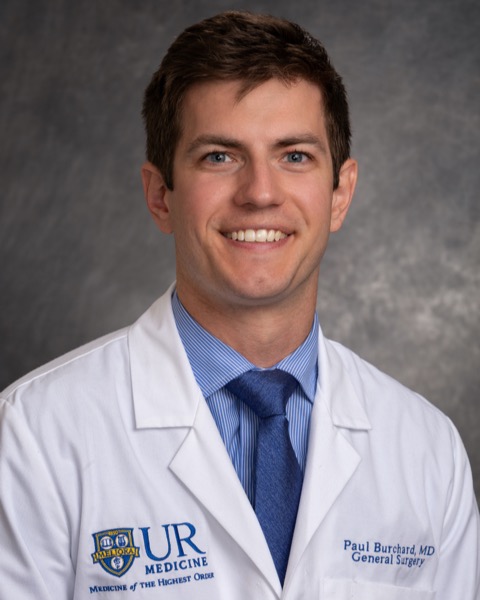
Paul R. Burchard, MD
General Surgery Resident
University of Rochester Medical Center
Rochester, New York, United States
Disclosure(s): No financial relationships to disclose
Paul R. Burchard, MD
General Surgery Resident
University of Rochester Medical Center
Rochester, New York, United States
Disclosure(s): No financial relationships to disclose
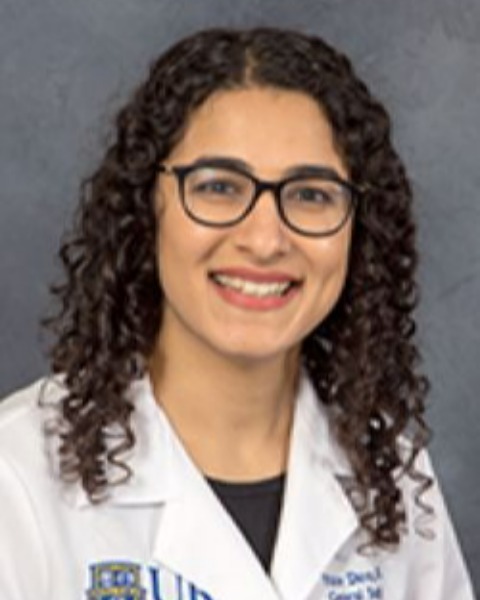
Yatee A. Dave, MD (she/her/hers)
Resident Physician
University of Rochester Medical Center
Rochester, New York, United States
Disclosure(s): No financial relationships to disclose
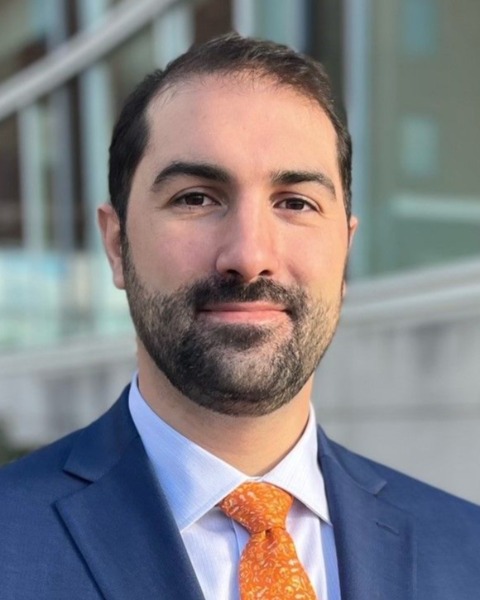
Luis I. Ruffolo, MD
Surgical Resident
University of Rochester Medical Center
Rochester, New York, United States
Disclosure(s): No financial relationships to disclose
Nicholas A. Ullman, MD, MSCI
R4 General Surgery Resident
University of Rochester Medical Center
Rochester, New York, United States
Disclosure information not submitted.
Chelsea Marin, MD
Resident Physician
University of Rochester Medical Center, United States
Disclosure information not submitted.
Rachel Jewell, B.S.
Lab Manager
University of Rochester Medical Center, United States
Disclosure information not submitted.
Mary Georger, MS
Tumor Immunology Lab
University of Rochester Medical Center, United States
Disclosure information not submitted.
Brian Belt, JD
Tumor Immunology Lab
University of Rochester Medical Center, United States
Disclosure information not submitted.
David Linehan, MD
Professor and Chair
University of Rochester Medical Center
Rochester, NY, United States
Disclosure information not submitted.
Roberto Hernandez-Alejandro, MD
Professory of Surgery
University of Rochester Medical Center, United States
Disclosure information not submitted.
Cholangiocarcinoma (CCA) remains highly treatment resistant due to abundant fibroinflammatory stroma containing immunosuppressive tumor-associated macrophages (TAMs). Lysyl oxidases (LOX) catalyze collagen cross-linking to facilitate desmoplasia and immune resistance. Here, we utilize pan-LOX inhibition to combat this stroma and improve anti-tumor immunity in a murine model of CCA.
Methods: Mice were implanted with an orthotopic murine CCA cell line and enrolled into therapeutic cohorts cohorts. Tumors underwent flow cytometry analysis of myeloid populations. Murine bone marrow-derived macrophages were exposed to CCA tumor-conditioned media (TCM) to generate TAMs. CellTiter-Glo 2.0 and collagen-coated transwell invasion assays were used with RNA sequencing and qRT-PCR on pre-invasive and invasive macrophages.
Results: Tumor growth was significantly delayed with combination of 5-FU & Oxaliplatin (FOX) + PXS-5505 compared to each treatment cohort (vehicle [p=0.0002], PXS-5505 [p=0.02], FOX [p=0.002]). Flow cytometry of orthotopic CCA tumors treated with FOX + PXS-5505 revealed significantly reduced abundance of TAMs compared to each treatment cohort (FOX [p=0.03], vehicle [p < 0.0001], PXS-5505 [p < 0.0001]). In vitro, TAMs exposed to pan-LOX inhibited TCM exhibited phenotypic differences compared to TCM alone (Figure 1A), with no differences in viability following 24 hours of exposure to PXS-5505 (p=0.62) (Figure 1B). TAMs exposed to pan-LOX inhibited TCM were rendered more susceptible to 5-FU cytotoxic therapy compared to TCM alone (Figure 1C). Furthermore, macrophage invasion through a collagen-coated transwell membrane was significantly reduced with pan-LOX inhibited TCM (p=0.0004). RNA sequencing of pre-invasive macrophages exposed to pan-LOX inhibited TCM revealed significantly downregulated gene signatures associated with migration (p < 0.0001), chemotaxis (p < 0.0001), and cellular adhesion (p < 0.0001), including Cxcr2, Cxcl10, Ccl22, Ccl5, Ccr7, MMP-9, Vcam1, Madcam1, S100a8/a9, and Cd177, compared to TCM alone.
Conclusions: Combination therapy of PXS-5505 with FOX reduced tumor progression and TAM abundance in orthotopic murine CCA. PXS-5505 rendered TAMs more susceptible to cytotoxic chemotherapy and disrupted macrophage invasion by downregulating key migratory and adhesive RNA transcripts. Combination therapy with PXS-5505 represents an innovative strategy in CCA.