
.png)

Category: Labor
Poster Session IV
Birthing parents with obesity have increased risk of medical and obstetric complications during pregnancy, often leading to a recommendation for induction of labor (IOL). Misoprostol is commonly used for IOL, however there is limited data on whether it’s pharmacokinetics (PK) are altered by body size. The objective of this study is to evaluate PK parameters of oral misoprostol in pregnancies complicated by obesity.
Study Design:
Pilot, single-center, observational study of non-fasting, term, singleton pregnancies with body mass index (BMI) > 30.0 kg/m2 at time of IOL with 50 mcg oral misoprostol. Plasma concentrations of active metabolite misoprostol acid (MPA) were measured at four time points using liquid chromatography mass spectrometry. Plasma MPA-time data analyzed using a non-compartmental PK model to derive the area under the curve from the first time point to the last measured concentration (AUC0-t) using the trapezoidal rule. Terminal slope (λz) used to extrapolate plasma concentration to infinity (AUC0-∞). Maximum serum concentration (Cmax) and time to maximum plasma concentration (Tmax) also described.
Results:
26 plasma observations from 7 subjects were included (Table 1). Observed plasma concentrations over time (Figure 1) demonstrate median(range) Cmax 26.63 (7.18-56.24) pg/mL, AUC0-t 10.93 (2.43-24.64) pg-h/mL, λz 2.68 (2.00-3.07) h-1, AUC0-∞ 22.67 (12.09-30.60) pg-h/mL. Tmax observed at 0.25 hours. Prior study evaluating 50 mcg oral misoprostol in 12 subjects with normal BMI (mean 28.6 kg/m2) reports mean±SD Cmax 53.97±23.79 pg/mL, AUC0-t 55.02±28.80 pg-h/mL, λz 1.05±0.86 h-1, AUC0-∞ 66.63±33.22 pg-h/mL, Tmax 0.23±0.14 hours.
Conclusion:
To our knowledge, this study is the first examination of 50 mcg oral misoprostol PK parameters among parturients with obesity undergoing term IOL. Data show decreases in PK parameters in this population, however some results are still within reported margin of error and there is marked variance between subjects. A future, powered, comparative trial is necessary to confirm these findings as well as further investigate clinically relevant outcomes.
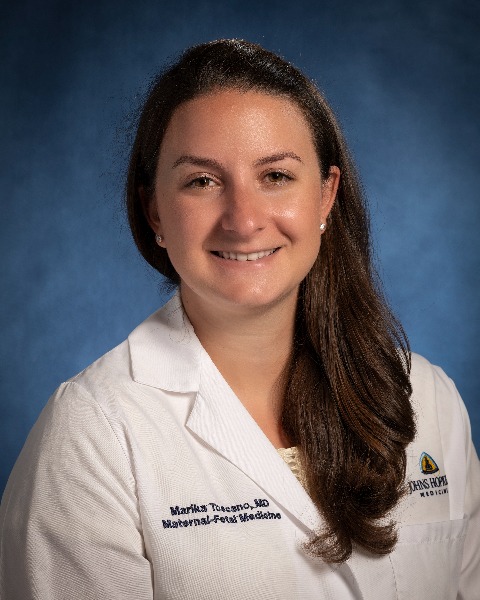
Marika Toscano, MD
Assistant Professor, Maternal-Fetal Medicine
Johns Hopkins University
Baltimore, Maryland, United States
Charlotte Orzolek, MD
Maternal Fetal Medicine Fellow
University of Rochester Medical Center
Rochester, New York, United States
Rachel Yull, MD
Medical Student, Class of 2022
University of Rochester School of Medicine and Dentistry
Rochester, New York, United States
Mikayla Satchell, BS
Medical Student, Class of 2023
University of Rochester School of Medicine and Dentistry
Rochester, New York, United States
Megan Betancourt, BS
Medical Student, Class of 2023
University of Rochester School of Medicine and Dentistry
Rochester, New York, United States
Kevin Welle, MS
Technical Director, Mass Spectrometry Resource Facility
University of Rochester Medical Center
Rochester, New York, United States
Curtis Haas, Pharm D
Chief Pharmacy Officer
University of Rochester Medical Center
Rochester, New York, United States
Monique Ho, MD
Associate Professor, Maternal-Fetal Medicine/Genetics
University of Rochester Medical Center
Rochester, New York, United States