
.png)

Category: Fetus
Poster Session II
To investigate outcomes of fetuses with hypoplastic left heart syndrome (HLHS) with intact or restrictive atrial septum managed expectantly or with fetal cardiac intervention (FCI).
Study Design: PubMed, Scopus, and Web of Science were searched systematically from inception until February 2022 for studies investigating outcomes in patients with HLHS following FCI via atrial septoplasty or atrial stent. Outcomes were classified by those who had FCI and those who did not (non-FCI). To estimate the overall proportion of each endpoint, meta-analysis of proportions was employed using a random-effects model. Heterogeneity was assessed using the I2 value.
Results: Seventeen studies reporting on 264 fetuses with intact or atrial restrictive septum HLHS in the FCI group and total of 24 studies reporting on 646 fetuses in the non-FCI group were included. Gestational age at diagnosis was comparable between groups (mean: 24.7 weeks in the FCI and 25.3 weeks in the EM group). Mean GA at FCI was 30.1 weeks (95% CI 28.7 to 31.5 weeks). GA at delivery was also comparable (mean: 37.5 weeks in the FCI and 38.1 weeks in the non-FCI group). Fetal outcomes including livebirth, neonatal death, and alive at hospital discharge pooled proportions were also comparable between groups (live birth: 92% (95% CI 87- 95) in FCI and 99% (95% CI 89-100) in non-FCI, neonatal death: 38% (95% CI 20-61) in FCI and 37% (95% CI 28-47) in non-FCI, alive at hospital discharge: 46% (95% CI 41-63) in FCI and 57% (95% CI 47-66) in non-FCI). There were lower postnatal atrial restrictive septum in the FCI group 47% (95% CI 28-67) compared to the non-FCI group 89% (95% CI 53 -98).
Conclusion: Although survival including livebirth and alive at hospital discharge did not differ between FCI and non-FCI groups, the procedure may translate into less restrictive septum at birth that might improve neonatal stability. Future multicenter studies need to assess long-term benefits of of atrial septoplasty or atrial stent for intact/restrictive HLHS.
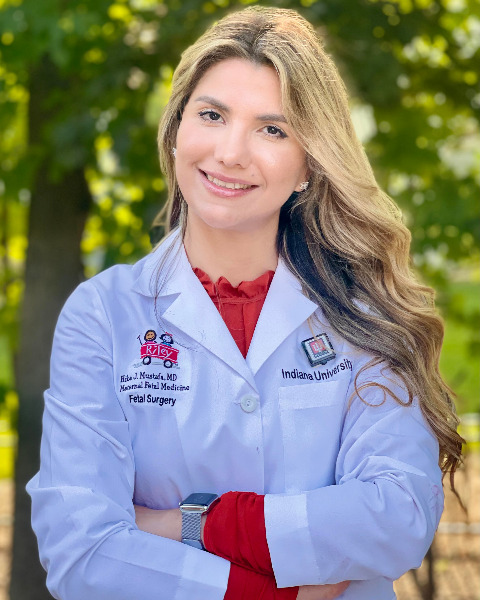
Hiba J. Mustafa, MD
Assistant Professor of Fetal Surgery and Maternal-Fetal Medicine
Indiana University Riley Children's Hospital Fetal Center
Carmel, Indiana, United States
Faezeh Aghajani, MD
University of Maryland
Baltimore, Maryland, United States
Nensi Shah, MD
Indiana University
Indianapolis, Indiana, United States
Mohammad Jawwad, N/A
Indiana University
Indianapolis, Indiana, United States
.jpg "Asma Khalil, MD, MSc (she/her/hers) photo")
Asma Khalil, MD, MSc (she/her/hers)
Professor of Maternal Fetal Medicine
St George's Hospital, University of London
London, England, United Kingdom

Alfred Abuhamad, MD
President, Provost and Dean
Eastern Virginia Medical School
Norfolk, Virginia, United States
Huda B. Al-Kouatly, MD
Thomas Jefferson University
Philadelphia, Pennsylvania, United States