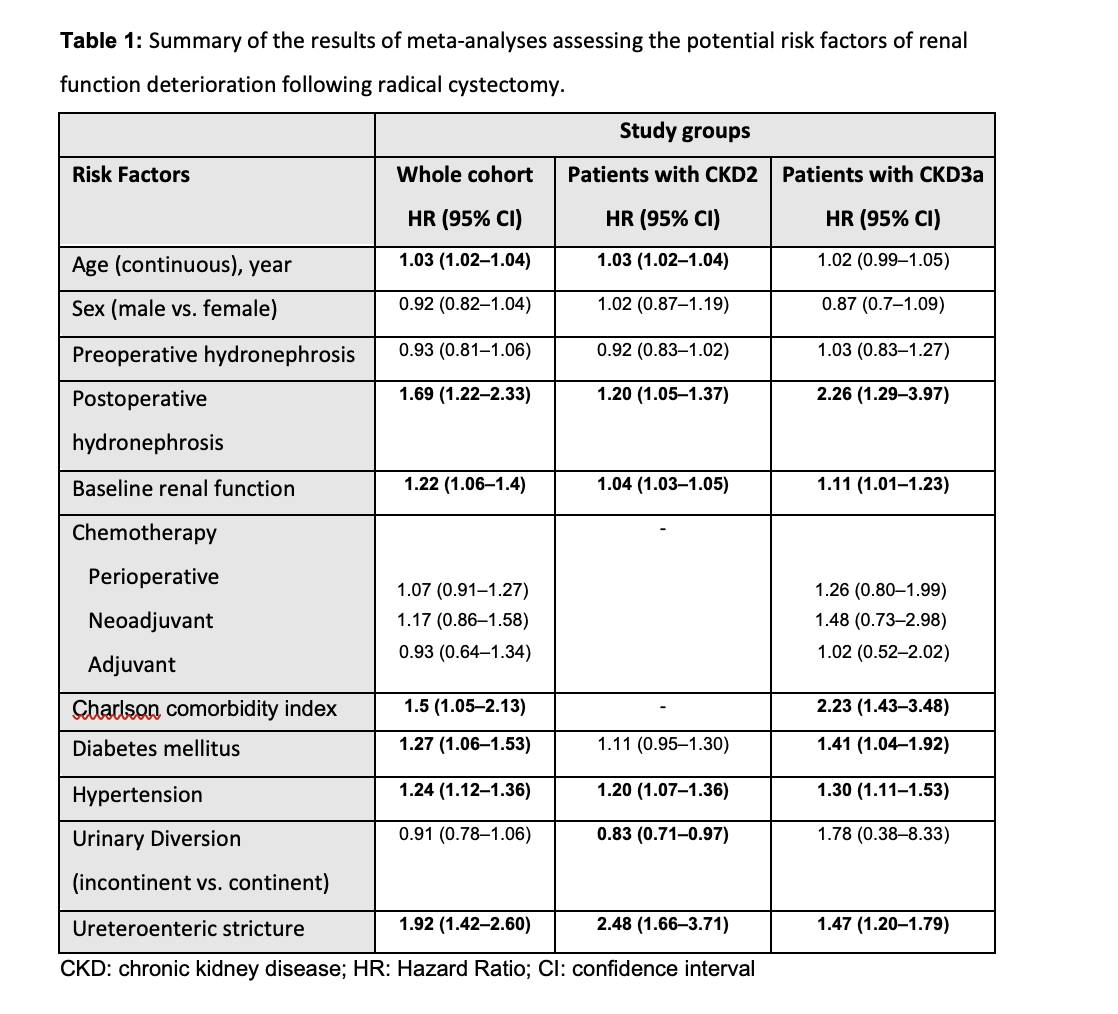
Introduction: The literature lacks high level of evidence regarding renal function changes and related contributing factors following radical cystectomy (RC). The aim of this study was to evaluate the potential risk factors of renal function deterioration in patients with bladder cancer undergoing RC. Methods: PubMed, Web of Science, Cochrane Library, and Scopus databases were searched for articles published by September 2022 according to the PRISMA (Preferred Reporting Items for Systematic Reviews and Meta-Analyses) statement. After quality and risk of bias assessments, eligible studies were included in the meta-analysis. The primary outcome was renal function deterioration following RC, which was defined as significant (=10%) decline of estimated glomerular filtration (eGFR) rate and/or any chronic kidney disease (CKD) upstaging. In addition, subgroup meta-analyses were conducted in patients with pre-operative CKD stages 2 and 3a (eGFR 60-89 and 45-59 mL/min, respectively). Results: A total of 10 articles, comprising 15,502 patients, were deemed eligible for this study. On meta-analysis of the whole cohort, factors that were associated with renal function deterioration following RC included older age (HR 1.03 per year, 95% CI 1.02–1.04), lower baseline renal function (HR 1.22, 95% CI 1.06–1.4), higher Charlson comorbidity index (HR 1.5, 95% CI 1.05–2.13), diabetes mellitus (HR 1.27, 95% CI 1.06–1.53), hypertension (HR 1.24, 95% CI 1.12–1.36), postoperative hydronephrosis (HR 1.69, 95% CI 1.22–2.33), and uretero-enteric stricture (HR 1.92, 95% CI 1.42–2.60). The results of the subgroup analyses in CKD stages 2 and 3a are shown in Table 1. Conclusions: Older age, lower baseline renal function, higher Charlson comorbidity index, diabetes mellitus, hypertension, postoperative hydronephrosis, and ureteroenteric stricture are significant risk factors of CKD deterioration following radical cystectomy. SOURCE OF Funding: None