Session: MP79: Sexual Function/Dysfunction: Medical, Hormonal & Non-surgical Therapy II
MP79-02: Pharmacokinetics and Safety Outcomes of Compounded Versus Branded Testosterone Pellets in Men with Testosterone Deficiency: A Single-Center, Open-Label, Randomized Trial
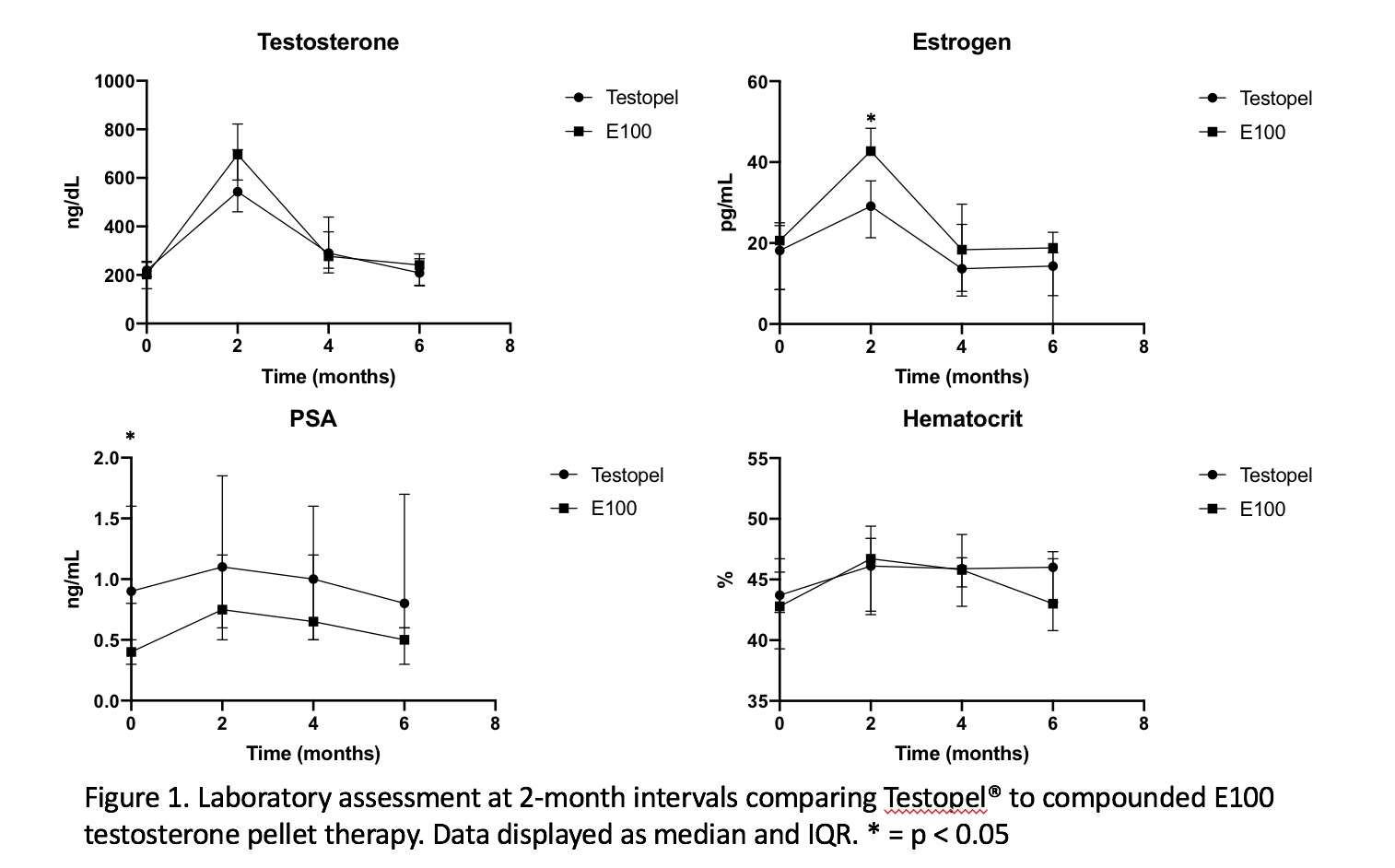
Introduction: Testosterone deficiency (TD) is a prevalent condition, especially in men = 45 years old. Treatment of TD with testosterone therapy (TTh) carries numerous metabolic benefits. Subcutaneous Testopel® pellets are FDA approved for the treatment of TD however can impose a significant financial burden to the patient. The objective was to evaluate the safety profile of compounded subcutaneous testosterone pellets and compare the pharmacokinetics between compounded and FDA approved testosterone pellets (Testopel®) for TTh. Methods: This was a prospective, randomized, non-inferiority clinical trial. We enrolled 75 men diagnosed with TD and randomized them 1:1 ratio to Testopel® and a 100mg compounded pellet group from Empower Pharmaceuticals, an FDA-registered-facility. The patients were implanted with their respective treatment: Testopel® (10 pellets of 75mg) or compounded testosterone pellets (8 pellets of 100mg). Patients were monitored for adverse events with morning laboratory assessment (serum Testosterone, estradiol, 17-hydroxyprogesterone (17-OHP), hematocrit & prostate specific antigen) at 2, 4 and 6 months. Results: After randomization, 34 participants enrolled in the Testopel® 75mg arm and 42 participants in E100 arm. Serum T levels were similar between the groups at 2, 4 and 6 months, with most men (82%) dropping below 300 ng/dL by the end of the trial. The only adverse event was pellet extrusion (n=1). Most dropouts were related to persistent TD symptoms and serum T < 300ng/dL, with similar rates between the two groups in the study. The mean E levels for Testopel® and E100 at 2 months were 29.1 (IQR: 21.3-35.4) and 42.7 ± 17.3 (IQR: 42.1-48.4) pg/mL respectively (p = 0.0006). However, levels were not statistically different at the 4 (p=0.53) and 6-month (p=0.17) time points. Other lab values were similar (Table 1). Conclusions: Compounded testosterone pellets are clinically efficacious and safe in the treatment of TD. Compounded pellets may represent an economic alternative to Testopel®. This pilot study may provide the practicing urologist with the support to offer compounded testosterone pellets as TTh. SOURCE OF Funding: Investigator-initiated grant by Empower Pharmaceuticals Support NIH Grant R01 DK130991 and Clinician Scientist Development Grant from the ACS to RR