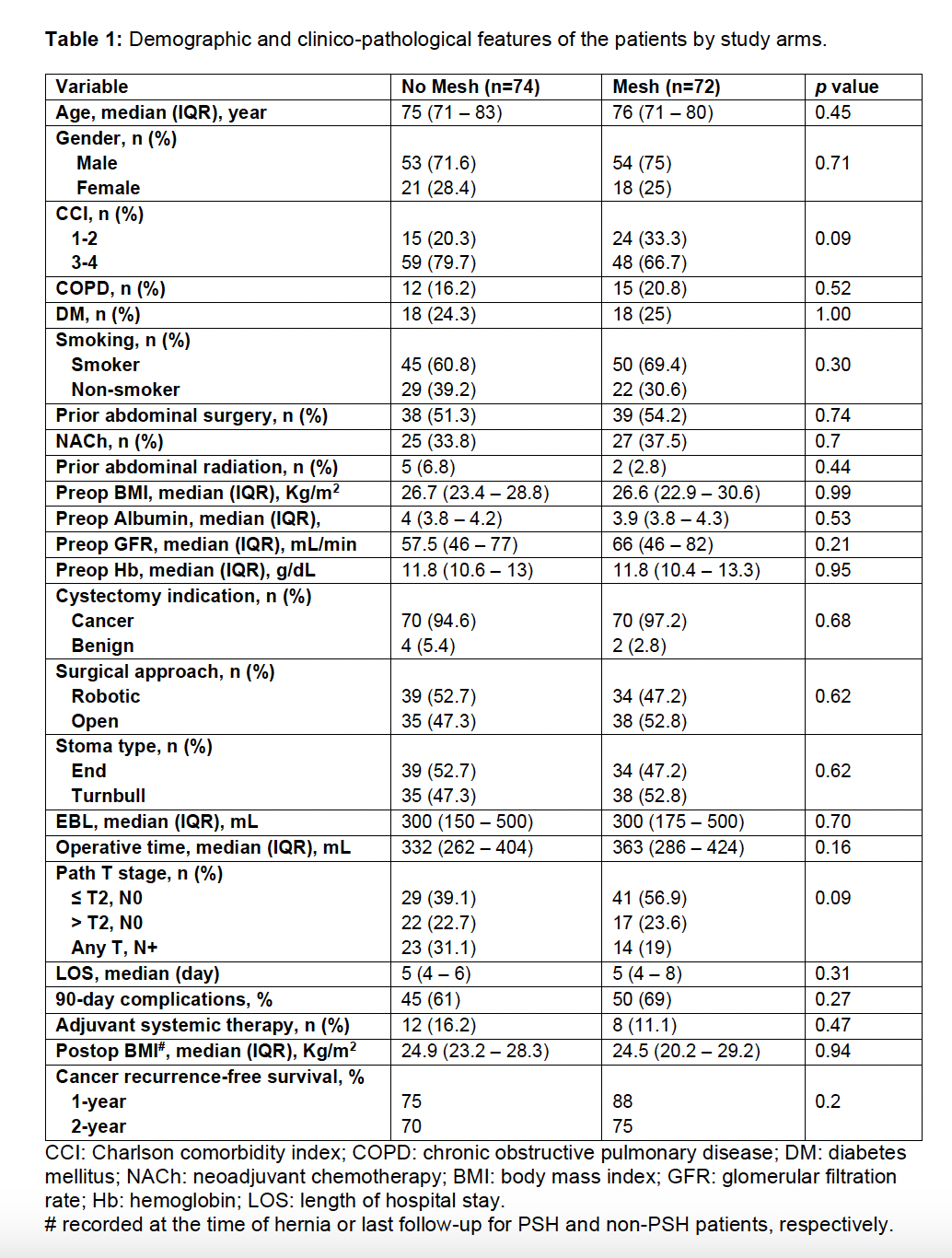
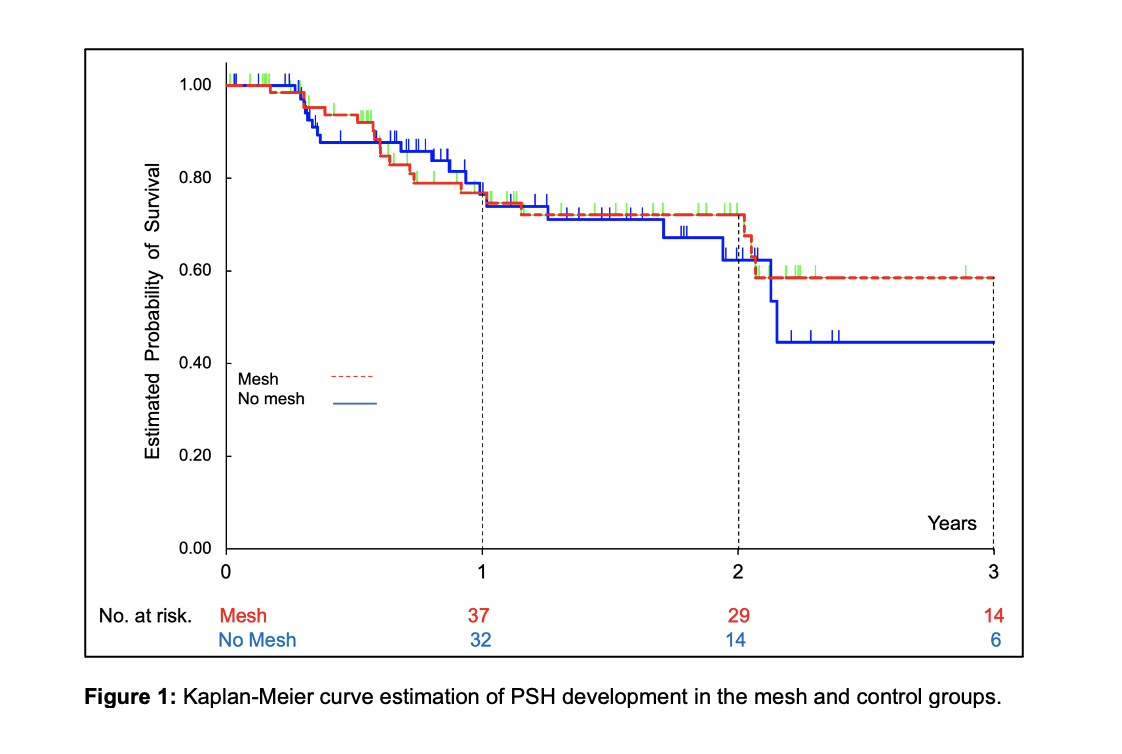
Introduction: Parastomal hernia (PSH) is a common complication following ileal conduit urinary diversion. The aim of this study is assess the effect of prophylactic biologic mesh on the PSH development in patients undergoing cystectomy and ileal conduit. Methods: This phase III randomized controlled trial (#NCT02439060) included patients undergoing cystectomy and ileal conduit at USC between 2016 and 2021. Patients were randomized 1:1 to receive prophylactic biologic mesh (FlexHD, thickness 2.5 mm) using sublay intraperitoneal technique. Follow-ups included physical exam and CT imaging every 4-6 months up to 2 years. The primary and secondary endpoints were radiological (Moreno classification) and clinical PSH, respectively. Results: A total of 146 patients were enrolled and randomized to mesh (n=72) and control (n=74). Two arms were similar in terms of clinical features (Table 1). All surgeries and mesh placements were accomplished without intraoperative complication. Median operative time was 31 minutes longer in patients receiving mesh. Postoperative wound/stoma and infectious complications were similar between the mesh and control groups (7% vs. 8%, and 26% vs. 22%, respectively). Within a median follow-up of 13 months, the incidence of radiological and clinical PSH was 26% (26% in each arm) and 11% (10% in mesh vs. 12% controls), with median time to radiological and clinical PSH of 8.5 and 15.6 months, respectively. No definite mesh-related adverse events were reported. On multivariable Cox regression analysis, prior radiation (HR 3.6, p=0.02) and pathological T stage > 2 (HR 2, p=0.06) had significant and borderline association with an increased risk of PSH, respectively. PSH-free survivals in the mesh and control groups were 77% vs. 76% at 1-year, 72% vs. 62% at 2-year, and 58% vs. 44% at 3-year, respectively (Figure 1). Conclusions: These initial results suggest that implementation of biologic mesh at the time of ileal conduit construction is safe without significant protective effect in first year, yet may decrease PSH development afterward. SOURCE OF Funding: Musculoskeletal Transplant Foundation