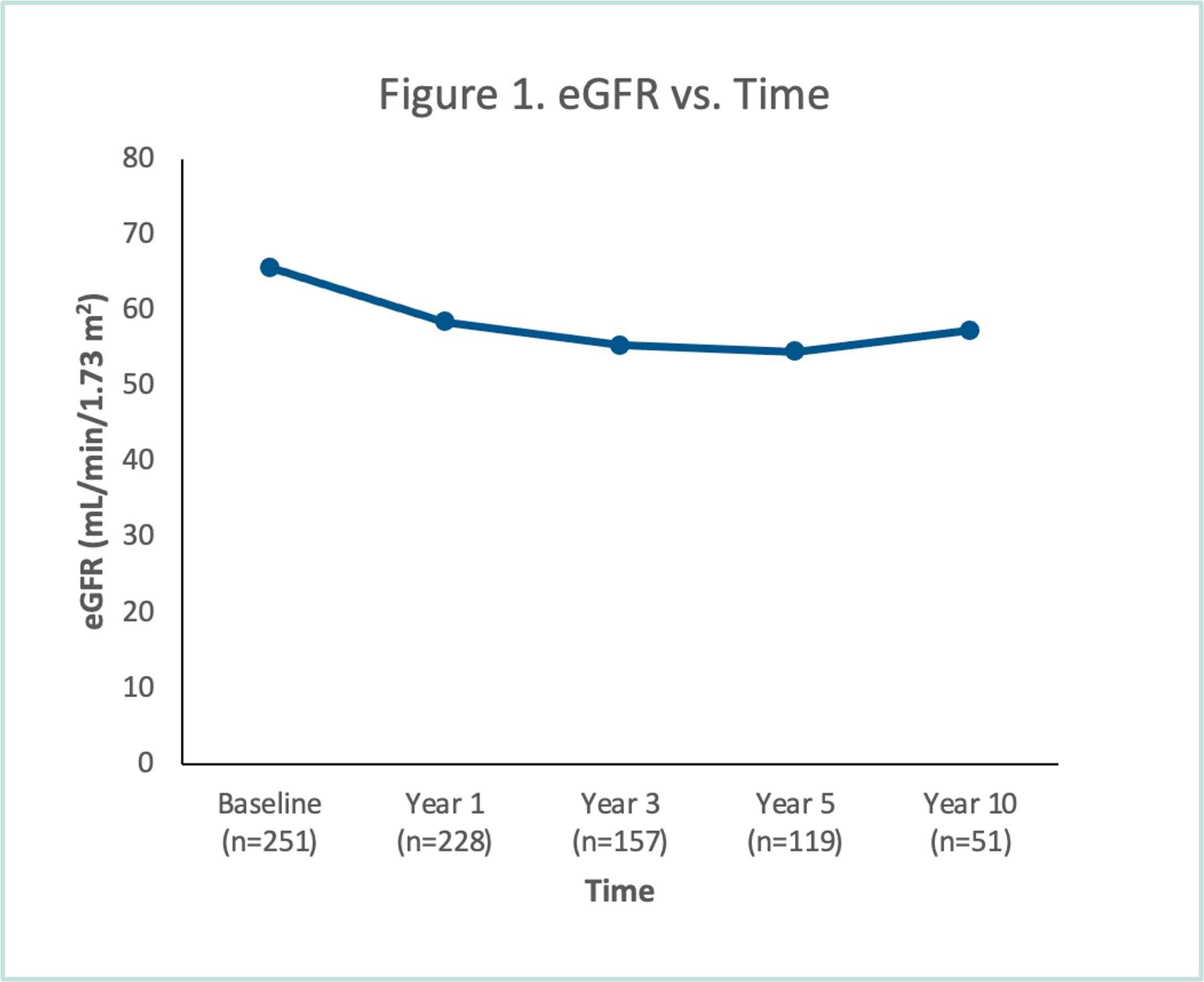
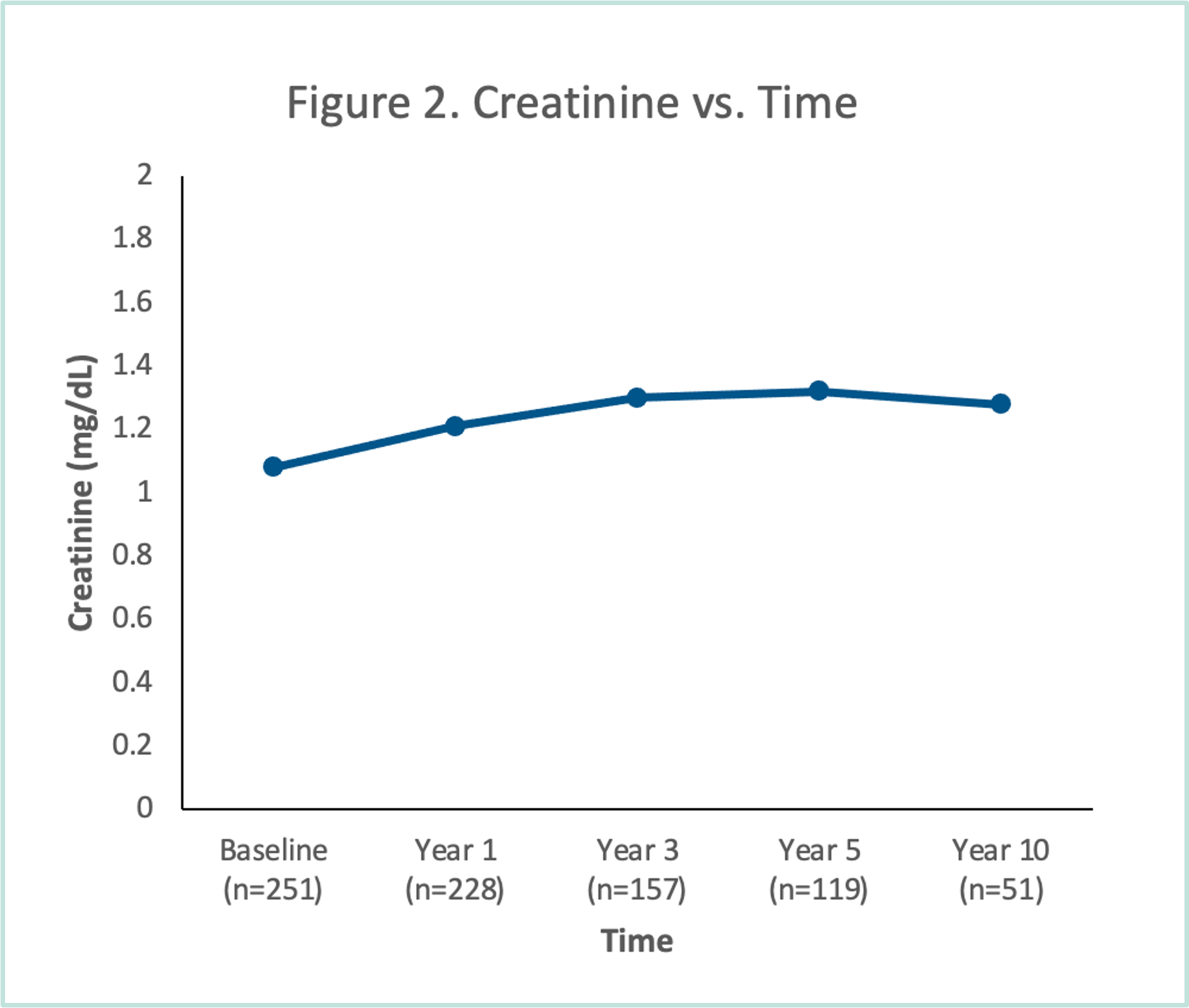
Introduction: Trimodal therapy (TMT) is a standard treatment option for select patients with muscle-invasive bladder cancer. The efficacy of TMT has been shown in several randomized trials; however, the long-term effect on renal function has not been investigated. Furthermore, various types of chemotherapy agents (ie. mitomycin, 5-FU, cisplatin) used during TMT are nephrotoxic. As many bladder cancer patients are elderly with significant medical comorbidities, data on long term renal function would aid in management. We sought to evaluate the change in renal function over 10 years in bladder cancer patients who have completed TMT. Methods: The Massachusetts General Hospital’s institutional TMT database was retrospectively reviewed to obtain baseline renal function (estimated GFR) at time of muscle-invasive bladder cancer (MIBC) diagnosis. The eGFR values were calculated using the CKD-EPI creatinine equation. Interval eGFR was obtained for years 1, 3, 5, and 10 after the date of bladder cancer diagnosis. Results: 287 patients undergoing TMT treatment for muscle invasive bladder cancer were reviewed. Patients were excluded due to incomplete TMT treatment or missing data, resulting in 251 eligible patients for evaluation of baseline mean eGFR. Median follow up was 4.56 years. Baseline mean eGFR was 65.67 mL/min/1.73. Mean eGFR for years 1, 3, 5, and 10 were 58.43 mL/min/1.73, 55.4 mL/min/1.73, 54.54 mL/min/1.73, and 57.3 mL/min/1.73, respectively. Conclusions: Renal function for bladder cancer patients undergoing TMT declined slightly after 1 year of follow up but remained stable for the remainder of the 10 years of follow up. Further studies are needed to identify predictors of renal decline and compare these results with the overall bladder cancer and general population. SOURCE OF Funding: n/a