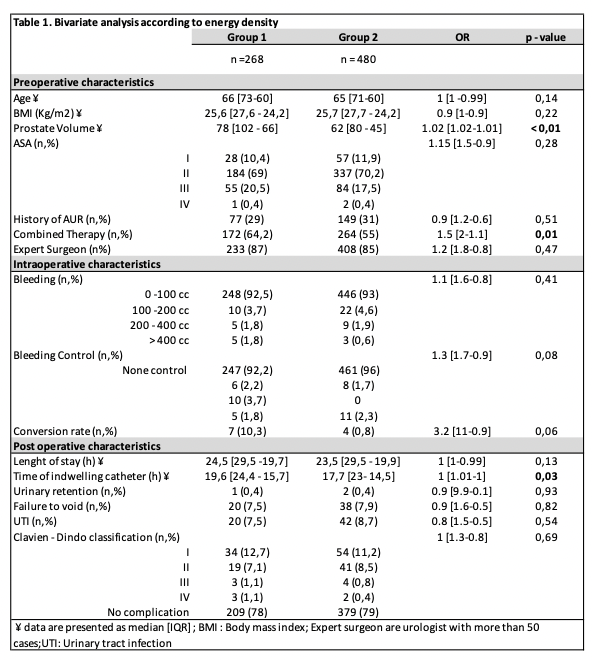
Introduction: Energy density (ED) (kJ/mL) measures the amount of Joules used in relation to prostate volume (PV). ED appears to be related to adequate tissue removal and probably improved mid-term outcomes in patients treated with photo-vaporization (PVP) of the prostate with GreenLight laser. We aim to assess associated factors with a lesser ED delivery in prostate photo-vaporization. Methods: Data was retrospectively collected from a single center database with 748 patients who underwent surgery between 2012 and 2019. Groups were divided according to intra-operative energy delivered to the prostate. Group 1: < 4.0 and group 2: =4.0 kJ/mL. Peri and postoperative outcomes were assessed. Bivariate and multivariate analyses were performed to determine the statistically significant variables associated with the use of low ED. Results: General characteristics are shown in Table 1. Group 1 had a total of 36% (n=268), and Group 2 had 64% (n=480) patients. Bivariate analysis was performed, and statistically significant association was observed for higher PV (OR = 1.02 [1.02-1.01] IC 95% p-value <0.01), history of combination therapy (OR= 1.5 [2-1.1] IC95% p-value = 0.01) and postoperative longer bladder catheterization time. After controlling by confounding variables, the multivariate analysis showed that for patients with lower ED delivered acute urinary retention (AUR) appeared to be a protective factor (OR= 0.6 [0.9-0.4] IC95% p-value = 0.01), and a larger prostate volume (OR= 1.02 [1.3-1.02] IC95% p-value <0.01) was associated with lesser ED. Conclusions: After analyzing factors like surgeons' expertise and comorbidity, we found that PV is shown to be associated with lower energy density delivery and potentially associated with worse functional outcomes. SOURCE OF Funding: No funding was received