MP42-06: Assessing the Accuracy of Preoperative Radiographic Imaging in Determining Ureteral Stricture Length at Time of Robotic Ureteral Reconstruction
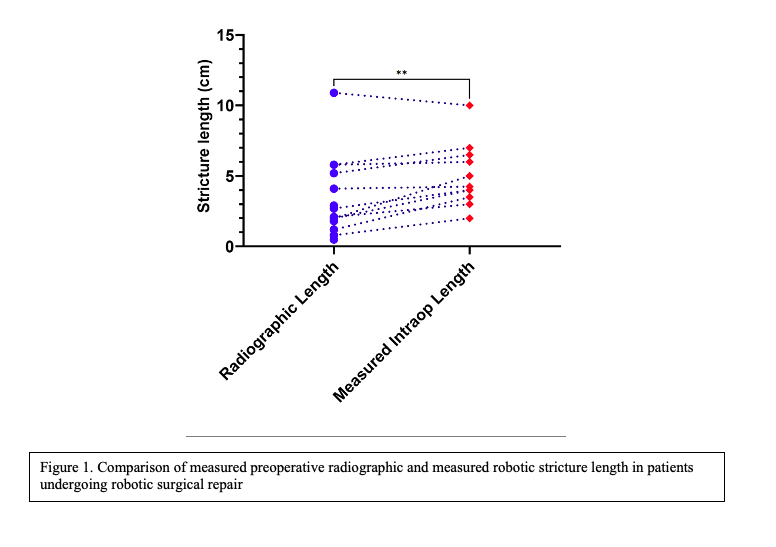
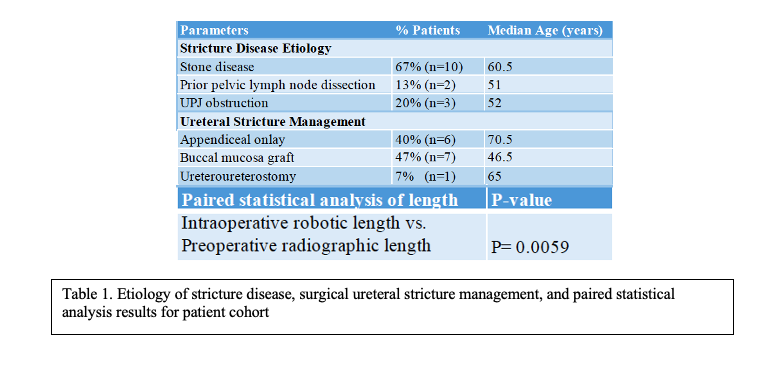
Introduction: During robotic ureteral reconstruction, accurate measurement of ureteral stricture length is important for surgical planning. We aimed to determine the accuracy of using conventional fluoroscopic imaging compared to ureteroscopy and direct measurement with measuring tape during intra-operative robotic repair. Methods: A retrospective review was conducted for 15 patients with ureteral stricture disease at a single institution treated with robotic repair. Data was collected regarding etiology of ureteral stricture disease, measured preoperative radiographic stricture length on fluoroscopy, and measured intraoperative robotic stricture length. A Wilcoxon matched-pairs rank test was performed to compare ureteral length measurements. Results: The most common etiologies of ureteral stricture were prior medical history of stone disease (n=10), prior ureteropelvic junction obstruction repair (n=3), and other iatrogenic causes (n=2) (Table 1). A majority of patients had ureteral stricture repair using buccal mucosa (n=7) or appendiceal onlay (n=6) grafts (Table 1). A total of 11 patients (73%) had >1 cm difference in stricture length between radiographic and robotic measurement (Figure 1). Of these patients, 73% (n=8) had prior medical history of stone disease (Table 1). The intraoperative robotic length was significantly longer compared to preoperative radiographic length (Median difference 1.2 cm, 98% CI 0.15-2.3, p<0.05) (Figure 1). Conclusions: Conventional preoperative radiographic measurement significantly underestimates the ureteral stricture length compared to intraoperative measurement. This may have clinical significance in influencing operative planning, technique, and the length of graft that is harvested. SOURCE OF Funding: None