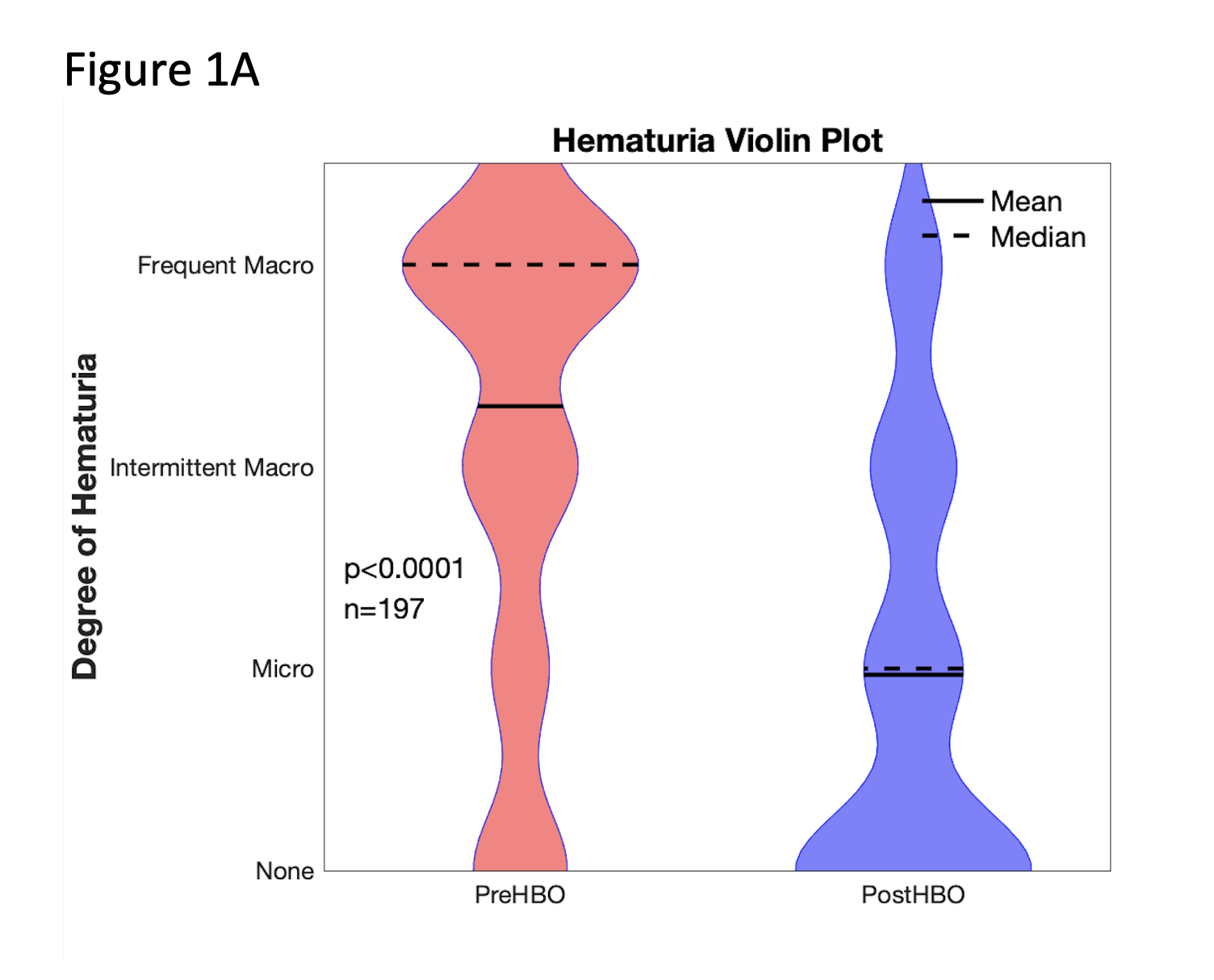
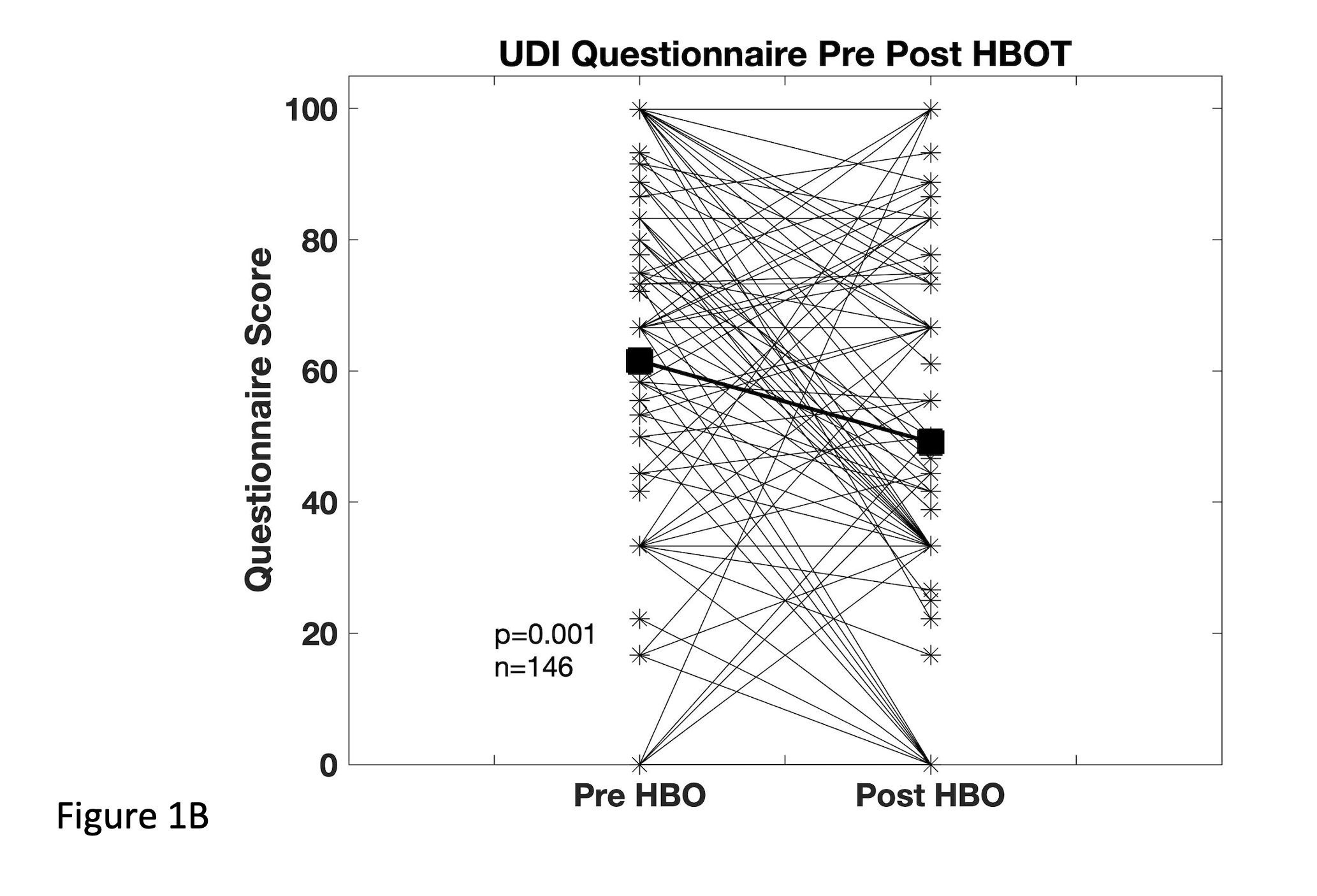
Introduction: Prior studies demonstrate reduced bladder bleeding interventions after hyperbaric oxygen therapy (HBOT) for hemorrhagic radiation cystitis. Previously, we demonstrated feasibility of collecting urine-related patient reported outcome measures (PROMs) via the Multicenter Registry for HBOT. The purpose of this study is to evaluate change in urine related PROMs before and after HBOT in a larger, updated cohort. Methods: Prospectively collected data from 19 sites in the Multicenter Registry for Hyperbaric Oxygen Therapy Consortium were analyzed. Measures included a hematuria scale adapted from the Radiation Therapy Oncology Group (RTOG) radiation cystitis scale and the Urinary Distress Inventory (UDI). Data obtained on the first and last days of HBOT were compared using the Wilcoxon rank sum test. Results: 216 patients were included, 197 had complete RTOG/EROTC hematuria data, 146 had UDI data and 133 had both. Patients were on average 72 (+/- 10.3) years old, 58/216 were diabetic, 81/216 were current or former smokers, and 187/216 developed radiation cystitis due to prostate cancer related radiation treatment. Referral for HBOT occurred approximately 7.0 +/-5.8yrs following radiation. The average number of treatments was 36+/-11. RTOG/EROTC hematuria scores were significantly improved post HBOT (2.2 pre vs 0.9 post, p=0.001) (Figure 1A). UDI scores were significantly improved, post HBOT (61.5+/-31.5 pre vs 49.1+/-30.9, p<0.01) (Figure 1B). Conclusions: In a novel, multi-institutional prospective data set, we demonstrate HBOT is associated with improved urine related PROMs for individuals undergoing HBOT for radiation cystitis. Continued expansion of the registry may provide more generalizable results and allow for analysis of factors leading to change in UDI and hematuria scores. SOURCE OF Funding: N/A