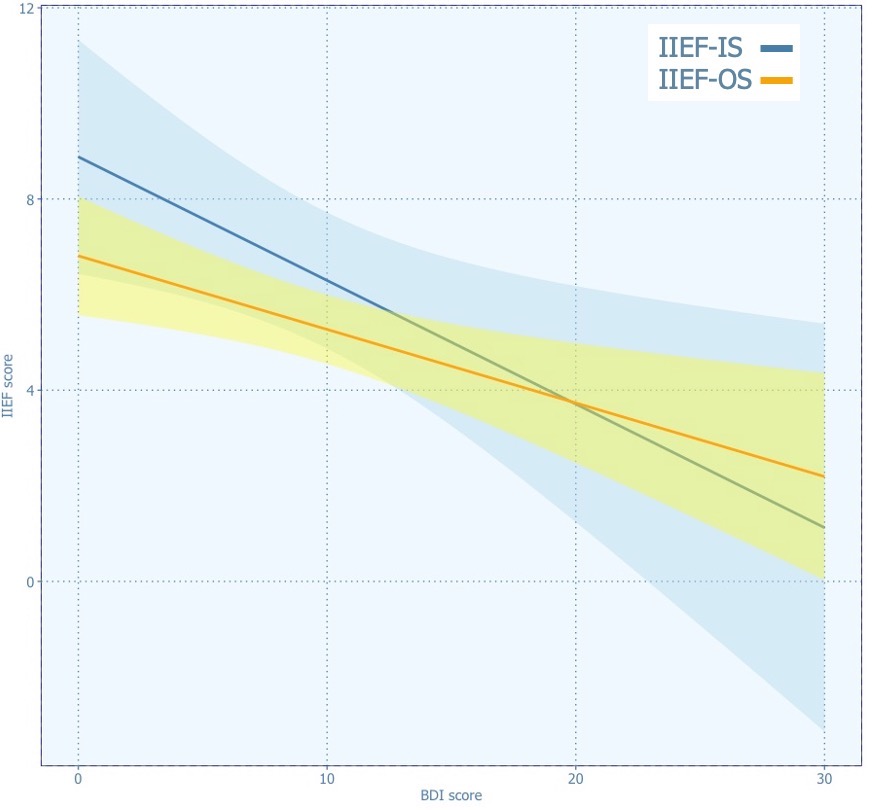
Introduction: Delayed Ejaculation (DE) is among the most challenging male sexual dysfunctions. We aimed to explore and compare the sociodemographic and clinical characteristics of men with DE with those complaining of primary premature ejaculation (PE) Methods: Data from 555 consecutive men seeking first medical help for DE and/or primary PE between 2005 and 2022 at a single tertiary-referral center were retrospectively analyzed. Complete socio-demographic, clinical and laboratory data were collected for all patients. All patients completed the International Index of Erectile Function (IIEF) and the Beck Depression Inventory (BDI) at baseline. We excluded men with known or potential causes responsible for ejaculatory disorders (n= 52). Descriptive statistics was used to detail and compare clinical and sociodemographic characteristics between the two groups (DE vs. PE). Linear regression models tested the association between depressive symptoms (BDI) and baseline IIEF domains scores among men with DE. Results: Of 555 patients, 479 (86.3%) and 76 (13.7%) primary PE and DE, respectively. Men with DE were significantly older (44 vs. 47, p=0.01) than patients with PE. Conversely, the two groups did not differ in terms of educational/relational status, BMI, comorbidities, and hormonal milieu. At psychosexual interview, men with DE report more frequently symptoms referable to anxiety and depression (9.4% and 12,7%) along with higher median baseline BDI scores (8 vs. 6), all p<0.01. DE patients reported lower median IIEF-OF, -SD domains (6 vs. 9) and (7 vs. 8) than patients with PE only, all p<0.05. At linear regression analysis, among DE patients, a higher BDI score was associated with lower IIEF-OS (coeff. -1.57 p=0.004), and IIEF-IS (coeff. -0.72 p=0.01) domains (Figure 1). No association between BDI and IIEF-OF, -EF, -SD domains was found Conclusions: Among men complaining of ejaculatory disorders, one out of ten reports DE. These patients have higher chances to report clinically significant depression significantly impacting on their overall satisfactory sexual life SOURCE OF Funding: none