MP46-01: Understanding the Impact of the Social Construct of Race on Receipt of Radical Cystectomy in the Largest Equal Access Health System in the US: The Veterans Affairs Health System
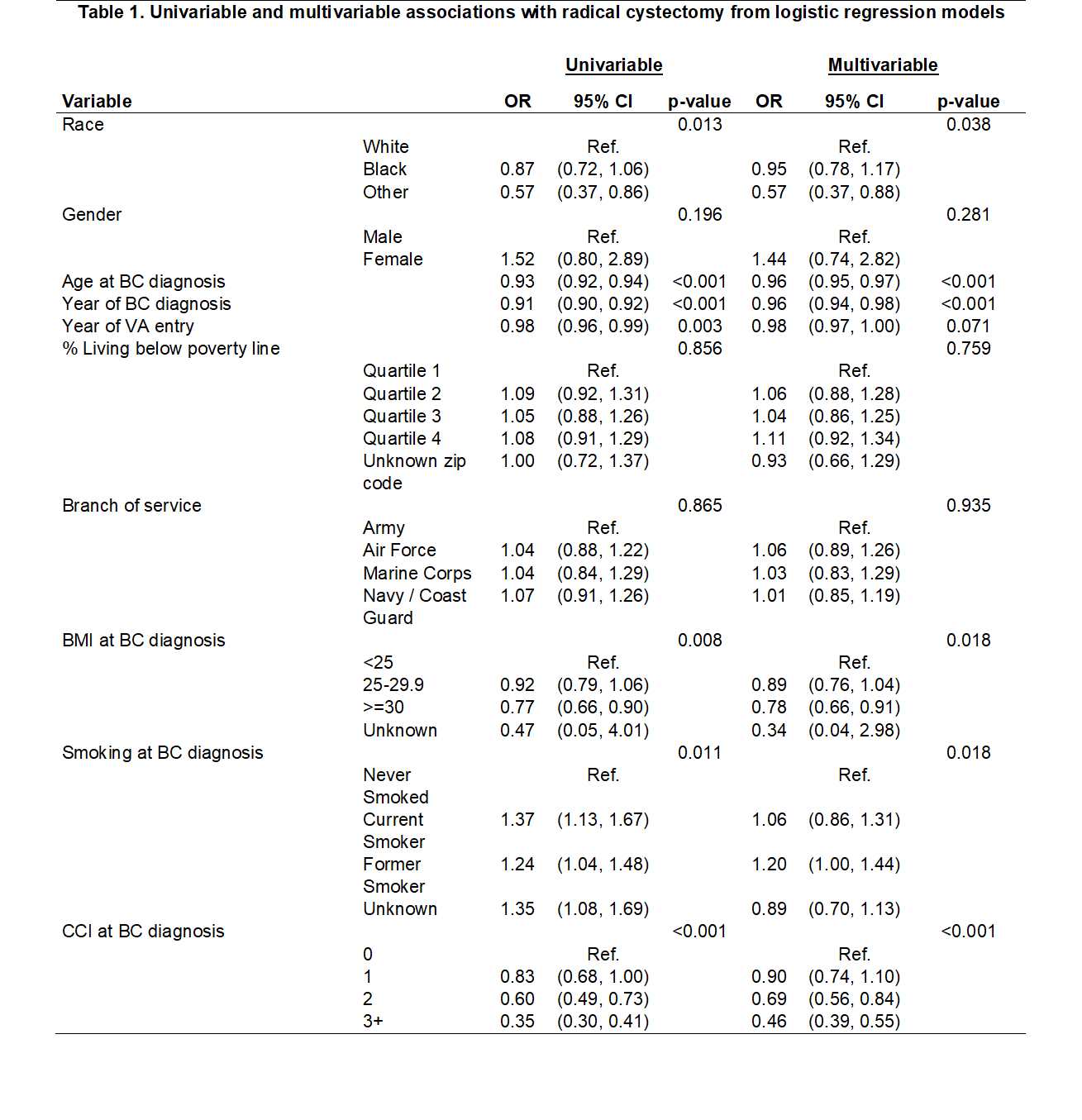
Introduction: Radical cystectomy (RC) for patients with muscle invasive bladder cancer (MIBC) is a guideline recommended treatment with prior studies noting racial disparities in RC use and outcomes. We described receipt of RC by race among MIBC patients in an equal access setting. Methods: This retrospective study identified a total of 6,883 Veterans diagnosed with MIBC from January 1, 2000, to December 31, 2020. Patients were excluded if they were exposed to agent orange during service or had missing race. The primary outcome was receipt of RC (yes vs. no). Univariable and multivariable logistic regression models were used to test the association between race (White, Black, Other) and RC use. Multivariable models were adjusted for age at BC diagnosis, year of BC diagnosis, year of Veterans Affairs (VA) entry, gender, poverty status (determined by zip code), branch of service, Charlson comorbidity index (CCI), smoking history, and body mass index (BMI). Results: Of the 5,179 patients who met inclusion criteria, 1,426 (27.5%) received RC. Race was associated with RC in both univariable (p=0.013) and multivariable (p=0.038) analysis. In multivariable analysis, Blacks were less likely to undergo RC than Whites, though this relationship did not reach significance (OR: 0.95; 95% CI: 0.72-1.17). Other races were significantly less likely to undergo RC than Whites (OR: 0.57; 95% CI: 0.37-0.88). Other variables significantly associated with RC in multivariable analysis were age (OR: 0.96; 95% CI: 0.95-0.97), year of diagnosis (OR 0.96; 95% CI 0.94, 0.98), BMI (OR >=30 vs. <25: 0.78; 95% CI: 0.66-0.91), smoking (OR Former smoker vs. never smoked: 1.20; 95% CI: 1.00-1.44) and CCI (OR 3+ vs. 0: 0.46; 95% CI: 0.39-0.55). Conclusions: In one of the largest RC cohorts studied in the largest equal access setting in the US, this analysis showed no significant difference in RC use among Blacks compared to Whites. However, we did observe significantly decreased RC use among other races than Whites. Further investigation into the drivers of RC use by race beyond equal access are needed to understand utilization patterns. SOURCE OF Funding: The funding sources had no role in the collection, management, analysis, and interpretation of the data; preparation, review, or approval of the manuscript; and decision to submit the manuscript for publication.