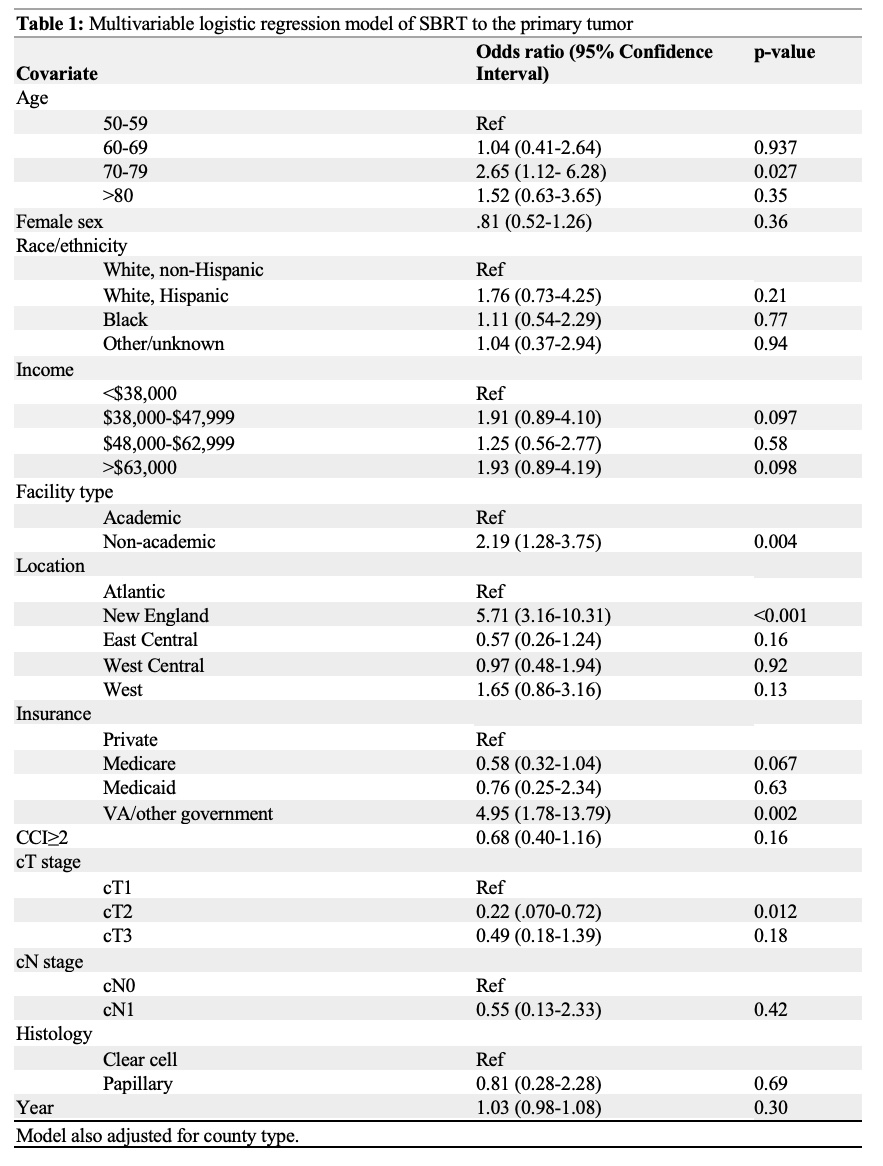
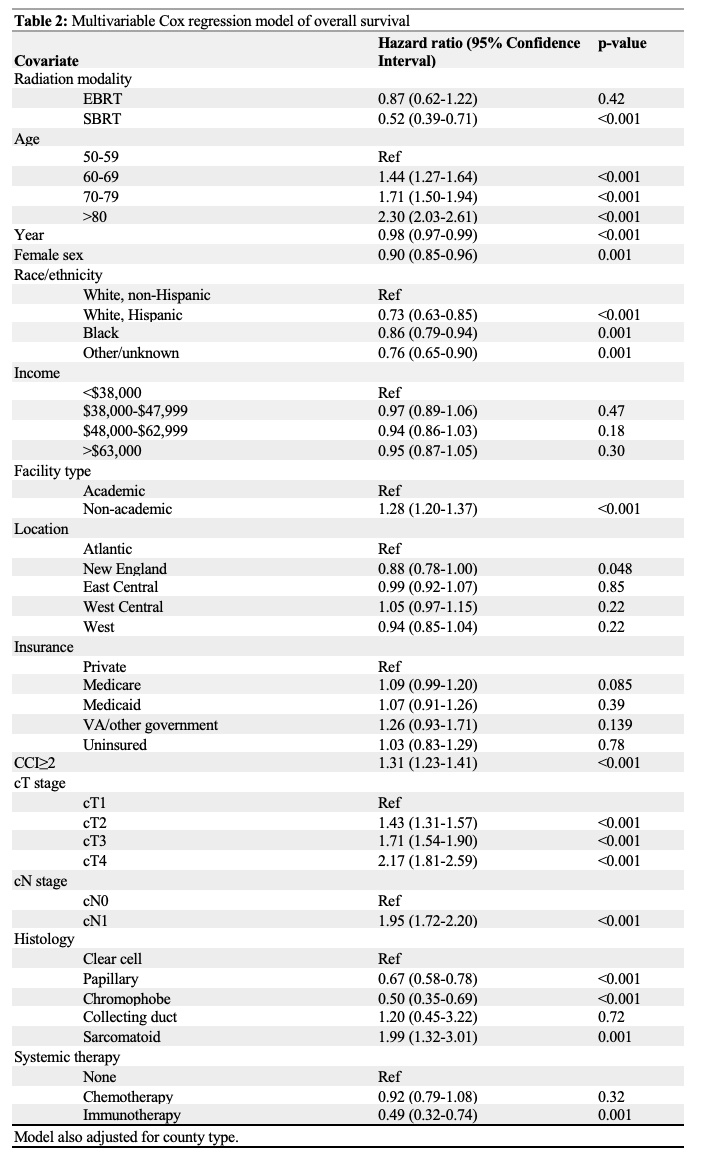
Introduction: A growing body of evidence suggests that stereotactic body radiotherapy (SBRT) could be an appropriate local treatment strategy for patients with renal cell carcinoma (RCC) who refuse surgery or are medically inoperable, but the degree of uptake of SBRT remains understudied. Methods: The National Cancer Database was utilized to identify all patients from 2004-2020 with non-metastatic RCC for whom surgery was not performed due to medical comorbidities, age, locally advanced disease, or patient refusal. We evaluated trends over time in the use of radiation to the primary tumor for these patients, and the modality of radiation used. Multivariable logistic regression was used to determine the predictors of SBRT adjusted for baseline demographic and clinical covariates. We used multivariable Cox regression to determine the adjusted association of SBRT with overall survival (OS). Results: There were 10,810 patients with RCC from 2004-2020 who were deemed poor surgical candidates or refused surgery. The proportion receiving radiation to the primary tumor increased from 1.7% from 2004-2009 to 3.3% in 2020 (p=0.02), and the proportion treated with SBRT vs. EBRT increased from 51% in 2004-2009 to 65% in 2020. There was a small but statistically significant increase in the odds of SBRT over time (OR=1.05, 95% CI 1.01-1.09, p=0.008 for each year of diagnosis). Age 70-79, treatment at a non-academic center, treatment in New England (versus Atlantic region) and VA insurance were associated with use of SBRT, while cT2 disease was associated with lower use of SBRT versus cT1 disease (Table 1). SBRT (HR 0.52, 95% CI 0.39-0.71, p<0.001) was associated with a significant OS benefit on multivariable Cox regression analysis adjusted for age, race, ethnicity, treatment setting, cT stage, cN stage, histology, and systemic treatment (Table 2). Conclusions: Although overall utilization of SBRT is very low in RCC patients who are poor candidates for surgery or who refuse surgery, there seems to be an increasing trend of utilization over time. Use of SBRT was associated with superior OS compared to patients treated with EBRT. SOURCE OF Funding: N/A