Consultant Urologist The Christie NHS Foundation Trust
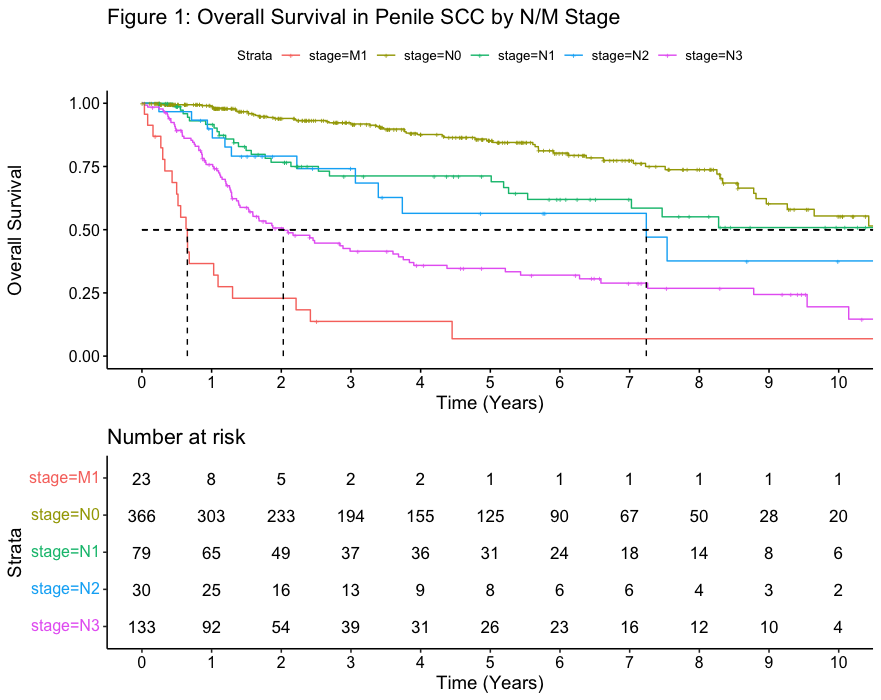
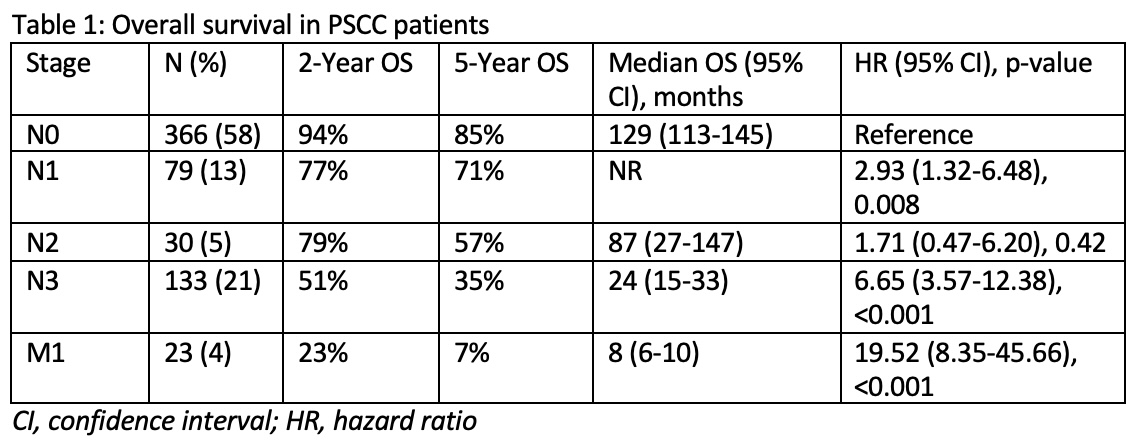
Introduction: Penile squamous cell carcinoma (PSCC) is rare and overall survival (OS) in metastatic disease remains poor. This study examines the OS, classified by TNM stage, in a large contemporary cohort of PSCC patients managed at a tertiary referral centre. Methods: We analysed retrospective data from a prospectively maintained database for patients with PSCC treated between 2003 and 2022. We excluded clinically node-negative (cN0) patients who did not undergo invasive nodal staging (pNX). TNM stage was defined by histopathology (AJCC version 8) except where clinical/radiological findings of fixed inguinal nodes (cN3), pelvic lymphadenopathy (cN3) or distant metastatic disease (M1) were present. All patients were treated according to local guidelines. The primary outcome of OS (time from definitive primary surgery to death, censored for last follow-up) was analysed using the Kaplan-Meier method and log rank test. Multivariate Cox regression analysis for age, p16 status, TNM-stage and grade was performed. Audit approval was obtained from the host clinical governance committee. Results: We identified 634 eligible patients. Baseline characteristics were similar in each group, with median age 64 years (range 26-94) and median follow-up 55 months (range 0-187). We describe OS (figure 1) and risk of death by N and M stage, after multivariate analysis (table 1). Conclusions: We demonstrate the contemporary OS outcomes of a large cohort of penile cancer patients receiving standard of care treatment at a tertiary referral centre, with significant OS differences by N and M stage. Our data confirm the poor survival outcomes of patients with N3 and M1 disease and these groups should be the target for developing novel management strategies. Conversely, patients with N1 and N2 disease have significantly longer survival, reinforcing the need for predictive biomarkers to help refine patient selection for optimal management. SOURCE OF Funding: None