MP50-16: Oncological Outcomes Following Robotic Post-Chemotherapy Retroperitoneal Lymph Node Dissection for Testicular Cancer: A Worldwide Multicenter Study
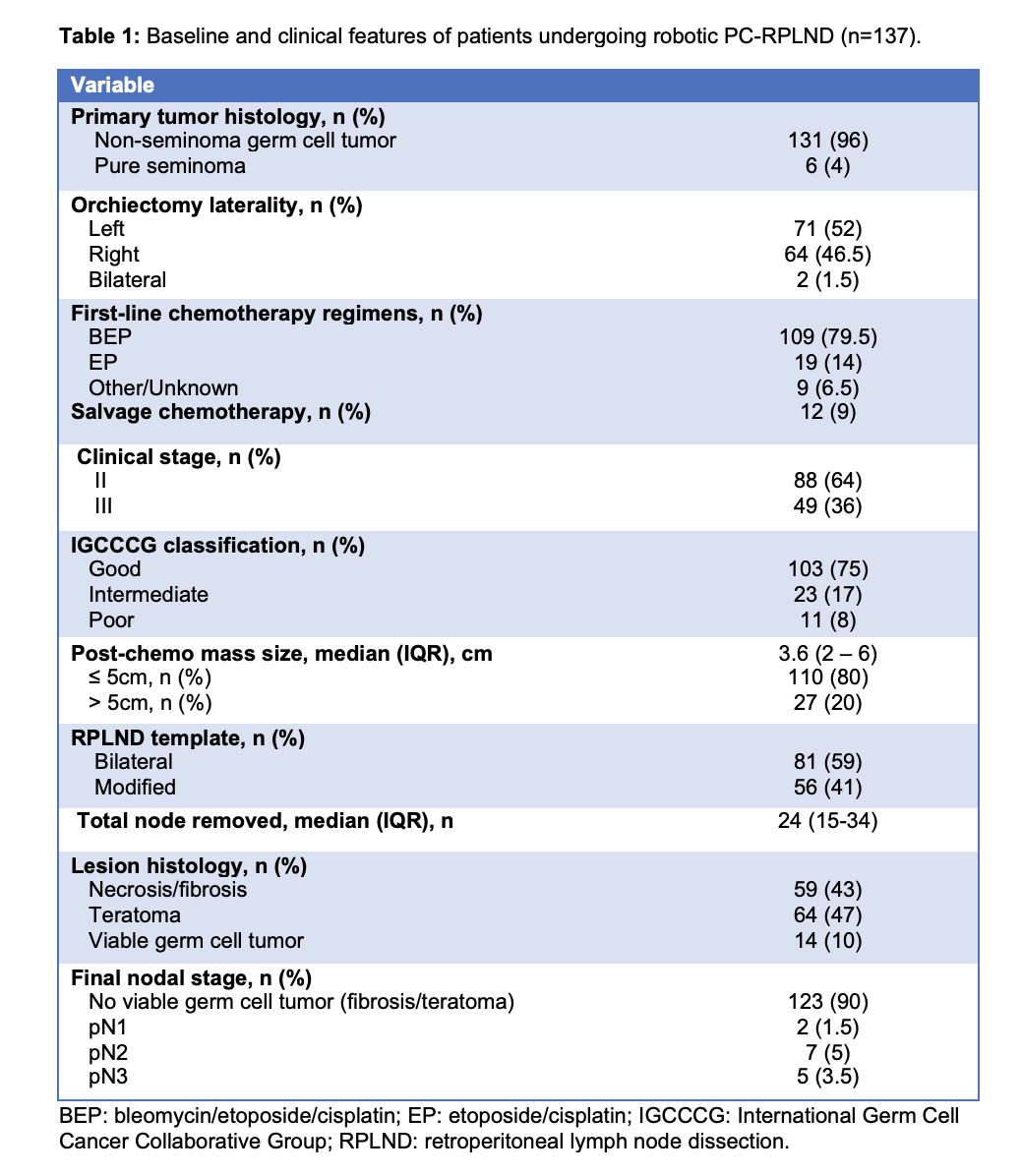
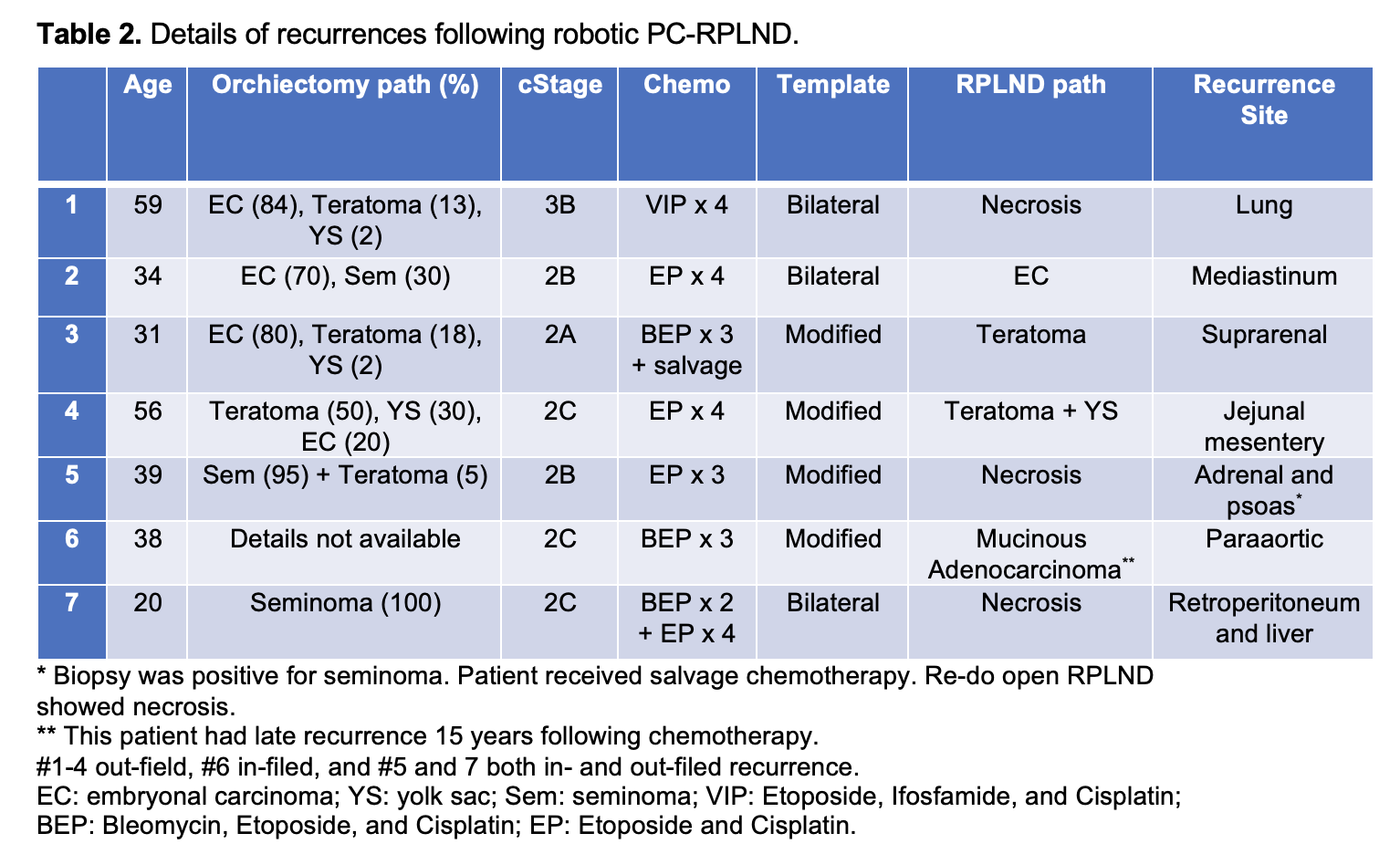
Introduction: The feasibility and safety of robotic approach for post-chemotherapy retroperitoneal lymph node dissection (PC-RPLND) has been previously shown by our group. The aim of this study is to evaluate the oncological outcomes of robotic PC-RPLND. Methods: In this retrospective study, we included patients who underwent robotic PC-RPLND at nine academic centers across the world between 2011 and 2022. Patients’ characteristics, pathological findings, and oncological outcomes were reviewed. Results: A total of 137 patients with a median age of 29 (IQR 25, 36) years were included. The baseline features and clinicopathological findings are shown in Table 1. BEP (bleomycin, etoposide, cisplatin) was the main chemotherapy regimen (80%) and 12 patients (9%) received salvage chemotherapy. Twelve cases (9%) were electively converted to open. Median estimated blood loss, operative time, and length of hospital stay were 100 mL, 5 hours, and 2 days, respectively. Final pathology revealed necrosis/fibrosis in 59 (43%), pure teratoma in 64 (47%), and viable germ cell tumor in 14 (10%) patients. Among patients with residual viable tumor, those with pN2,3 non-seminoma received chemotherapy and the others were followed closely. With a median follow-up of 21 (IQR 8, 49) months, seven patients (5%) had disease recurrence, of whom 3 (2%) were in-field (Table 2). 2-year recurrence free survival was 93%. Median time to recurrence was 11 months. No port-site recurrence or carcinomatosis was identified. Two (1.5%) cancer-related deaths were recorded. Conclusions: At centers with expertise in testicular cancer and minimally invasive surgery, in appropriately selected patients robotic PC-RPLND is associated with comparable short-term oncological outcomes to the open approach. SOURCE OF Funding: None