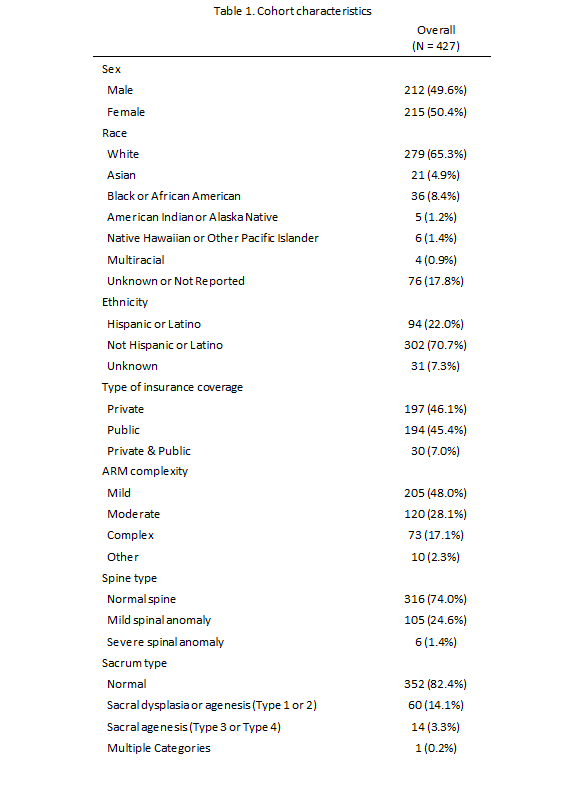
Introduction: Urologic anomalies such as hydronephrosis, solitary kidney, and vesicoureteral reflux are common in individuals with anorectal malformations (ARM). These can lead to renal damage if not detected and managed appropriately. Optimal detection and surveillance strategies have not yet been established. We aim to evaluate current urologic evaluation practices in individuals with anorectal malformation utilizing a multi-center registry. Methods: We performed a multicenter retrospective study of children with ARM evaluated at sites participating in the Pediatric Colorectal and Pelvic Learning Consortium (PCPLC). We included all subjects with ARM who had a colostomy or PSARP within 12 months of birth and were also seen at a PCPLC site within 3 months of birth or ARM diagnosis. The primary outcome was the proportion of subjects undergoing urologic evaluation within 12 months of ARM diagnosis. The secondary outcome was proportion of screened subjects with urologic anomalies. We evaluated associations between urologic evaluation and clinical and sociodemographic characteristics. P-value <0.05 was considered significant. Results: A total of 427 subjects with ARM from 13 institutions were included, and only 22% (93/427) of subjects had a recorded urologic evaluation within 12 months of ARM diagnosis. For imaging studies performed within 12 months of ARM diagnosis, 25% (112/427) underwent renal ultrasound, 8% (34/427) had a voiding cystourethrogram (VCUG), and 1% had a renal scan performed. Kidney anomalies were reported in 58 subjects, with hydronephrosis seen most commonly, followed by horseshoe kidney and ectopic kidney. Vesicoureteral reflux was detected in 20 subjects, comprising 59% of those who had a VCUG performed. On univariate analysis, having a renal ultrasound performed within 12 months of ARM diagnosis was not associated with clinical characteristics, such as ARM complexity or spine/sacrum status. It was associated with Hispanic ethnicity (OR 1.73, CI 1.04, 2.84, p = 0.034). Conclusions: Timely urologic evaluation was recorded only 25% of the time, with a high proportion yielding expected anomalies such as hydronephrosis and vesicoureteral reflux. This suggests many potentially harmful conditions may be going undetected or unrecorded, and routine early evaluation should be standardized. SOURCE OF Funding: none