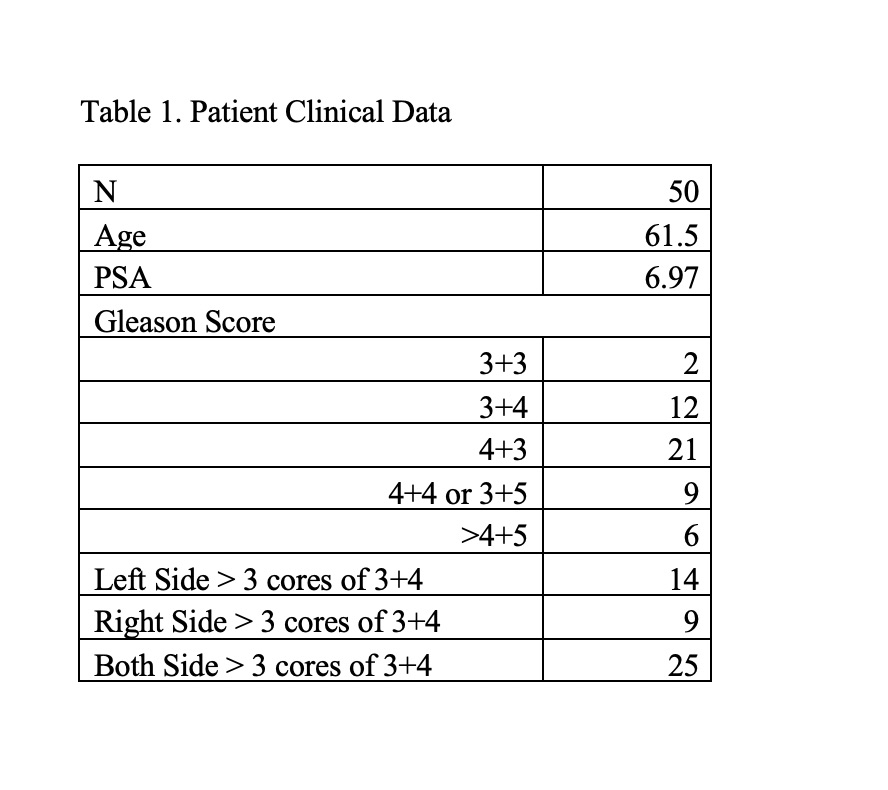
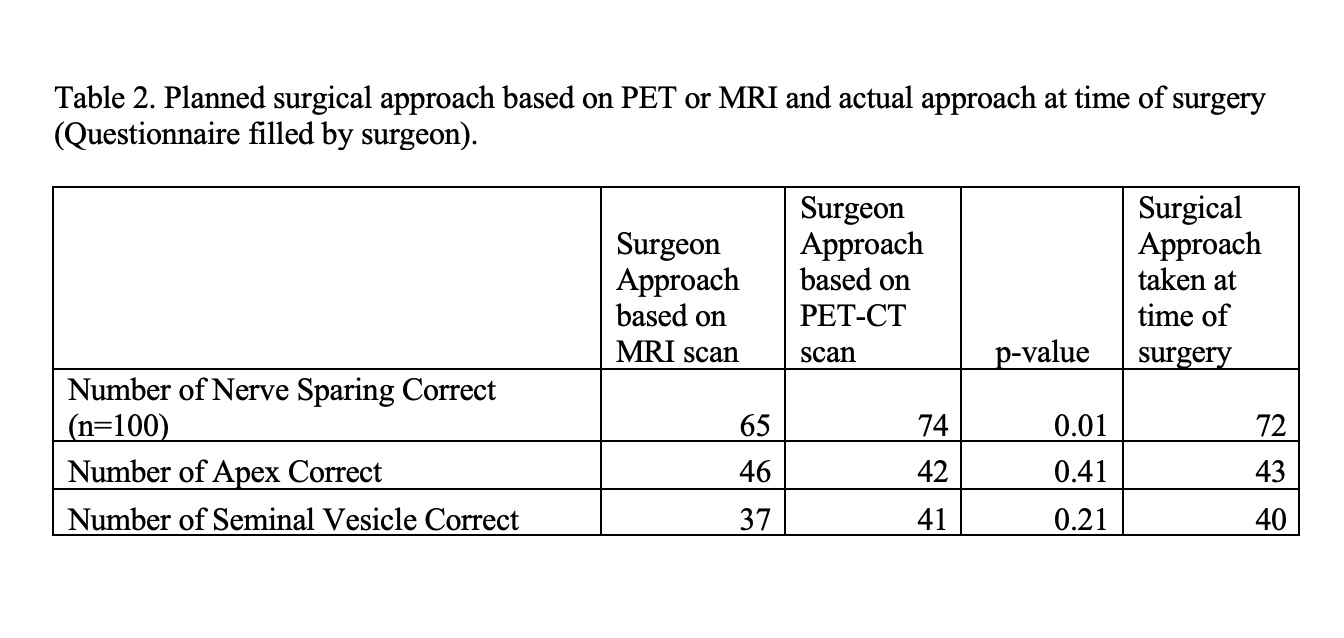
Introduction: Survivors of surgically managed prostate cancer (PCa) may experience side-effects such as urinary incontinence and erectile dysfunction. Currently, Multiparametric MRI (MRI) aids decisions on nerve-sparing approach. We sought to see if 68Ga-PSMA-11 PET CT (PET) scan could better predict and improve surgical approach compared to MRI. Methods: We prospectively enrolled 50 patients with clinically significant PCa (> 3 cores of Gleason 3+4 or worse) that were scheduled for prostatectomy with a MRI. Patients then underwent PET. Images were read by dedicated radiologists to identify extra-prostatic extension (EPE) at the nerve bundles (NB), apex, and bladder neck and seminal vesicle invasion (SVI). Surgeon questionnaires about approach (non-nerve sparing vs nerve sparing) were prospectively filled based on MRI and PET scan and after surgery for the actual surgical approach. These results were then compared to the final whole mount to determine if the surgical approach was correct. Sensitivity, specificity, positive predictive value (PPV), and negative predictive value (NPV) were calculated for MRI and PET scan. Surgeon questionnaires were compared using McNamar’s test. Results: Patients had an average age of 61.5 with biopsy results shown in Table 1. Sensitivity, specificity, PPV and NPV for EPE along the posterior aspect with concern for NB involvement for MRI was 60.0, 76.9, 40.0, 88.2 and PET was 85.7, 73.4, 46.2, 95.1. The correct surgical approach (non-nerve sparing vs. nerve sparing) would have been taken 74% of time using PET findings alone compared to MRI which was correct 66.3% (p=0.01) as shown in Table 2. The ability to correctly select surgical approach (wide vs normal) for the apex and SVI was also captured. No patients had bladder neck invasion. Surgeon choice based on imaging was influenced by other factors such as Gleason score. Conclusions: We found PET scans were more sensitive with EPE at the NB. PET scans were a better guide to correctly decide nerve sparing approach based on prospective questionnaires. SOURCE OF Funding: None