IRCCS Ospedale Policlinico San Martino, Genova, Italy
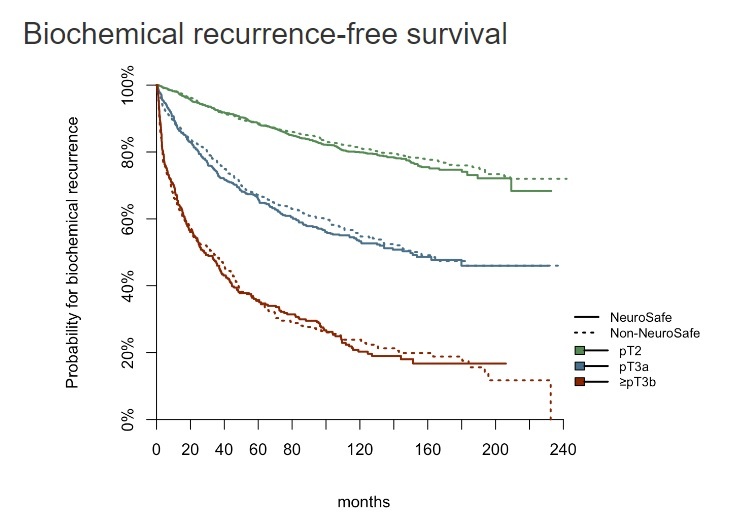
Introduction: It has been established in either retrospective comparative studies or randomized controlled trials that the neurovascular structure-adjacent frozen-section examination (NeuroSAFE) during NSRP significantly increases the nerve-sparing procedures (NS) and reduces the positive surgical margins (PSMs), but the long-term oncological outcomes have not yet been evaluated. Methods: We analyzed long-term follow-up data prospectively collected into our institutional review board-approved database of consecutive open retropubic and robot-assisted radical prostatectomies (RPs) performed between January 2002 to June 2011. In the NeuroSAFE technique, the complete neurovascular structures adjacent to prostatic margins are removed and the specimen is stained for proper cryo-sectioning and anatomic alignment. Baseline characteristics between NeuroSAFE and non-NeuroSAFE patients were compared using the chi-square likelihood test. The impact of NeuroSAFE on biochemical recurrence-free survival (BFS) was analyzed by log-rank test, and Kaplan-Meier analysis in propensity score (PS)–based matched cohorts. PS-matching was performed 1:1 using PSA, pT stage, Gleason score (GS), and pN-status as covariates. Results: From January 2002 to June 2011, 11069 consecutive RPs were collected. Of these, 5392 (49%) were performed with NeuroSAFE. Long-term oncological outcomes were assessed in an adjusted cohort of 2567 matched pairs. In NeuroSAFE vs the matched non-NeuroSAFE RPs, frequency of NS was significantly higher (all stages: 97% vs 81%; pT2: 99% vs 92%; pT3a: 94% vs 72%; pT3b: 88% vs 40%; p < 0.0001) and PSM rates were significantly lower (all stages: 15% vs 22%; pT2: 7% vs 12%; pT3a: 21% vs 32%; p < 0.0001). After a median follow-up of 132 (interquartile range 81.8 - 158) months, 10-yr BFS in NeuroSAFE pts didn’t differ from non-NeuroSAFE pts (5-yr- and 10-yr-BFS: pT2: 88.5 % vs 88.6 %; 79.9% vs 81.4 %, p = 0.35; pT3a: 65.8 % vs 67.2%; 53.3% vs 55.3 %, p = 0.58; = pT3b: 35.7% vs 34.5%; 20.3% vs 23.9%, p = 0.95) (figure 1). Conclusions: Even after 10 years of follow-up, NeuroSAFE has no negative impact on BFS, and it can be considered a safe option to improve the NS procedure without unfavorable effects on the oncological outcomes. SOURCE OF Funding: None