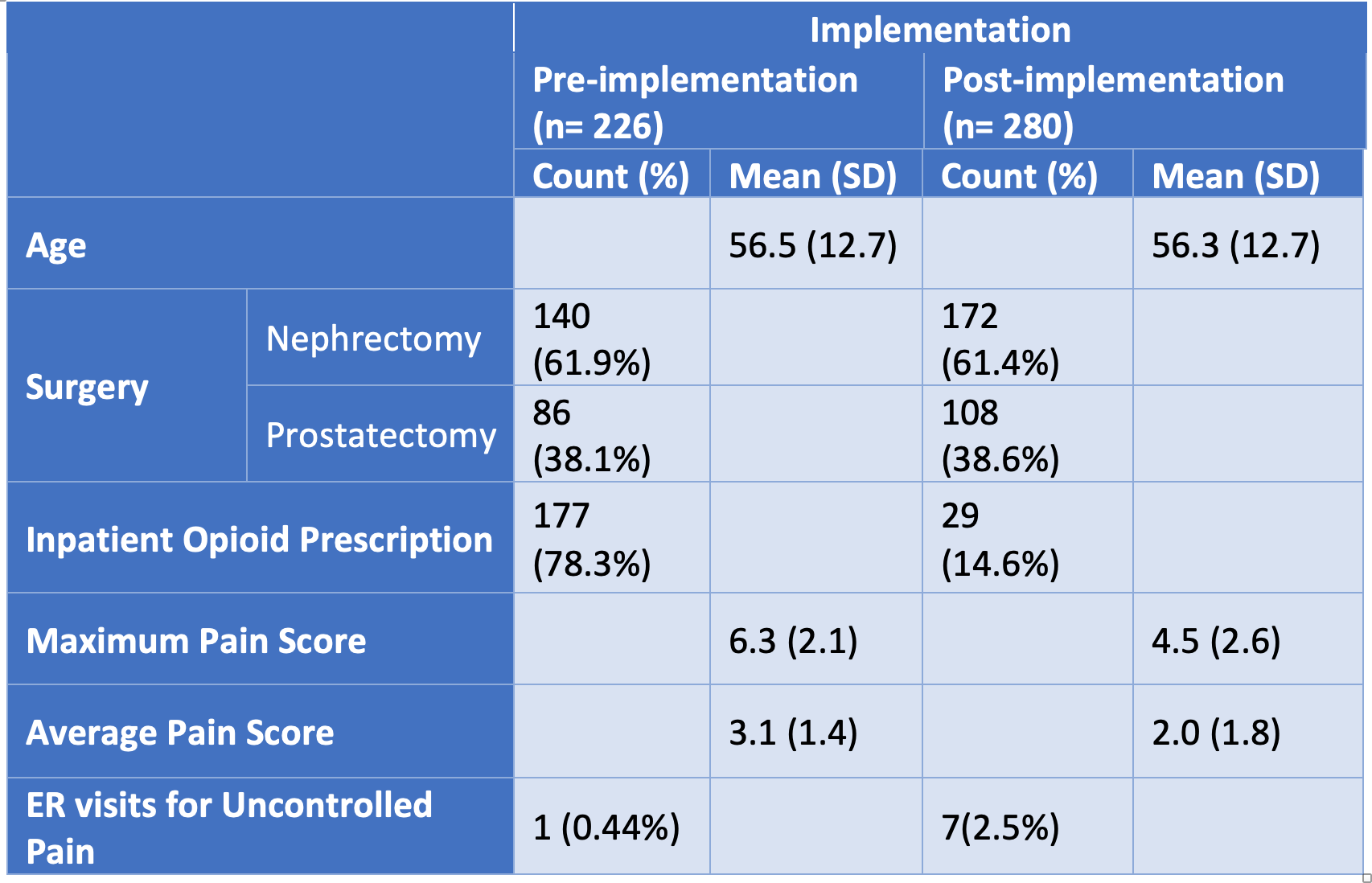
Introduction: An optimal pain management is essential to establish an effective fast-track surgery model. In patients undergoing minimally invasive oncological surgeries including radical prostatectomy (RP) and Radical Nephrectomy (RN), multiple studies have assessed the efficacy of various analgesic medications. Therefore, we aim in our study to compare the efficacy of post-operative analgesic regimen after the implementation of an opioid-free regimen at a large tertiary care center. Methods: Mixed retrospective and prospective, non-randomized, pre and post interventional trial was performed at our institution between November 2015 and October 2022. Sample included patients undergoing RP and RN during that time frame. An opioid-free pain regimen was developed and instituted in April 2019, which included preoperative education and counseling regarding opioids and pain expectation management, round-the-clock intravenous acetaminophen as inpatient and prescriptions of oral acetaminophen as outpatients. Comparison was made between patients in the opioid-regimen group (pre-implementation) vs. the opioid-free regimen group (post-implementation) in terms of pain score and the need for additional analgesics. Results: A total of 226 (44.66%) patients were in the pre-implementation group, with both RP and RN included in the total, and 280(55.33%) patients were in the post-implementation group. The intervention significantly reduced postoperative opioid administration from [Pre: 78.3% vs Post: 14.6%, p <0.001]. The post-implementation group had a significantly lower maximum pain score [Pre: 6.3± 2.1 vs Post: 4.5 ± 2.6, p= 0.04] and lower average pain score [Pre: 3.1 ± 1.4 vs Post: 2.0 ± 1.8, p < 0.001]. However, the post-implementation group had higher rates of return visits for postoperative pain management [Pre:1.2% vs Post: 5.1%, p = 0.274].Pre implementation patients followed up for uncontrolled pain were 1(0.44%) and 7 (2.5%) post implementation presented to the ER for uncontrolled pain. Conclusions: The results support the efficacy of opioid-free pain management regimen in patients undergoing minimally invasive upper tract and pelvic urologic surgery. To Date, this study is considered one of the largest highlighting the efficacy of opioid free regimen post op. SOURCE OF Funding: N/A