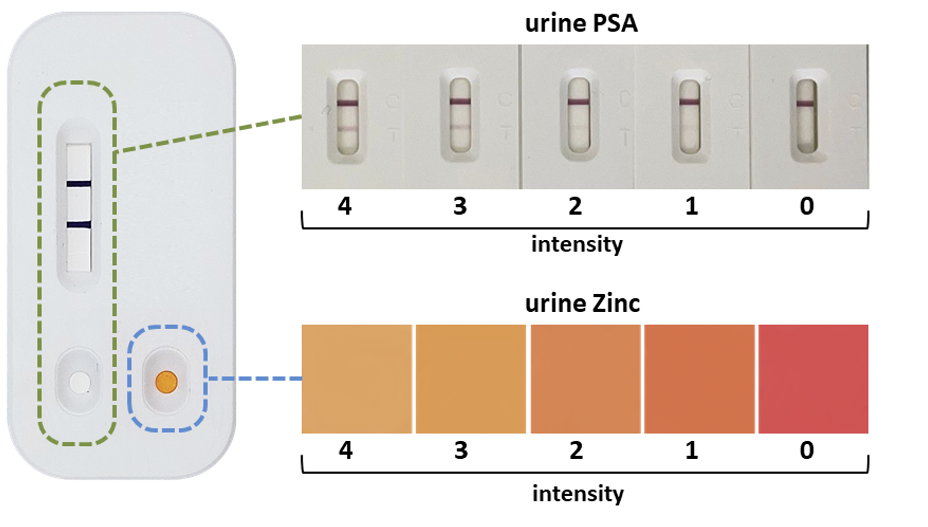
Introduction: Rapid tests are popular diagnostic method that can rapidly provide in vitro diagnostic results by non-trained personnel at a patient site, permitting to decentralize first line exams outside the hospitals and towards local areas. In the present study we aim to validate the diagnostic performance of a rapid urine test based on PSA and Zinc and to explore the ability to improve early prostate cancer diagnosis. Methods: A urine sample were collected from 174 subjects scheduled for prostatic biopsies based on standard parameters, as PSA levels, digital rectal examination (DRE) and multiparametric-magnetic resonance imaging (mpMRI). Informed consent was obtained from each participant. The amount of urinary PSA and Zinc was determined by an optimize device combining lateral flow immunoassay and colorimetric dip-stick assay, respectively, and confirmed with commercial assays. Results: The test for urinary PSA and Zinc have been optimized based on values observed in previous studies, in order to return an intensity scale from 0 to 4, in relation to the quantity of analyte present in the sample. Intensity has been evaluated by the naked eye and image readers, showing a concordance of 88%. Multivariate ROC curve analysis combining Rapid test intensity with routine parameters such as PSA, Age, DRE (standard of care (SOC)) and PiRADS obtained by mpMRI resulted in an AUC=0.861, that is statistically different from SOC or PiRADS alone (AUC 0,643 and 0,761, respectively). Conclusions: These results suggest that our optimized rapid test for urinary PSA and Zinc could be clinically useful in detecting neoplastic transformation in the prostate and spare useless invasive analysis to healthy subjects. SOURCE OF Funding: None

.jpg "Daniele Amparore, MD photo")