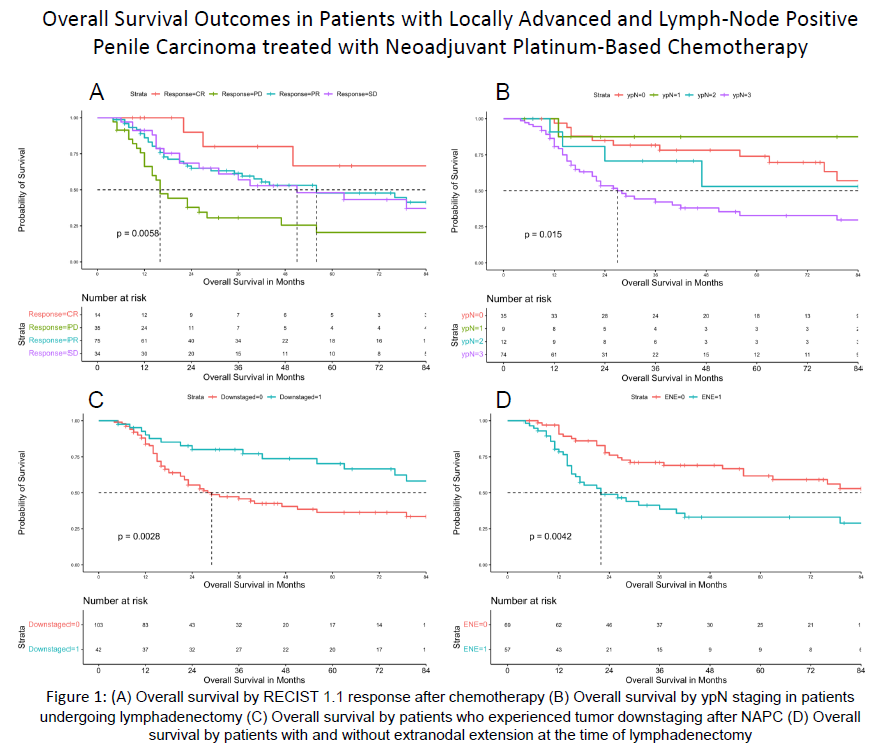
Introduction: The efficacy of neoadjuvant platinum-based chemotherapy (NAPC) in locally advanced Penile Squamous Cell Carcinoma (PSCC) has been demonstrated in prior small studies, leaving clinicians with scant evidence-based guidance. Thus, we aimed to provide evidence on real-world outcomes of patients with PSCC who received NAPC prior to surgical resection. Methods: Patients who had undergone NAPC prior to surgical resection for PSCC were included from ten centers. Patients had locally advanced (cTany, cN+), non-metastatic (M0) disease. Clinicopathologic data, chemotherapeutic agents utilized including TIP (Paclitaxel - Ifosfamide - Cisplatin), surgical modalities, and clinicopathologic outcomes were assessed. The primary outcome was overall survival (OS), analyzed using Kaplan-Meier Method and compared using Cox Proportional Hazard Modelling. The secondary outcome was progression-free survival (PFS). Response was determined via best overall response measured with RECIST 1.1 criteria following completion of NAPC. Results: 167 patients with PSCC treated with NAPC were included, 137 (84%) of whom received TIP. 92 (55%) patients died during follow up, and the median follow up for survivors was 57 months. The median OS was 42.0 months, while the median PFS was 17.0 months. After NAC, 22% had progressive disease (PD), 20% had stable disease, 47% had partial response, and 11% had complete response, with median OS of 16 months, 51 months, 56 months, and 119 months, respectively (p < 0.01). Predictors for OS and RFS included lymphovascular invasion, positive number of lymph nodes, extranodal extension, downstaging after chemotherapy, best overall response, and ypN status. Figure 1 demonstrates OS outcomes by RECIST best response after chemotherapy, presence of downstaging after NAPC, ypN stage, and presence of extranodal extension. Conclusions: NAPC is effective in patients with lymph node metastases from PSCC. This study represents the largest conglomeration of multi-institutional penile carcinoma patients treated with upfront cisplatin based therapy, and provides further supportive data for multimodal therapy for advanced penile cancer patients while prospective clinical trials complete accrual. SOURCE OF Funding: NA