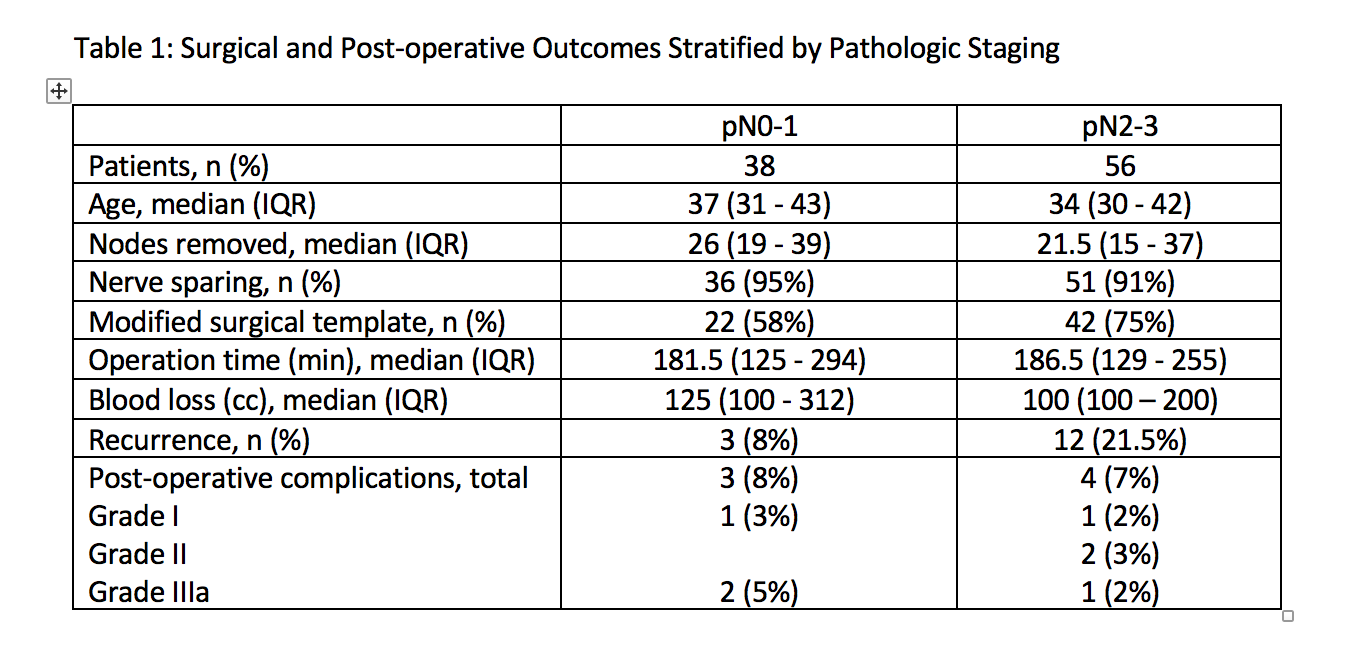
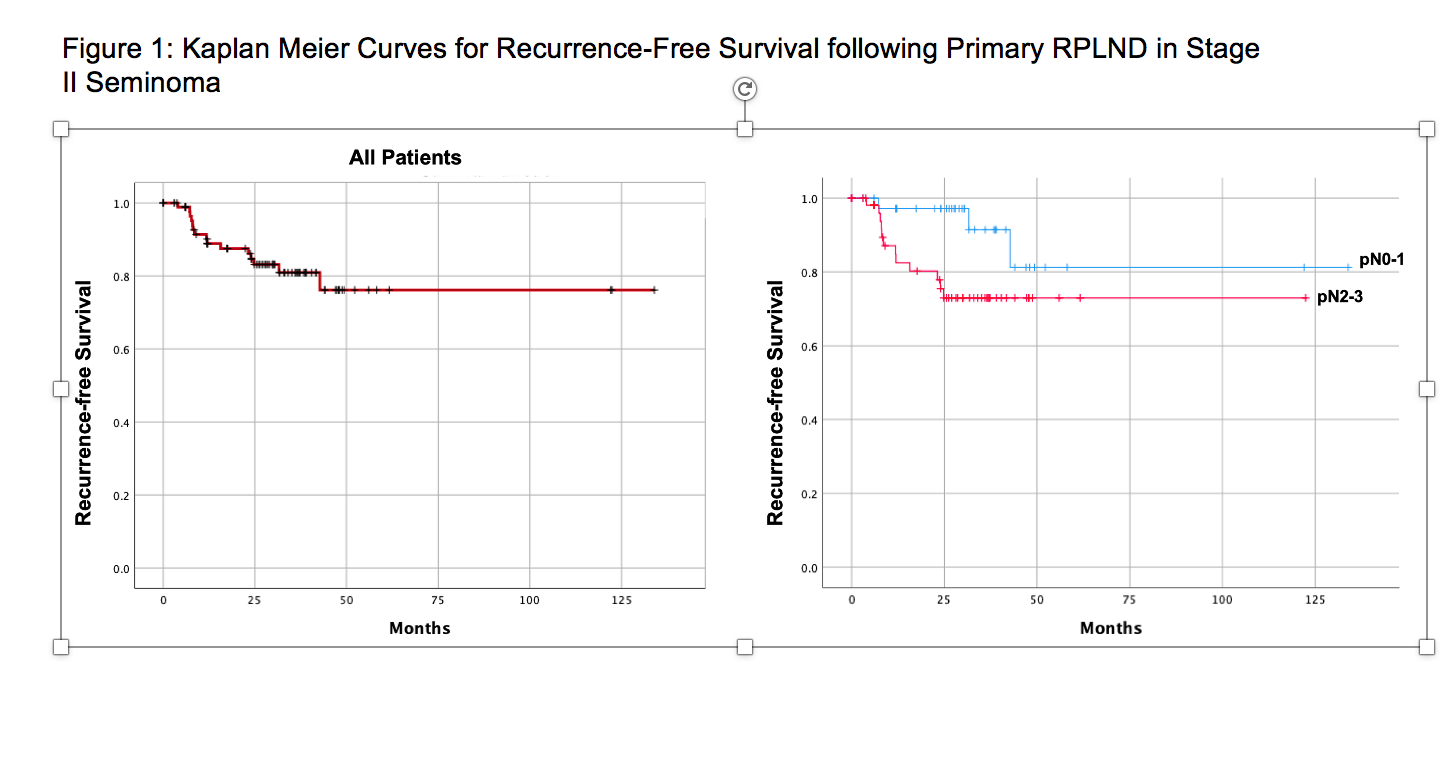
Introduction: The long-term toxicities of chemotherapy and radiotherapy can represent a significant burden to testicular cancer survivors. Although retroperitoneal lymph node dissection (RPLND) is an established treatment for testicular germ cell tumors, little data exists on its efficacy as a front-line treatment in early metastatic (stage II) seminoma. This study aims to assess the surgical and oncologic outcomes of RPLND as the primary treatment of stage II seminoma using multi-institutional dataset. Methods: In this retrospective study, we included adult patients with Stage II testicular seminoma who underwent RPLND as the first-line treatment for their early metastatic disease. Patients’ characteristics, perioperative findings, and recurrence data were reviewed from 12 institutions in the North America and 1 site in Europe. Results: A total of 94 patients with a median age of 35 (IQR 31 – 43) were enrolled with retroperitoneal lymphadenopathy between 1 - 5 cm. Two cases were performed robotically. An average of 23 (IQR 16 – 37) lymph nodes were removed. Pathologic upstaging occurred in 30% of patients. Of the 94 enrolled patients,11% were pN0, 30% pN1, 56% pN2, and 3% pN3. Overall, the recurrence free survival at 3 years was 82% and overall survival was 100%. Patient with pN2-3 showed significantly worse recurrence free survival than pN1 disease (78.5% versus 92%; P=0.04) (Figure 1). Table 1 shows the surgical and postoperative outcomes of the cohort stratified by pathologic staging. In total, 7 (7.5%) patients experienced post-operative complications including ileus, incision ulceration, pulmonary embolism and chylous ascites. Conclusions: The finding of this retrospective multi-institutional study establishes RPLND as a viable option for first-line treatment of testicular seminoma with clinically low-volume retroperitoneal lymphadenopathy. It is associated with a low complication rate and high recurrence-free survival. SOURCE OF Funding: None