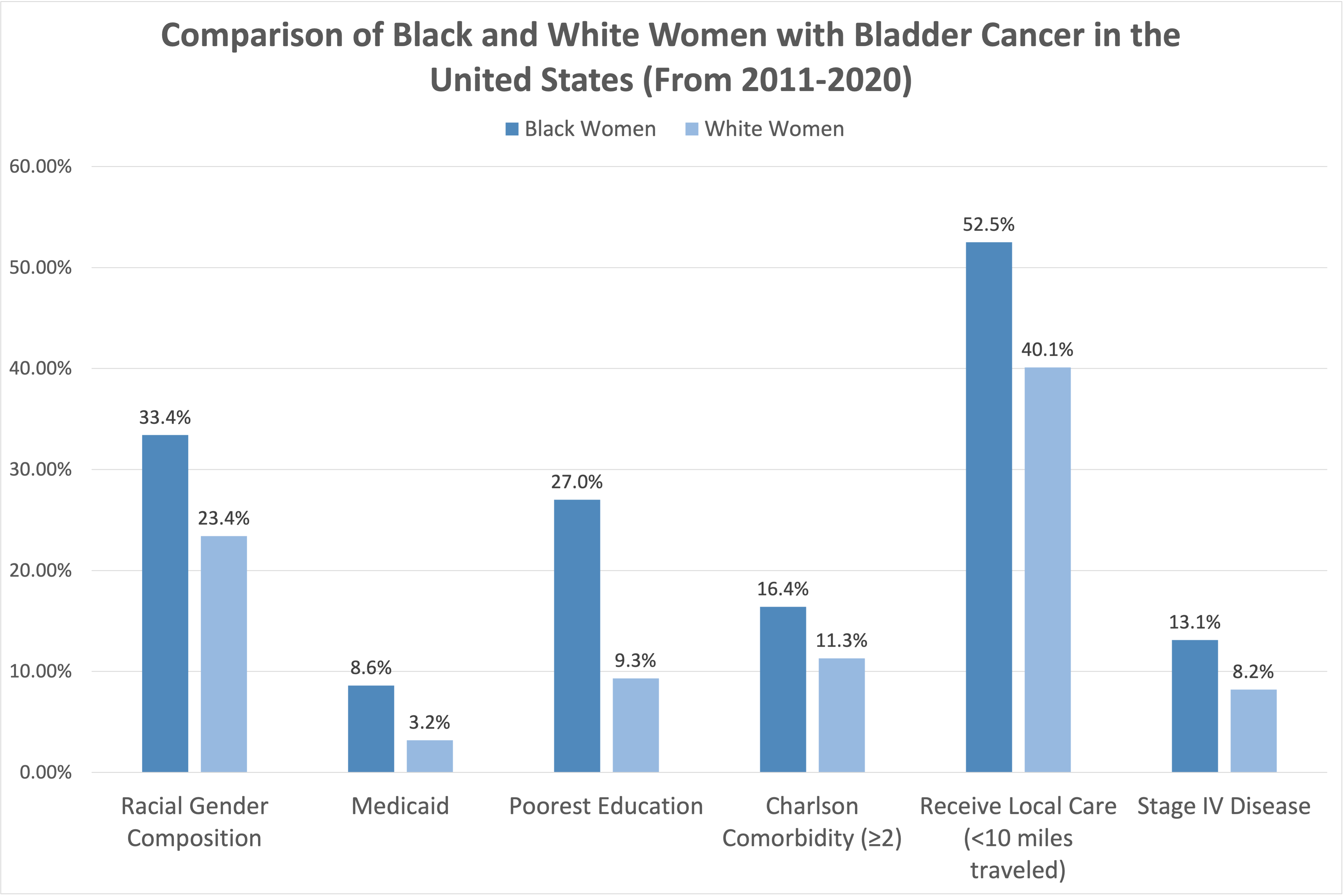
Introduction: Women present with more advanced disease and have worse bladder cancer outcomes than men because of social and biological differences. Yet, little is known about how race affects bladder cancer in women. We sought to explore the impact of Black race on women presenting with bladder cancer in the United States. Methods: The National Cancer Database (NCDB) Hospital Comparison Benchmark Report (HCBR) was examined. Patients from 1,379 participating hospitals diagnosed with bladder cancer from 2011 to 2020 were included. Demographic and clinical characteristics were compared between white and Black women. Two proportion Z-tests were conducted to determine differences between the two groups. Results: In total, 634,900 patients with bladder cancer were identified. Women made up 152,729 (24.1%) patients, of which 129,967 (85.1%) were white and 12,639 (8.3%) were Black. Stratified by race and gender, Black women comprised a larger proportion of cases compared to white women (33.4% vs. 23.4%, p < 0.001). Black women were more likely to have Medicaid (8.6% vs. 3.2%, p < 0.001), live in areas with the highest high school dropout rates (27.0% vs. 9.3%, p < 0.001), have a Charlson comorbidity score of 2 or more (16.4% vs. 11.3%, p < 0.001), and receive care locally ( <10 miles traveled) (52.5% vs. 40.1%, p < 0.001). A higher proportion of Black women presented with Stage IV disease compared to their white counterparts (13.1% vs. 8.2%, p < 0.001). Conclusions: Compared to white women, Black women comprised a larger percentage of race-stratified cases of bladder cancer and had multiple disparities in insurance status, education, comorbidity index, and stage at presentation. Future studies to better understand the prevalence and etiology of these differences are needed to improve the evaluation, diagnosis, and treatment of women with bladder cancer. SOURCE OF Funding: None