Associate Professor Medical College of Georgia, Augusta University
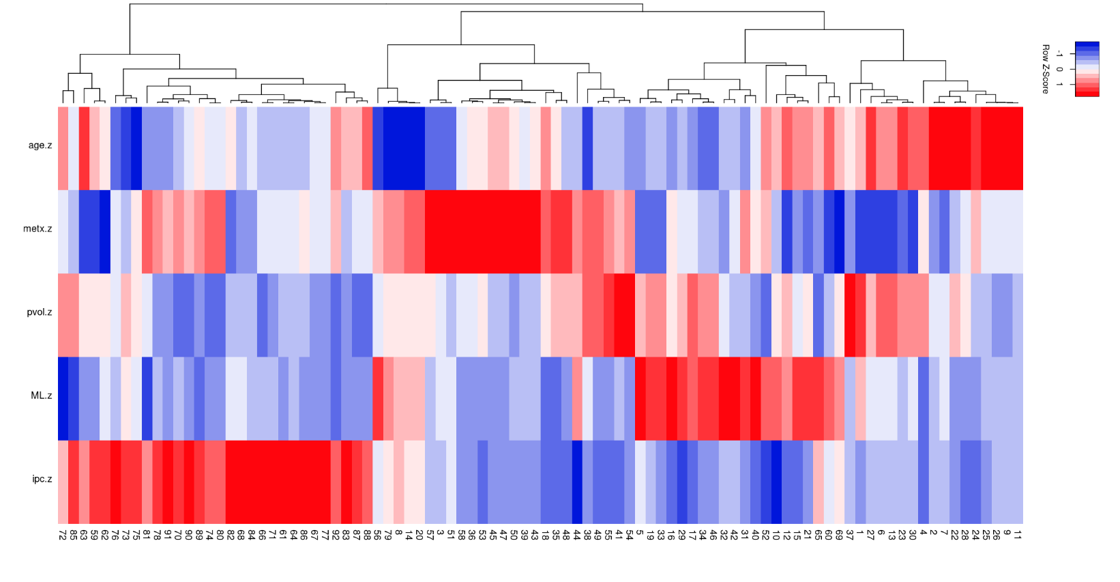
Introduction: Benign prostatic hypertrophy (BPH) is a heterogeneous disease that is affected by multiple variables including infection, genetics and inflammation. This study assessed whether hierarchical cluster analysis could better characterize BPH patients. Methods: Patients who underwent TURP or simple prostatectomy between January 2017 to August 2022 were reviewed. 92 patients who had CT imaging within 18m of surgery were selected. CT-based prostate volumes (PV) were calculated using the ellipsoid volume formula (L*W*H*(p/6)). Metabolic syndrome score (MetX) was calculated by adding normalized BMI score to the number of metabolic syndrome-related diseases present (i.e., hypertension, hyperlipidemia, type II diabetes mellitus each disease given a score of 1). Data were scaled using Z transformation. Hierarchical clustering was conducted with Heatmapper software using average linkage and Pearson distance measurement methodology. Results: Mean age of the cohort was 68 (SD=8.5), and 40% were African American. Hypertension, hyperlipidemia and type II diabetes mellitus were present in 73%, 58% and 32% of patients, respectively. Mean prostate volume was 84ml (SD= 56). Median lobes (ML) were present in 26%. Intraprostatic calcifications (IPCs) were present in 37%. Clustering revealed three clear groupings. Group 1 cnsisted of men with IPCs. These men had lower than average age, PV, and MetX scores. Group 2 consisted of men with either MLs or high PV without concomitant high MetX score. Two categories of men were included in Group 2 - younger than average men with MLs; and older than average men men with high PVs. Group 3 consisted of men with high MetX score. Age and PV was lower than average in this group. Conclusions: Cluster analysis identified three distinct clinical phenotypes of BPH. Classification of BPH subtypes may allow for improved diagnosis and therapy. Future studies will correlate molecular subtyping data and clinical outcomes data to further validate findings. SOURCE OF Funding: Medical College of Georgia