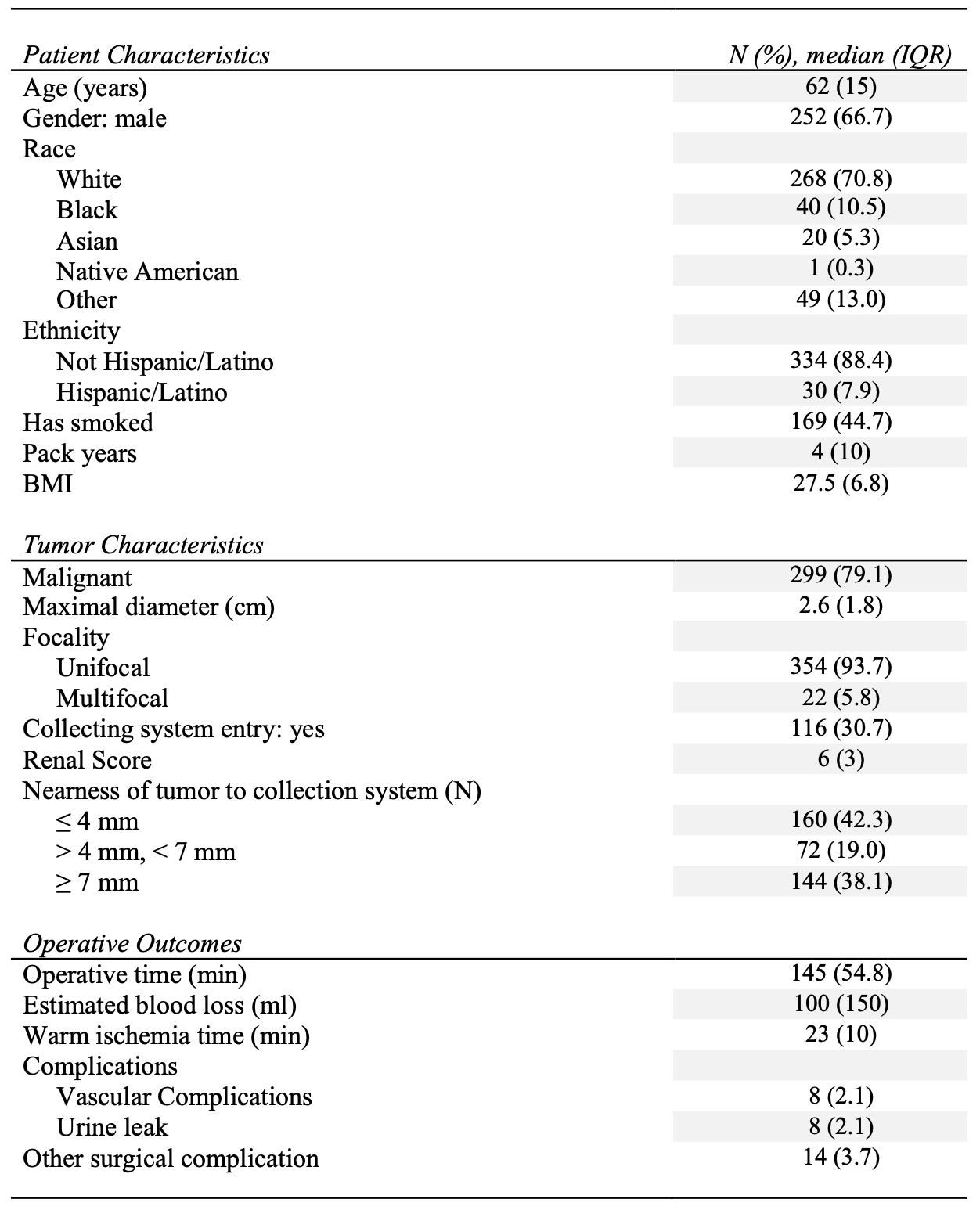
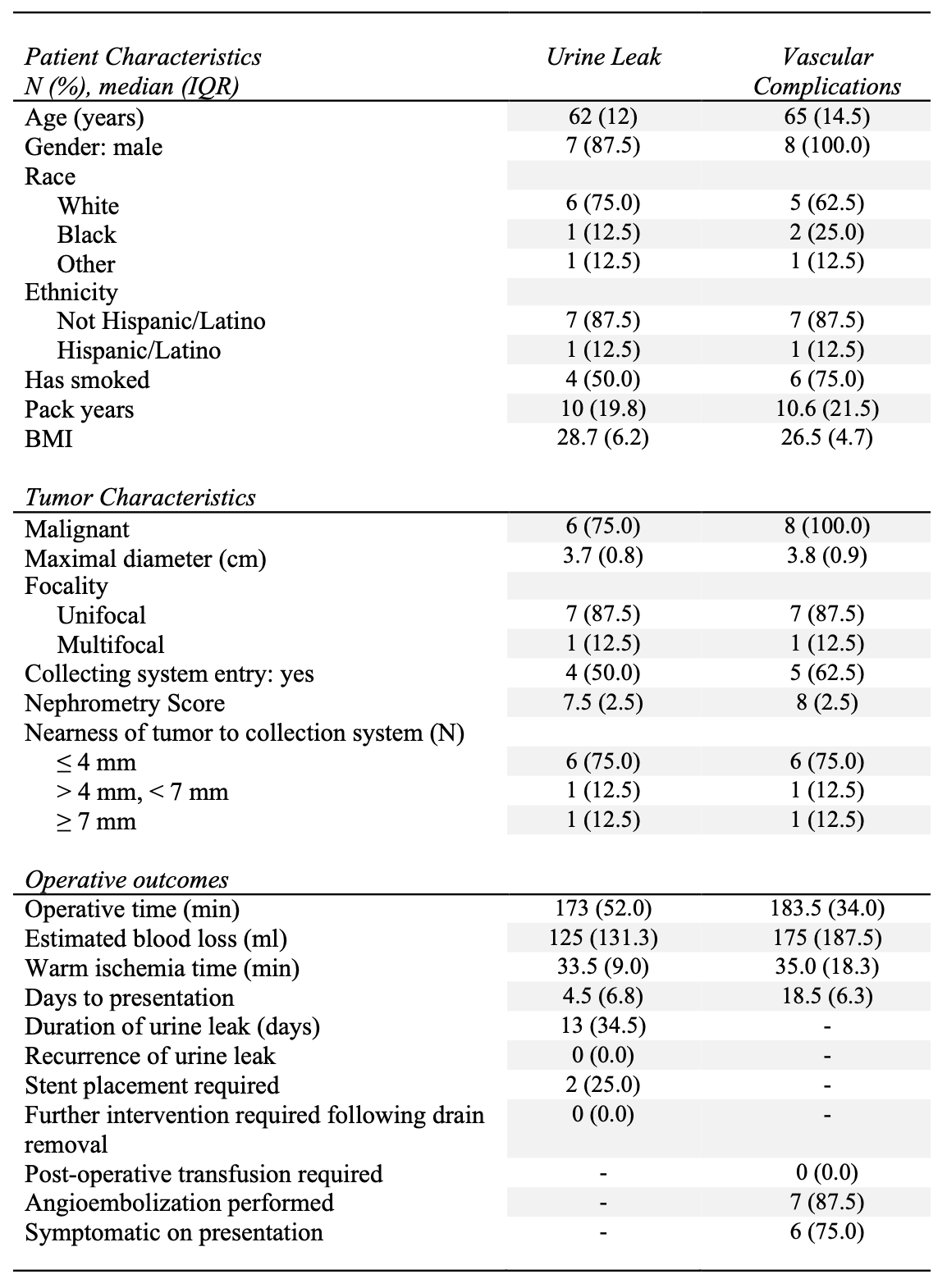
Introduction: Historically, the incidence of urine leak (UL) and vascular complications (VC) following robotic-assisted partial nephrectomy (RAPN) have been as high as 17%. To reduce the incidence of these complications, we implemented a standardized technique of renorrhaphy utilizing a running suture along the base of the tumor defect. We report the contemporary experience of RAPN complications from a single, high-volume center. Methods: We identified 378 patients from an IRB-approved Renal Tumor Database of 1908 cases who underwent RAPN from 1/2017 to 8/2022. The time frame was selected to reflect the utilization of the renorrhaphy technique. Results: VC occurred in 8 (2.1%) cases and UL occurred in 8 (2.1%), including 1 patient who had both complications (Table 1 and 2). The collecting system was entered in 5 (62.5%) VC cases and 4 (50%) UL cases. For VCs, the median nephrometry score and maximal tumor diameter was 8 (2.5) and 3.8 (0.9) cm, respectively. Patients with UL had a median nephrometry score of 7.5 (2.5) and a median maximal tumor diameter of 3.8 (0.8) cm. The majority of cases of VC and UL had tumors = 4 mm from the collecting system (both 6/8). VCs presented a median of 18.5 (6.3) days postoperatively and 6/8 were symptomatic. Angioembolization was performed in 7 (87.5%) VC cases and 0/8 required transfusion. Patients with UL presented after a median of 4.5 (6.8) days. The duration of UL was 13 (34.5) days with only 2/8 cases requiring intervention with a stent. Conclusions: Standardization of contemporary RAPN techniques has resulted in low rates of VC and UL. Complications occurred in patients with high nephrometry scores or tumors located close to the collecting system. Both UL and VC generally present early with symptoms and can be managed without kidney re-operation or removal of the kidney. SOURCE OF Funding: None