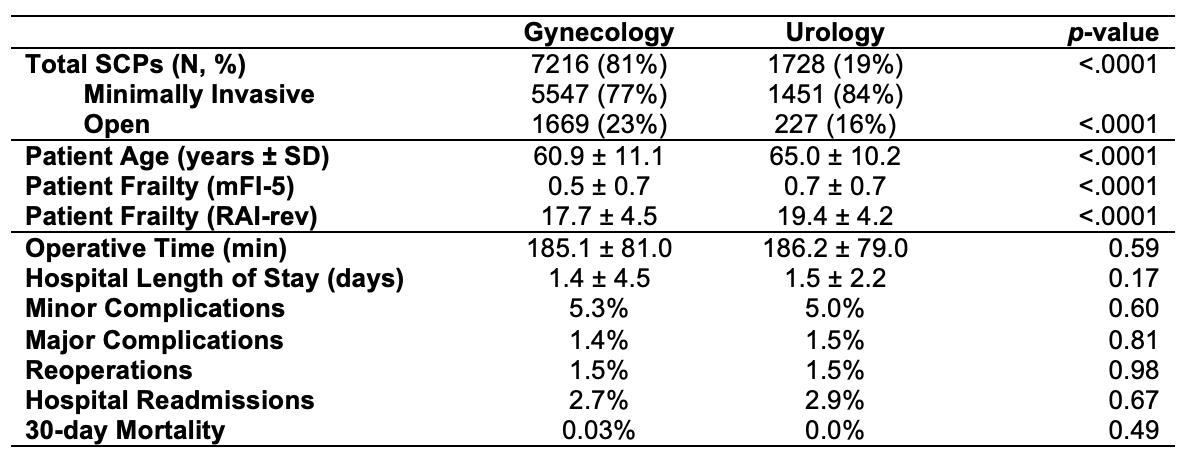
Introduction: Sacrocolpopexies (SCP) are performed by both urologists and gynecologists; however, the majority are performed by gynecologists. We aim to elucidate if there is a difference in patient demographics and surgical outcomes based on surgeon specialty. Methods: Open and minimally invasive SCPs performed between 2006-2020 were identified inthe American College of Surgeons National Surgical Quality Improvement Project (ACS-NSQIP) database using CPTs 57280 and 57425. Frailty was calculated using the NSQIP modified frailty index (mFI-5), a previously validated 5-item score including points for diabetes, functional status, chronic obstructive pulmonary disease, heart failure, and hypertension, and the revised surgical Risk Analysis Index (RAI-rev), a validated score which accounts for patient comorbidities, age, and functional status. Univariate analysis was performed using student’s t-test and Pearson’s chi-square to compare operative parameters, patient frailty and demographics, surgical outcomes, and mortality. Results: We identified 8,944 SCPs from 2006-2020. Gynecology performed 81% of cases, and urology performed 19% (p <.001). Urologists tended to perform more minimally invasive cases compared to gynecologists (84% vs 77%, p<.001). Between urologists and gynecologists, there were no significant differences in surgical outcomes, minor complications (surgical site infection, pneumonia, urinary tract infection, bleeding, or acute kidney injury), major complications (deep vein thrombosis, stroke, renal failure, myocardial infarction, pulmonary embolism, septic shock, deep wound infections, or cardiac arrest), 30-day reoperations, 30-day hospital readmissions, nor 30-day mortality. However, urology patients tended to be older (65 vs 61 years, p<.001) and frailer by mFI-5 (0.7 vs 0.5, p<.001, higher score indicating more frailty) and RAI-rev (19.4 vs 17.1, p<.001, higher score indicating more frailty). Conclusions: We found no difference in 30-day surgical outcomes for SCPs performed by urologists compared to gynecologists. However, urologists tend to perform more minimally invasive procedures and operate on older, more frail patients. This finding highlights differences in practice patterns between two specialties and warrants further studies. SOURCE OF Funding: n/a