Center for Evidence-Based and Translational Medicine, Zhongnan Hospital of Wuhan University
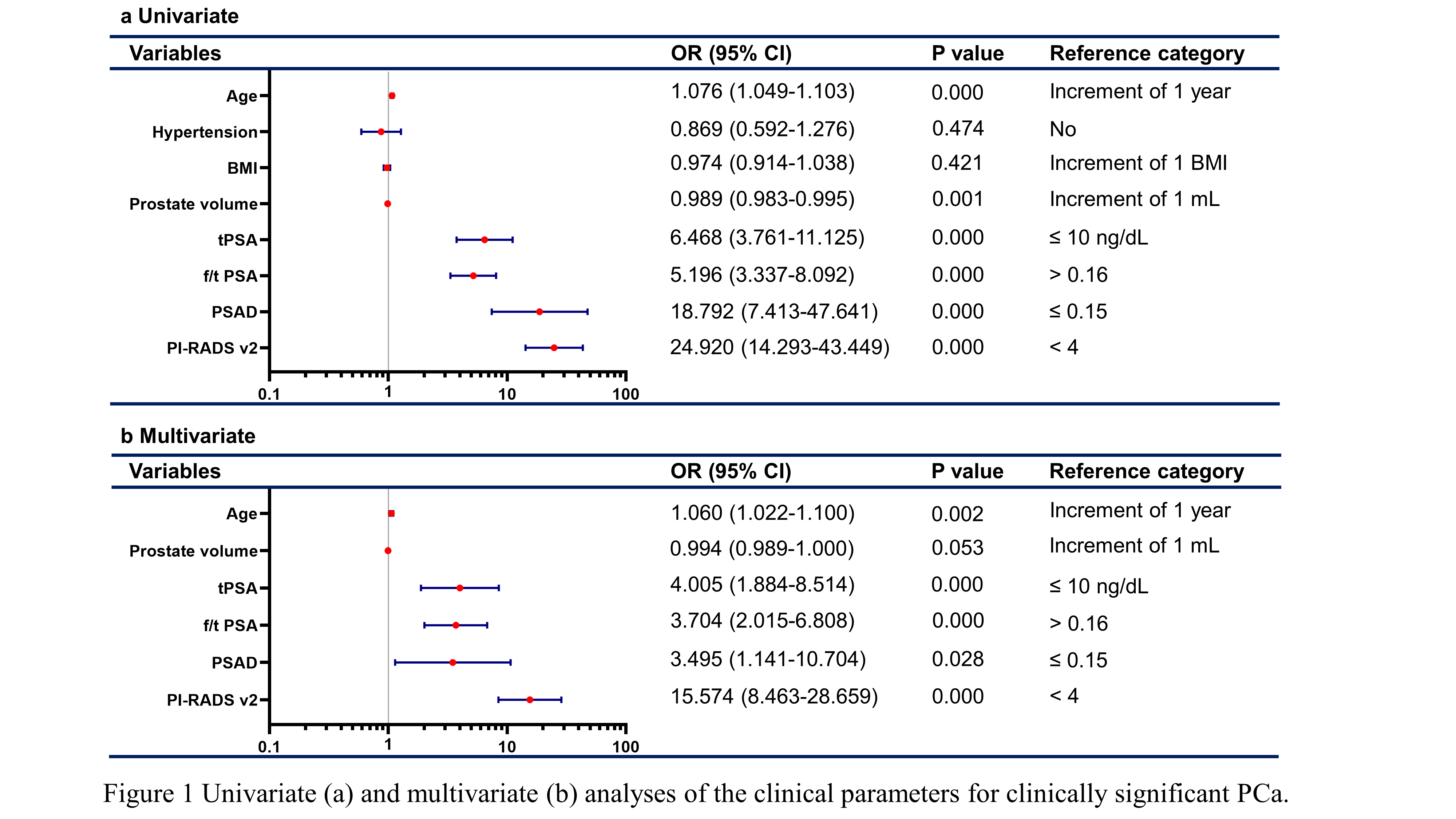
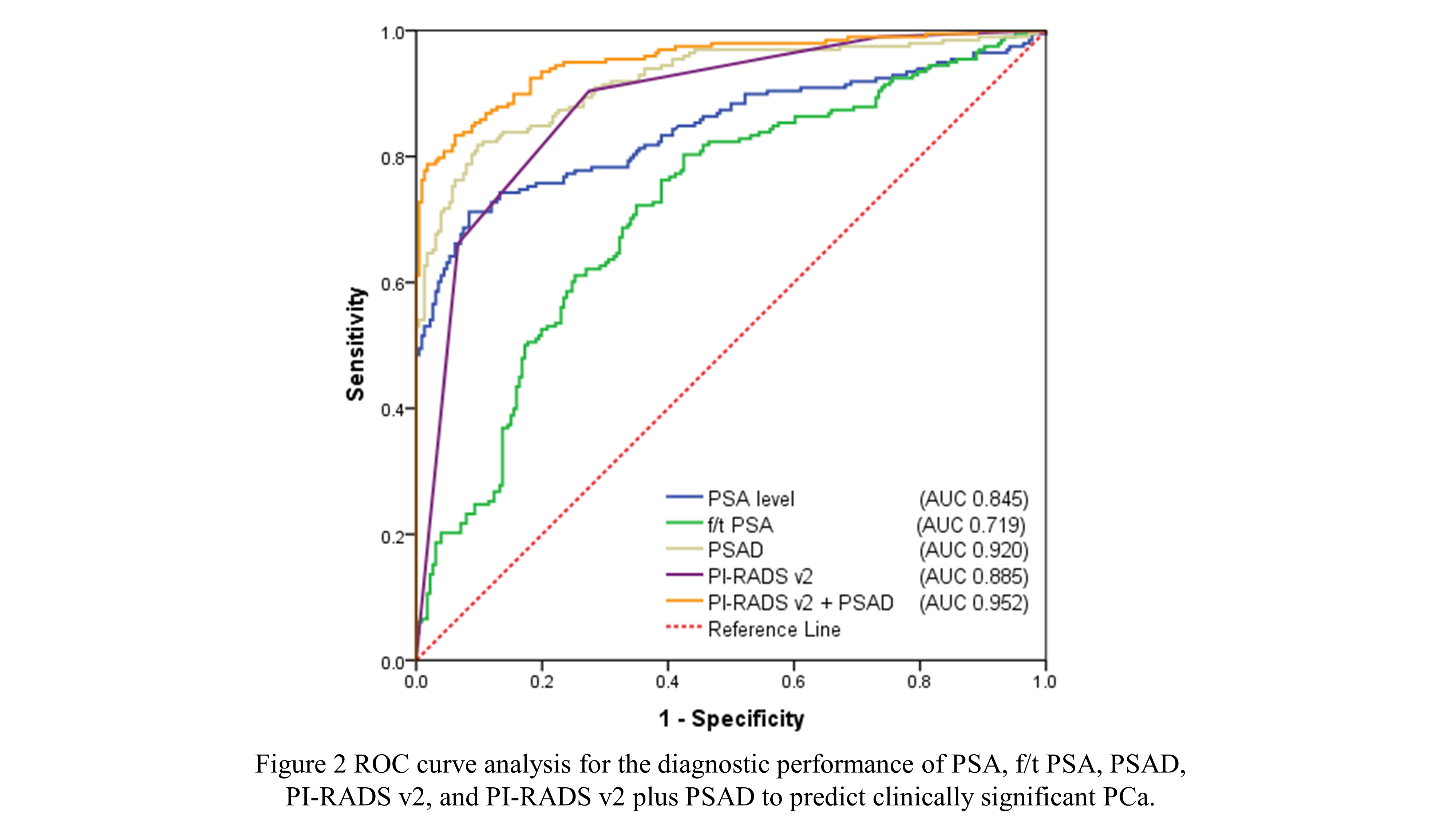
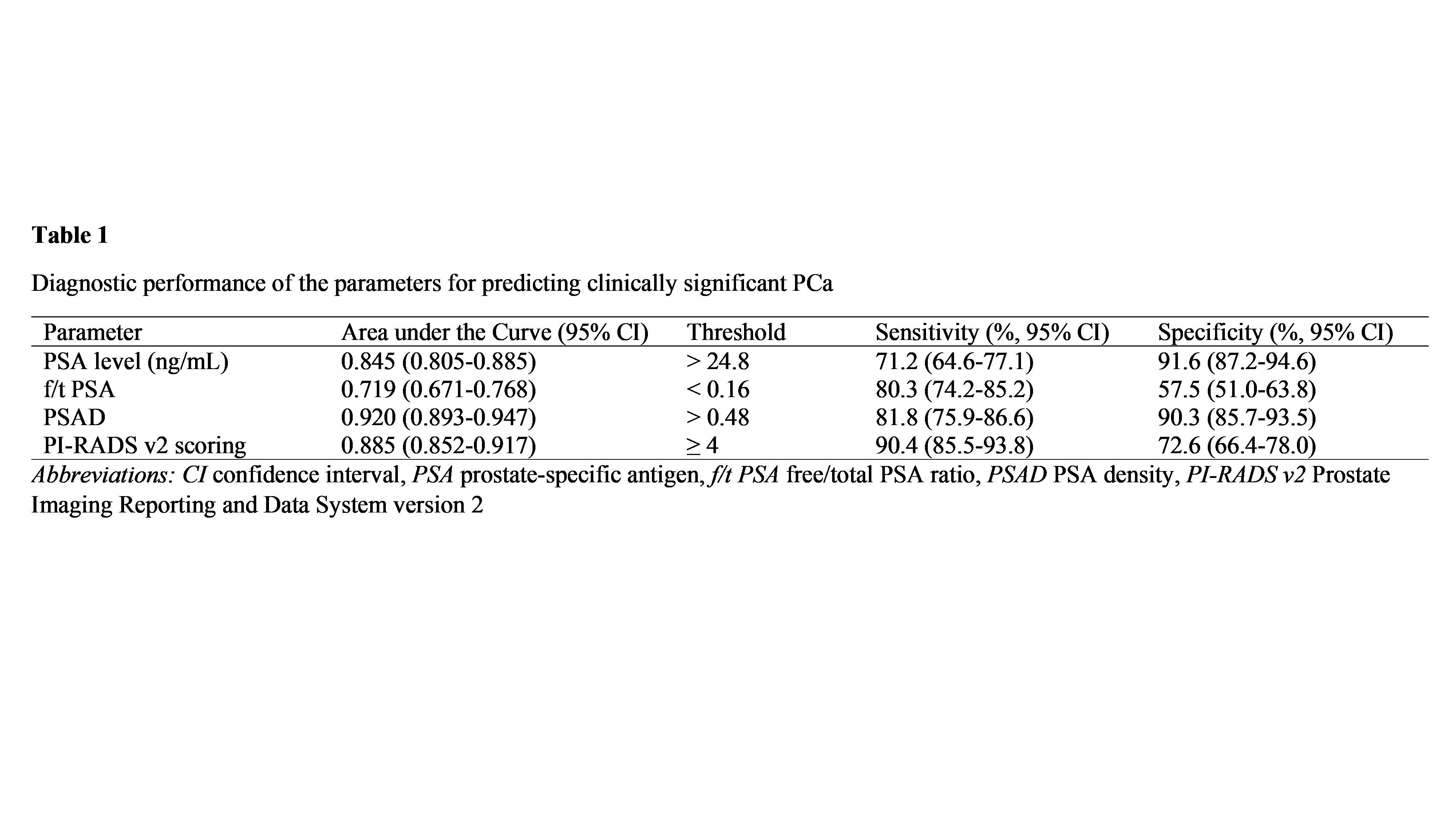
Introduction: The purpose of this study was to analyze the diagnostic performance of the Prostate Imaging Reporting and Data System version 2 (PI-RADS v2) in combination with clinical parameters in patients with suspected prostate cancer (PCa). Methods: A total of 424 men with suspicion of PCa were retrospectively analyzed, who underwent multiparametric magnetic resonance imaging (mpMRI) evaluated with PI-RADS v2 prior to transperineal ultrasound guided systematic biopsy. Clinical parameters including age, prostate volume, prostate specific antigen (PSA), free/total PSA ratio (f/t PSA), PSA density (PSAD) and PI-RADS v2 score were investigated. Logistic regression analyses were performed to identify predictors of clinically significant PCa defined as a Gleason score of 3 + 4 or greater. The prediction performance was compared with PSA level, f/t PSA, PSAD, PI-RADS v2 alone, and PI-RADS v2 plus PSAD using receiver operating characteristics (ROCs). Results: In total, 231 out of 424 cases (54.48%) were pathologically diagnosed as PCa. The percentage of clinically significant PCa was higher in patients with PI-RADS v2 score of 4 or greater compared to PI-RADS v2 score of less than 4 (90.86% vs. 55.88%, p < 0.001). Age, PSA level, f/t PSA, PSAD, and PI-RADS v2 were significant independent predictors of clinically significant PCa (Figure 1). The ROC area under the curve of PI-RADS v2 plus PSAD (0.952) was larger compared with PSA (0.845), f/t PSA (0.719), PSAD (0.920), and PI-RADS v2 alone (0.885) (Table 1, Figure 2). Conclusions: PI-RADS v2 in combination with PSAD may help detect clinically significant PCa and provide benefit in making the decision to biopsy men at suspicion of PCa. SOURCE OF Funding: None.