University of Florida College of Medicine - Jacksonville
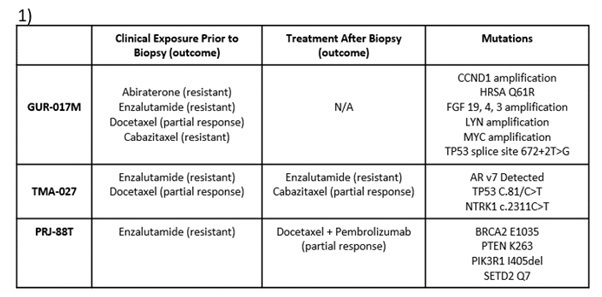
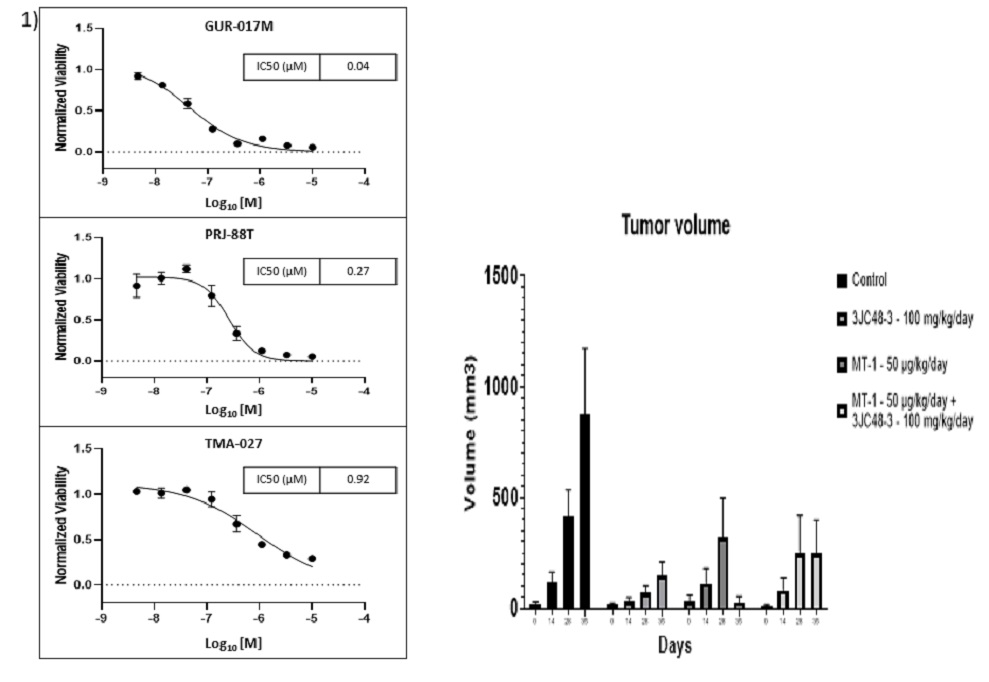
Introduction: Bromodomains (BD) are epigenetic readers of histone acetylation involved in chromatin remodeling and transcriptional regulation of protooncogene cellular myelocytomatosis (c-Myc) and other genes. Because c-Myc cannot be directly targeted by small molecular inhibitors due to disordered alpha helical structure, epigenetic targeting of c-Myc by BD inhibitors is an attractive therapeutic strategy for advanced prostate cancer (PC) associated with increased c-Myc upregulation . We studied the efficacy of MT1, a novel bivalent BD inhibitor that is 100-fold more potent than the first in class BD inhibitor JQ1, at inhibiting PC growth Methods: We tested the effect on viability by MT-1 on PC cell lines, 3D spheroids derived from clinically annotated drug resistant patient derived xenografts (PDX), mice PDX models and corroborated the molecular mechanism of MT1 down regulation of Myc leading to downstream Myc-dependent up regulation of Protein Kinase D1 (PrKD) substrate phosphorylation by western blot. Results: MT-1 inhibited growth of PC in castration sensitive (LNCaP) and resistant PC cells (PC-3). MT-1 treatment upregulated PrKD expression and phosphorylation of known PrKD substrates: threonine 120 (Thr-120) residues in beta-catenin and the serine 216 in Cell Division Cycle 25 (CDC25C) in PC-3 cells. Moreover, MT-1 was effective in inhibition of 3D spheroids growth at IC50 between 0.27-0.92µM in Abiraterone, Enzalutamide, Docetaxel, Cabazitaxel metastatic castrate resistant PCa patient-derived tumor 3D spheroids. Additionally, MT1 was effective in inhibiting the tumor growth in PDX mice model. A combined intra-peritoneal administration of MT-1 with another c-Myc inhibitor (3JC48-3), an obligate c-Myc and MYC-associated protein X (MAX) heterodimerization inhibitor, increased the efficacy of inhibiting the PDX growth in mice. Conclusions: This study provides strong pre-clinical in vitro and in vivo evidence for advancing MT-1 as a novel c-Myc targeting drug in PC. The MT-1 drug development will likely be highly impactful as c-Myc is dysregulated in three fourths of men with advanced PC. SOURCE OF Funding: none

.jpg "Allison Feibus, MD,MS photo")