MP18-02: "Torn between microsurgery and embolization -- please help": Application of natural language processing to understand adolescents' perceptions on an anonymous varicocele internet forum
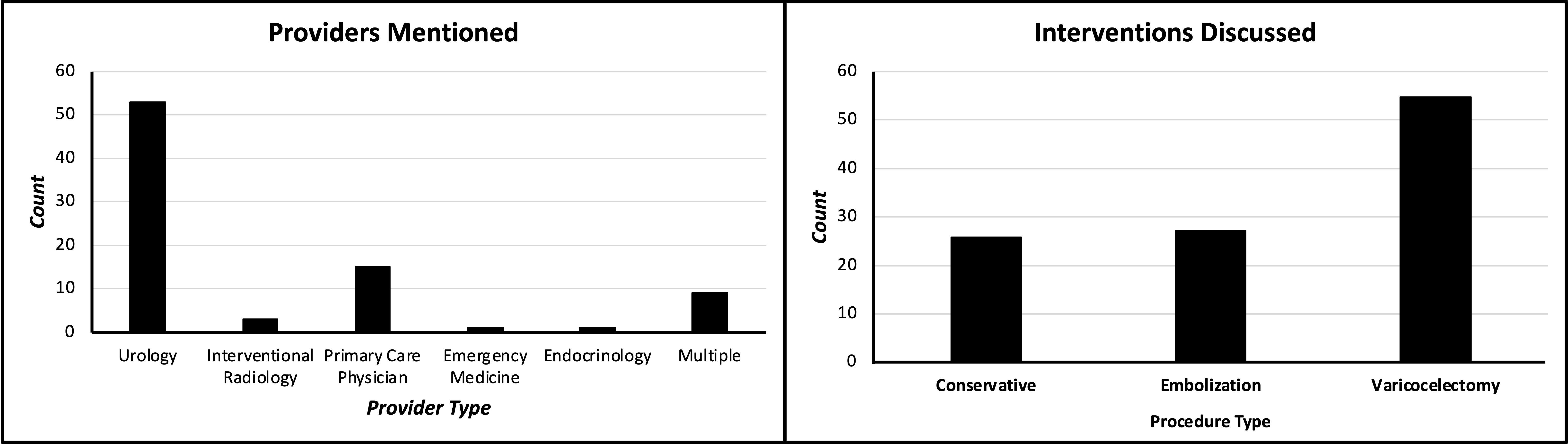
Introduction: Varicoceles affect up to 30% of postpubertal adolescent males. Studying this population remains difficult due to this topic’s sensitive nature. Using the popularity of social media in this cohort & natural language processing (NLP) techniques, our aim was to identify perceptions of adolescent males on an internet varicocele forum to inform how physicians may better evaluate & counsel this pediatric population. Methods: We extracted posts from the Reddit community r/Varicocele (5100 members) from founding to 6/2022 with criteria of discussant age =21 & word count >20. We employed qualitative thematic analysis using validated constant comparative method & an NLP technique called the meaning extraction method with principal component analysis (MEM/PCA) to identify discussion themes. We then interrogated 150 random posts to further characterize content based on NLP-identified themes & calculated Kaiser-Meyer-Olkin (KMO) statistic & Bartlett’s test. Results: 1103 posts met eligibility criteria. MEM/PCA & qualitative thematic analysis separately revealed key themes: varicocele overview (27%), management (19%), post-procedural experience (19%), seeking community (17%) & second opinion after visiting a physician (18%). KMO>0.60 & Bartlett’s test <0.01 indicated appropriateness for MEM/PCA. Mean age was 17.5 y/o (range 14-21) trending toward higher grade (89% were 2+), left-sided varicoceles. Figure describes provider & procedure type most commented on by discussants. 60% of discussants described symptomatic varicoceles (90/150) with 69% (62/90) reporting pain, 27% (24/90) reporting hypogonadism symptoms & 50% (45/90) reporting aesthetic as the primary concern. Conclusions: We applied a mixed methods approach to identify uncensored concerns of adolescents with varicoceles. Adolescents often turned to social media as an adjunct to doctors’ visits & to seek peer support. This population prioritized symptom control with emphasis on pain, aesthetics, sexual function & hypogonadism. This data highlights how adolescents may approach varicoceles uniquely, informing urologists how to better interface with this pediatric population. Limitations include self-reported, non-standardized data & skew toward higher grade varicocele. SOURCE OF Funding: NA