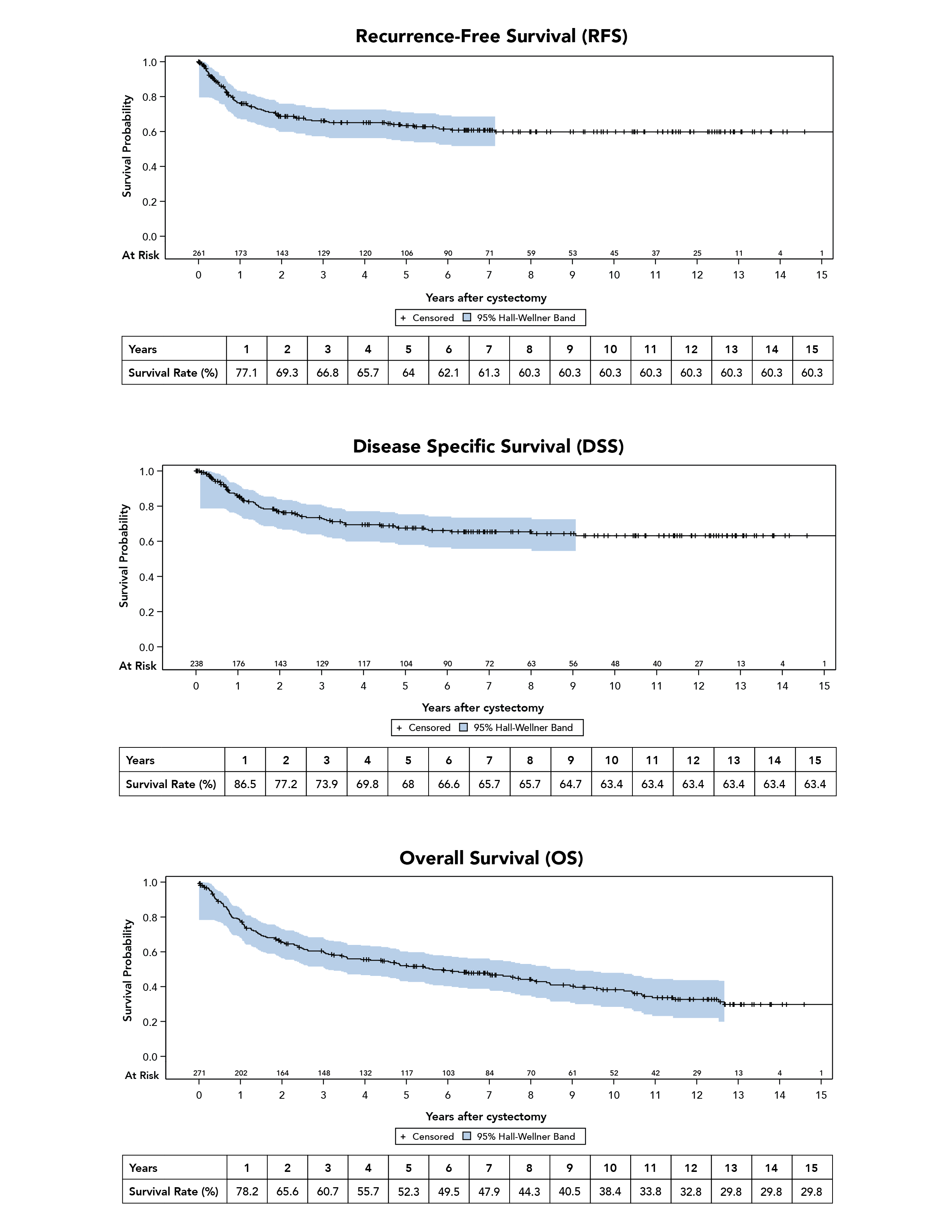
Introduction: We aimed to report the long-term follow-up of bladder cancer patients who underwent robot-assisted radical cystectomy (RARC) 15 years ago or more utilizing the International Radical Cystectomy Consortium (IRCC) database. Methods: Patients who underwent RARC before 2007 were identified. Kaplan-Meier method was used to depict recurrence-free (RFS), disease-specific (DSS) and overall survival (OS). Multivariate COX regression model was used to identify the variables associated with RFS, DSS and OS. Results: 271 patients were identified. Median follow-up time is 10 year (IQR 6-13) years. Twenty-five patients (10%) received neoadjuvant chemotherapy, 75 (28%) received neobladder, 117 (43%) had pT3/T4 and 63 (23%) had pN+ disease. RFS, DSS and OS were 60%, 63% and 30% at 15 years, respectively (Figure). Multivariate analysis showed that pT stage and pN+ remain the determinants of survival outcomes (Table). Conclusions: Locally advanced disease remains the main determinant of survival after RARC. SOURCE OF Funding: Vattikuti Foundation