Session: MP06: Health Services Research: Quality Improvement & Patient Safety I
MP06-08: Assessing Baseline Knowledge and Usage Patterns of Gender-Affirming Electronic Health Record Modules within a Urology Division at a Single Tertiary Care Institution
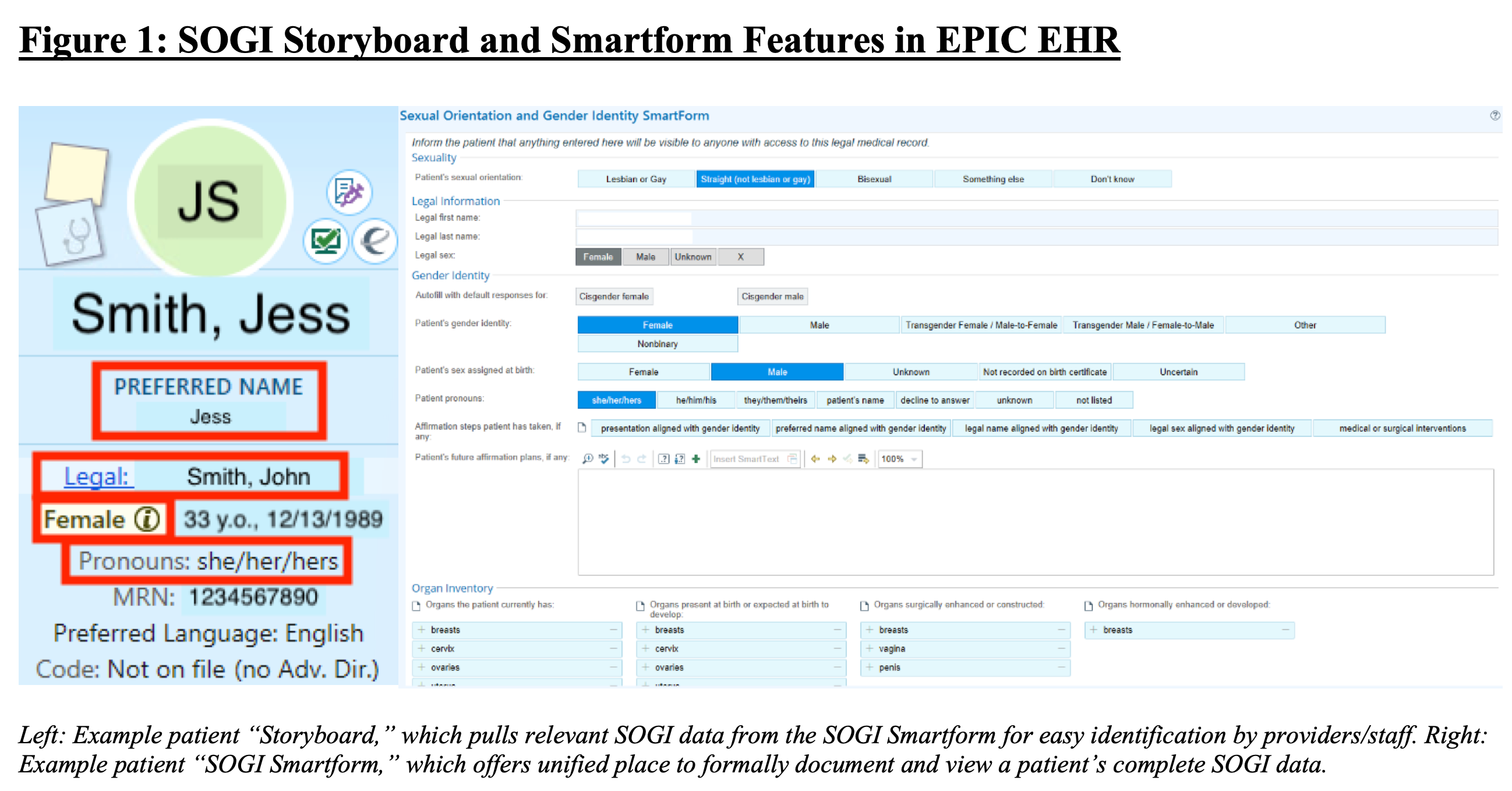
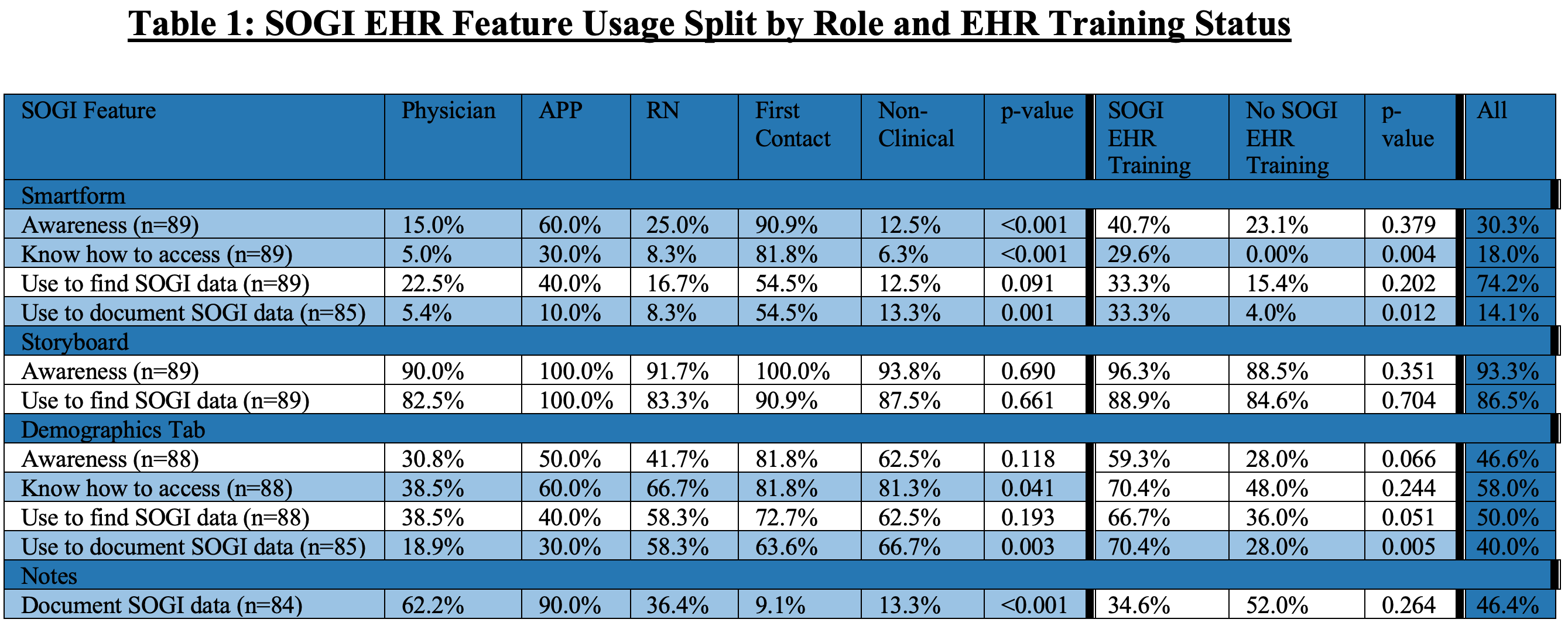
Introduction: No studies evaluate how gender-affirming electronic health record (EHR) modules (which enable seamless integration of patient sexual orientation and gender identity [SOGI] data) are being used by providers/staff within a urology practice. Methods: All 120 patient-facing providers/staff with EHR access within a urology division at a tertiary care center were offered a 39-question Qualtrics-based survey, which assessed respondents’ cultural competency, baseline knowledge of SOGI EHR modules, and SOGI module usage patterns. Cultural competency was assessed using the LGBT-Development of Clinical Skills Scale instrument. Chi-squared tests and linear regression models were used to determine differences in SOGI module use between roles and drivers of cultural competency. Results: 96 providers completed the survey (response rate, 89%). Only 25% of respondents received training on using SOGI data in the EHR. Respondents possessed high levels of LGBTQ attitudinal awareness (M=6.38/7) but low clinical preparedness (M=4.32/7), largely due to perceived inadequate training to work with LGBT patients. Major drivers of clinical preparedness were respondent role and number of LGBT patients seen in the past year (R2:30.8%, p=0.02) . While respondents uniformly report ease finding SOGI data, all providers/staff (particularly physicians) rarely use formal SOGI documentation tools. Few respondents partook in SOGI EHR training; those that did were significantly more likely to use formal SOGI documentation tools. Conclusions: This study revealed that providers/staff possess high general LGBTQ cultural competency and ability to find relevant SOGI data in the EHR, while also highlighting limited training in gender-affirming EHR tools and low usage of formal documentation tools. This framework could be a roadmap for evaluating gender-affirming EHR use by urology practices as such features increase in popularity. SOURCE OF Funding: This research was funded through a FOCUS Student Fellowship in Women’s Health supported by the Bertha Dagan Berman Award.