MP32-01: Oncological outcomes in patients with metastatic urothelial carcinoma after discontinuing pembrolizumab as a second-line treatment: A retrospective multicenter real-world cohort study
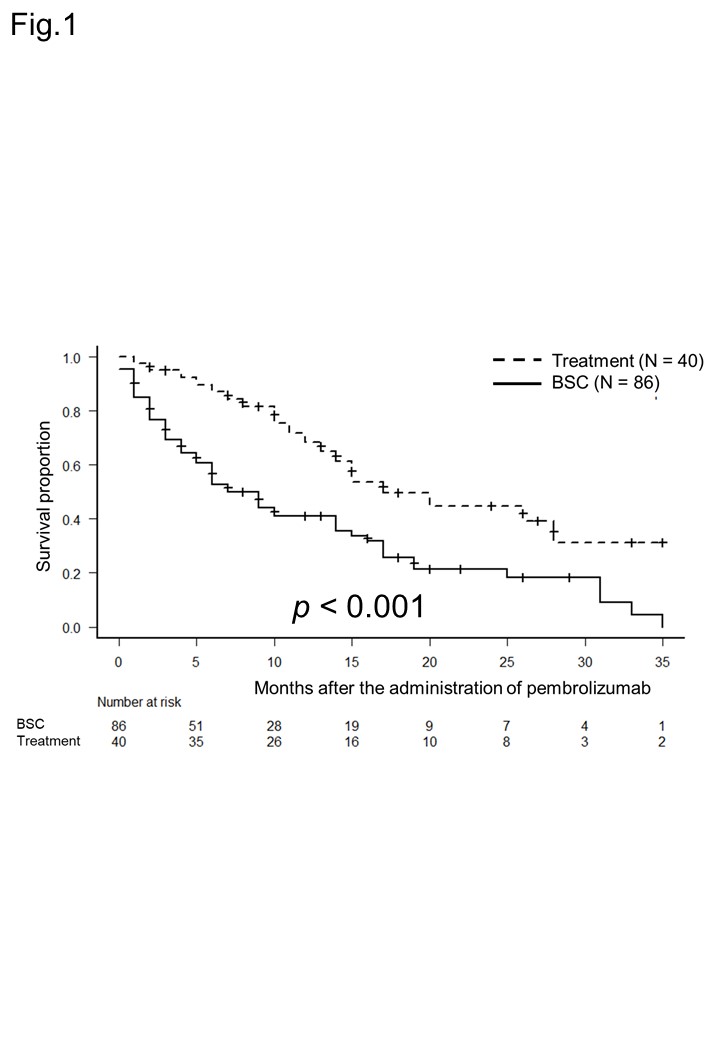
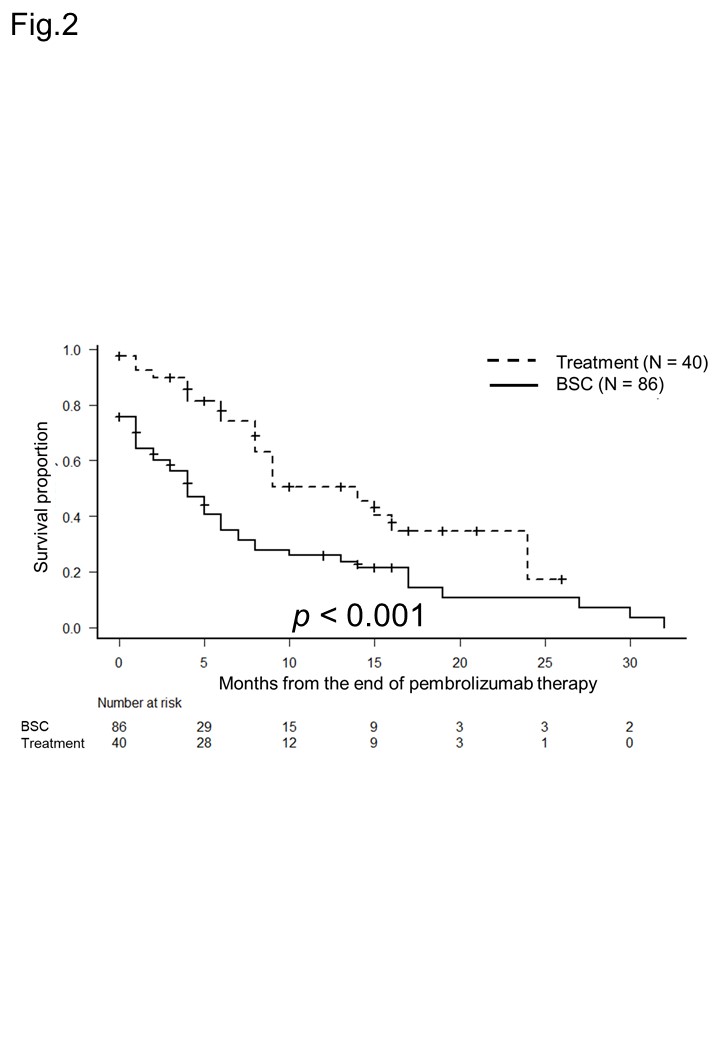
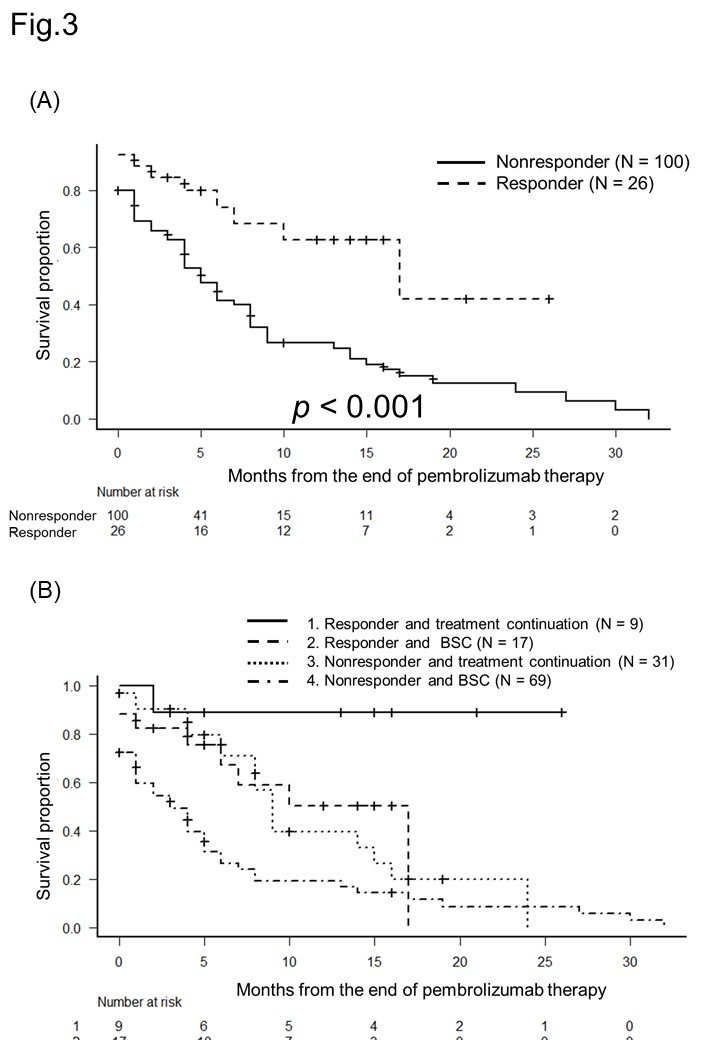
Introduction: The treatment options are currently limited, and the oncological outcomes remain unclear for patients with metastatic urothelial carcinoma (mUC) with or without third-line systemic therapy. We aimed to evaluate the oncological outcomes in real-world daily clinical practice after platinum-based chemotherapy followed by pembrolizumab for mUC. Methods: This retrospective, multicenter cohort study included patients with mUC who received second-line pembrolizumab in Japan. The patients were divided into the treatment group (those who received third-line treatment) and BSC group (those who did not receive other treatments). The primary endpoint of this study was to evaluate the oncological outcomes. Of 126 patients enrolled in this study, 40 received third-line therapy. Results: The median follow-up period was 8.0 months. The median overall survival (OS) times were nine months in the BSC group and 17 months in the treatment group (p < 0.001). The median progression-free survival (PFS) times were four months in the BSC group and 14 months in the treatment group (p < 0.001). In the multivariate analysis, performance status and liver metastasis were significantly associated with OS. Conclusions: Third-line therapy may have clinical potential advantages to improve the oncological outcomes in patients with mUC.Further prospective studies and long-term evaluations in large patient populations are required to identify the useful predictive markers for determining patients with mUC who should continue pembrolizumab treatment for a relatively long term. SOURCE OF Funding: None