University of Florida College of Medicine - Jacksonville
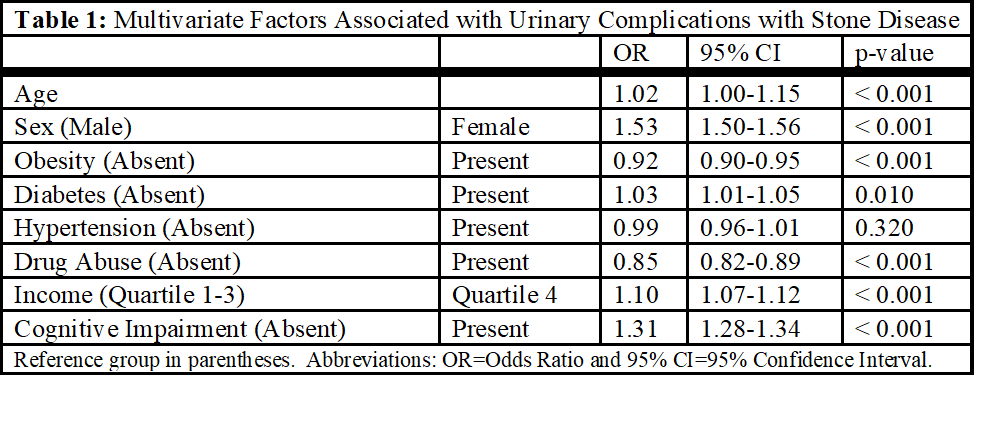
Introduction: Mental illness and brain disorders such as dementia are commonly encountered in patients with cognitive impairment in urology. In this cohort study, we assessed the prevalence and outcomes of inpatient admissions for stone disease in patients with cognitive impairment (CI). Methods: Using the National Inpatient Sample Database, we identified adults (>18 years) diagnosed with stone disease between 2015 and 2019. The study cohort was dichotomized based on the presence or absence of CI. The CI cohort was further divided based on ICD-10 codes into 3 major categories: depression, psychosis, and dementia. Urinary complications were defined as either UTI, acute renal failure, or systemic sepsis. Hospital course and complications were compared between groups. We evaluated independent factors associated with urinary complications in the population using multivariable logistic regression. Analyses were conducted using SPSS version 28.0 and R version 4.1.0. Results: We identified 223,072 patients in our study cohort. Patients with CI were significantly older (68 vs. 62 years, p<0.001), and more likely to be female (55.7% vs. 47.4%), have government-issued insurance (77.5% vs. 64.4%), and be discharged to a nursing facility (31.7% vs. 14.2%). Patients with CI had significantly higher rates of UTIs (29.7% vs. 21.5%, p <0.001), systemic sepsis (4.3% vs. 3.8%, p <0.001), and acute renal failure ((0.9% vs. 0.7%, p=0.008). On regression models, patients with female sex, low income, and CI were all independently more likely to experience a urinary complication, with significant differences (p < 0.001) (Table1). Conclusions: Patients with CI and stone disease are significantly more likely to experience urinary complications. Health care inequities among CI patients should be a topic of further study. SOURCE OF Funding: None

.jpg "Allison Feibus, MD,MS photo")