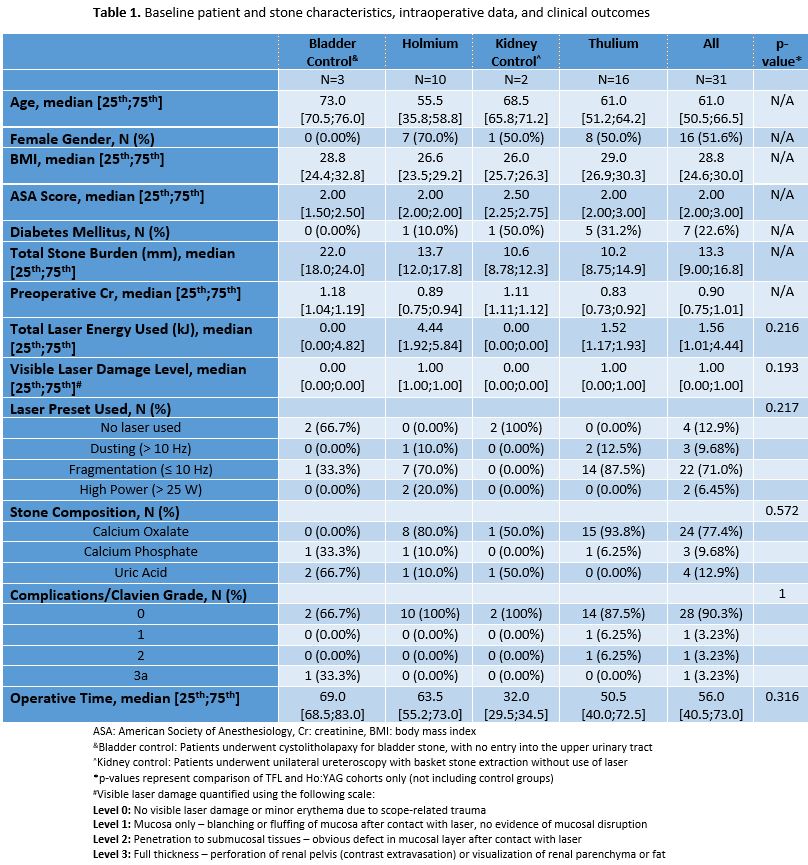
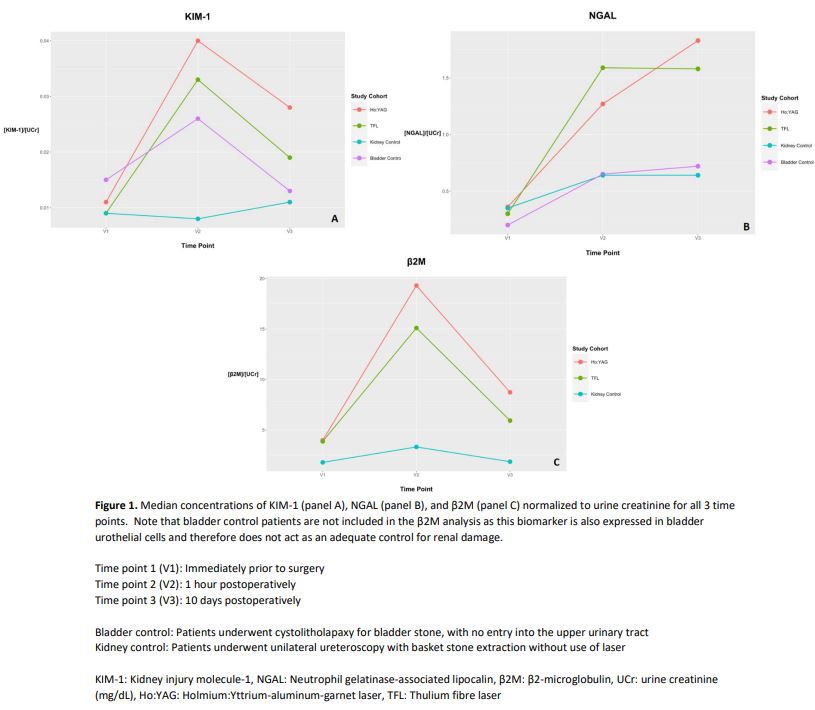
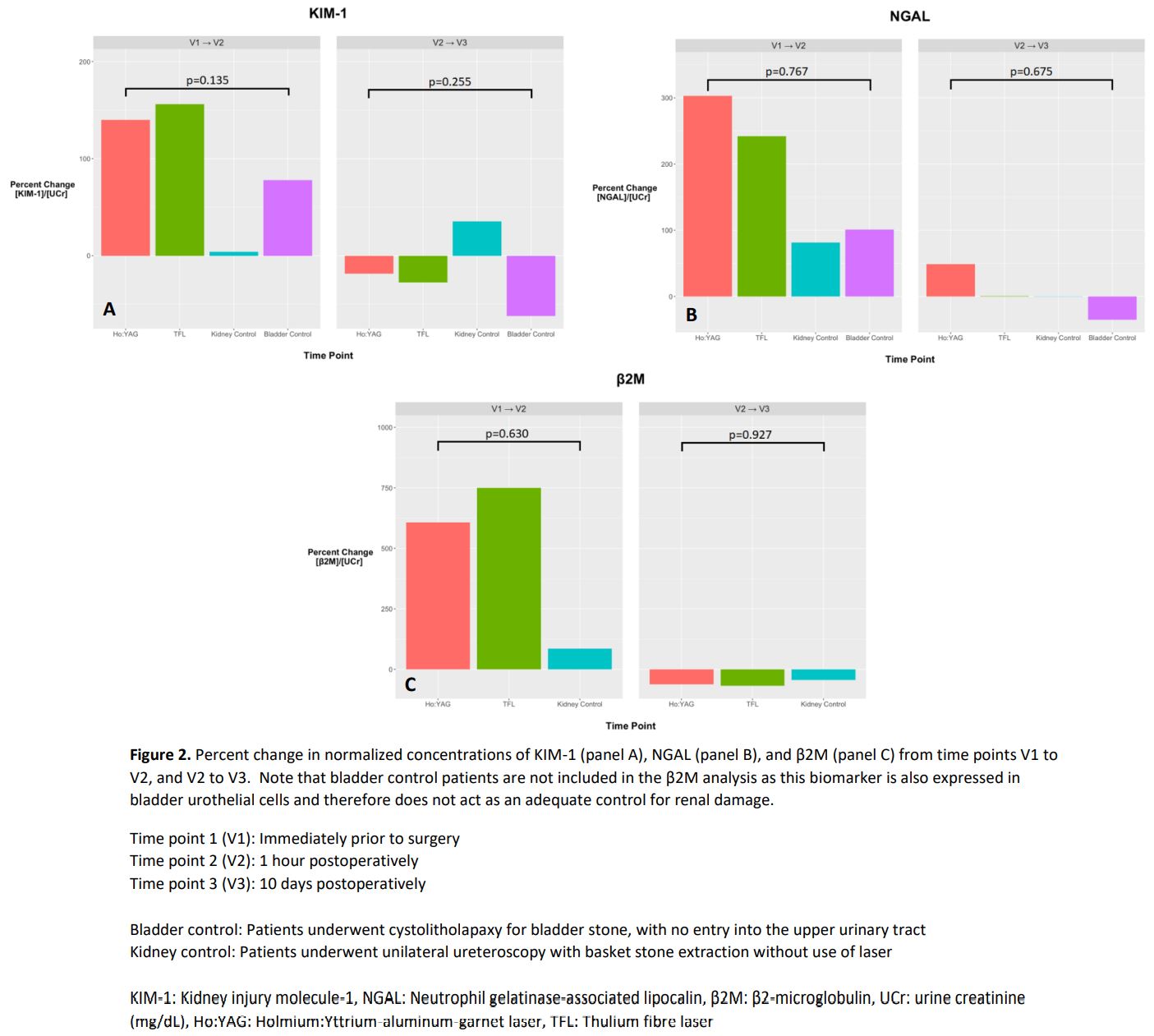
Introduction: The high power Holmium (Ho:YAG) and thulium fibre lasers (TFL) generate enough heat in surrounding fluid to cause renal cellular damage, yet the degree to which this occurs has yet to be quantified. We aim to establish a relative safety profile of the TFL and Ho:YAG by quantifying the degree of renal damage during ureteroscopic laser lithotripsy (URSLL). Methods: This is an ongoing randomized controlled trial of patients undergoing URSLL with unilateral non-obstructing renal stones. Patients are randomized to undergo URSLL with either the TFL or Ho:YAG laser. Each patient’s urine is collected immediately pre-op (V1), 1 hour post-op (V2), and 10 days post-op (POD#10, V3). Samples are analyzed by enzyme-linked immunosorbent assay (ELISA) for the following biomarkers: Kidney injury molecule-1 (KIM-1), Neutrophil gelatinase-associated lipocalin (NGAL), and ß2-microglobulin (ß2M), then normalized to urine creatinine. Primary outcome is degree of renal injury based on urinary biomarker changes. Results: To date 26 patients (16 TFL, 10 Ho:YAG) have been included. Baseline patient and stone characteristics were similar. Relative to controls, both lasers caused pronounced rises in biomarkers in the immediate postoperative period with a trend back towards baseline by postoperative day 10 (Fig. 1). However, the Ho:YAG laser caused a persistent rise in NGAL at 10 days. In terms of percent change from baseline, there were no significant differences between cohorts for any of the biomarkers (Fig. 2). Conclusions: Our pilot analysis suggests that there is notable laser-induced renal parenchymal damage for both TFL and Ho:YAG. The renal damage safety profile appears similar for both lasers. SOURCE OF Funding: This work was funded in part by a grant from the New York Academy of Medicine.