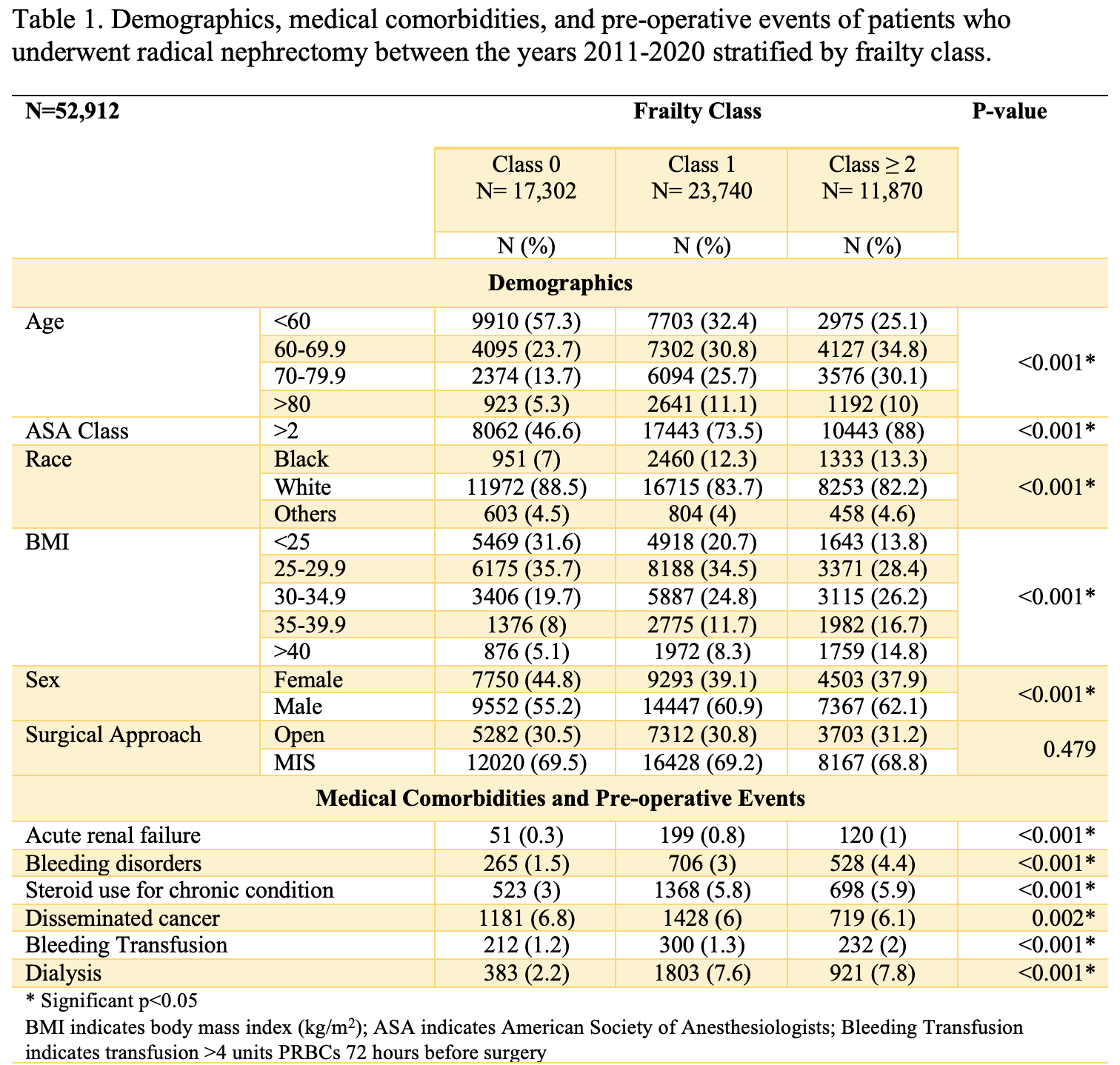
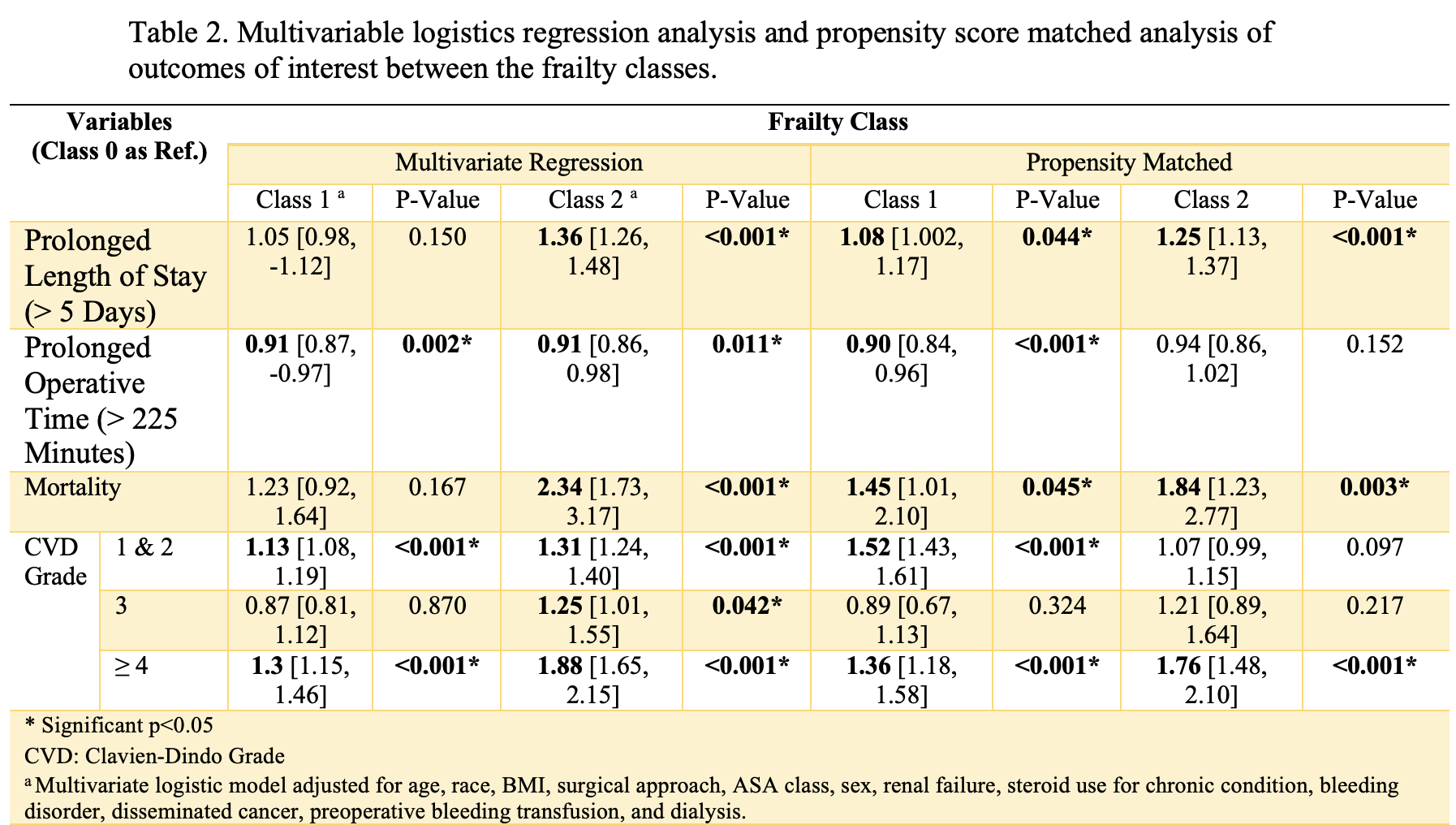
Introduction: The 5-item frailty index has been adopted as a preoperative evaluation method and has gained importance in predicting surgical outcomes. Hence, we aimed at assessing the ability of the 5-item frailty index score to predict 30-day morbidity and mortality post-radical nephrectomy (RN). Methods: We used the American College of Surgeons – National Surgical Quality Improvement Program (ACS-NSQIP) database to select patients who underwent RN from 2011 to 2020. To calculate the 5-item frailty score, a point was assigned for each of the following comorbidities: chronic obstructive pulmonary disease or pneumonia, congestive heart failure, dependent functional status, hypertension, and diabetes. Patients were then divided into 3 frailty groups 0,1, and = 2. Patient demographics, medical comorbidities, prolonged length of stay and operative time, mortality, and morbidity using the Clavien-Dindo (CVD) classification were compared between different groups. Multivariable logistic regression models and propensity score matching were then performed as a sensitivity analysis to control for possible confounders. Results: The cohort consisted of 52,912 patients. Frailty classes consisted of 17,302 (32.7%) class 0, 23,740 (44.9%) class 1, and 11,870 (22.4%) class = 2 patients. Patients with higher frailty class were more likely to be older, with higher ASA class, higher BMI, and comorbidities (p < 0.001). After multivariable analysis and propensity score matching, patients with frailty classes 1 and = 2 were more likely to have prolonged length of stay (OR=1.08, 1.25, respectively), mortality (OR=1.45, 1.84, respectively), CVD 1&2 (OR=1.52 for frailty class 1) and CVD = 4 (OR=1.36, 1.76, respectively) as compared to frailty class 0 (p < 0.001). Conclusions: The 5-item frailty score was found to be an independent predictor of prolonged length of stay, morbidity, and mortality after RN. This tool could help in patient counseling and risk assessment before surgery. SOURCE OF Funding: None