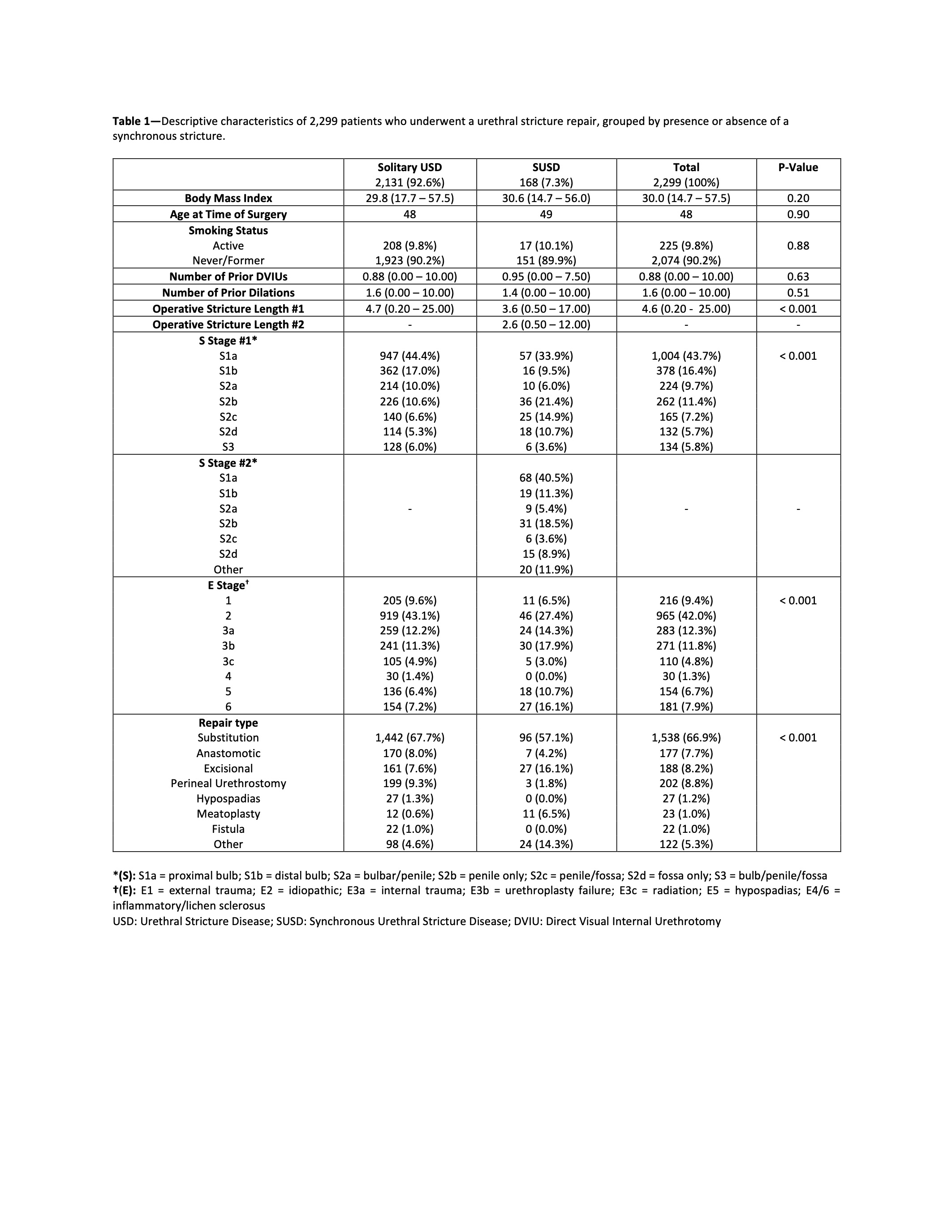
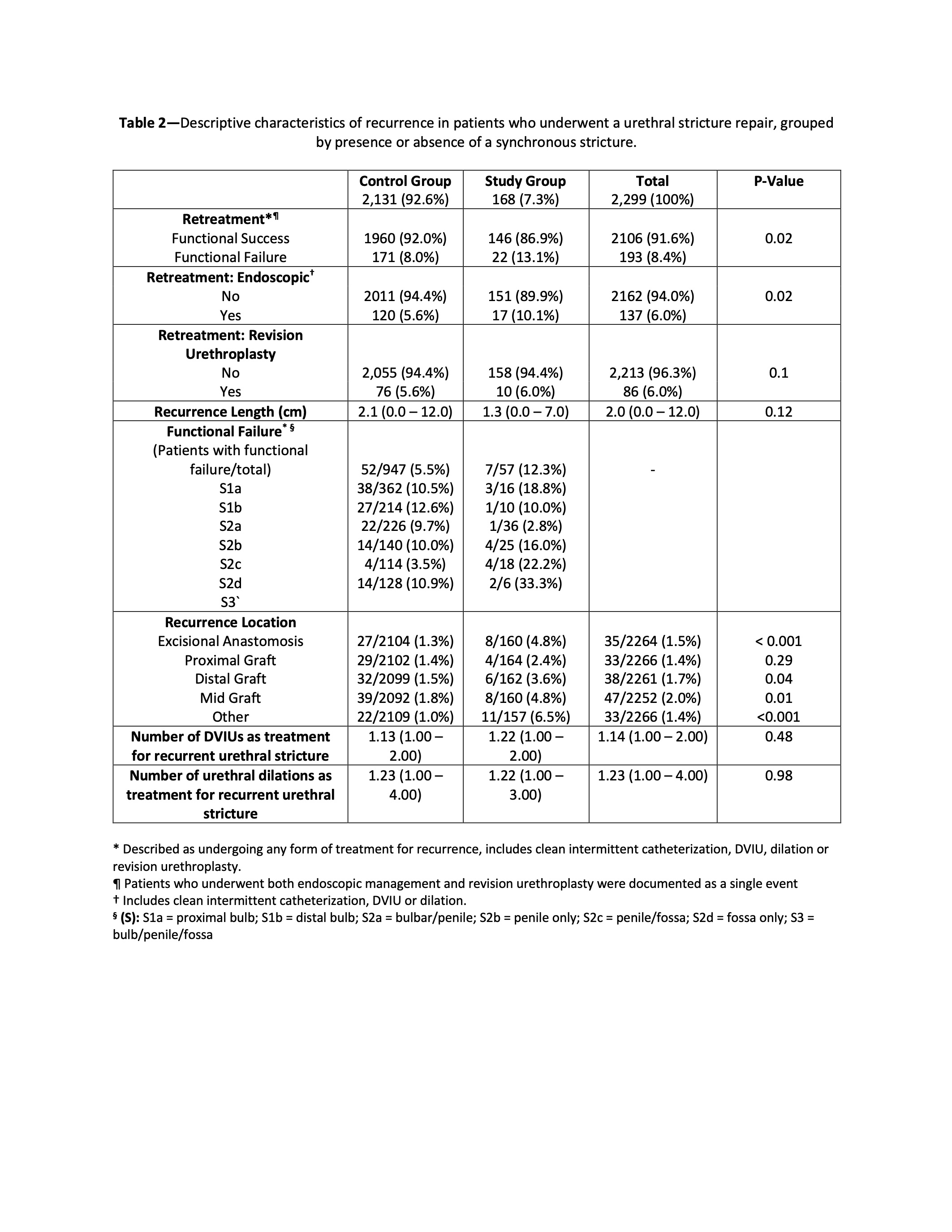
Introduction: The incidence of male anterior urethral stricture disease (USD) has been well described. Less is known regarding the management strategies and outcomes in patients with synchronous USD (SUSD). SUSD is the presence of two distinct urethral strictures separated by a healthy intervening urethral segment. This study sought to assess the functional outcomes following repair of SUSD. Methods: Patients with documented SUSD within a multi-institutional database were retrospectively assessed and compared to patients with solitary USD. Patients who underwent single-stage or staged anterior urethroplasty, including meatoplasty and perineal urethrostomy were included. Patients with a posterior urethral stricture or bladder neck involvement were excluded. Stricture classification according to the LSE (Length, Urethral Segment, Etiology) was performed. Stricture recurrence between cohorts was assessed, defined as undergoing repeat treatment. Logistic regression was performed to assess predictors of failure. Results: 168 of the 2,299 patients had SUSD (7.3%). Patients with SUSD had a significantly shorter mean primary stricture length than those with solitary USD, 3.6 cm vs. 4.7 cm, p <0.001. Mean stricture length for the secondary stricture was 2.6 cm. Patients with SUSD had a larger proportion of strictures classified as S2b, S2c and S2d than in those with solitary USD (p < 0.001). Patients with SUSD were more likely to be due to Lichen Sclerosus (LS) or hypospadias (Table 1). On univariate analysis, SUSD had a higher stricture retreatment rate, 8.0% vs. 13.1%, p = 0.02. On multivariable analysis, SUSD was not associated with higher retreatment rates, OR 1.37 (0.79 – 2.28), p = 0.2. Patients with SUSD and stage S1a, S1b, S2c, S2d and S3 stricture location demonstrated higher rates of stricture recurrence than controls, (Table 2). Conclusions: Patients with SUSD have higher rates of stricture recurrence following urethroplasty compared to patients with solitary USD on univariate analysis. Patients with LS and hypospadias are more likely to have SUSD. SOURCE OF Funding: None