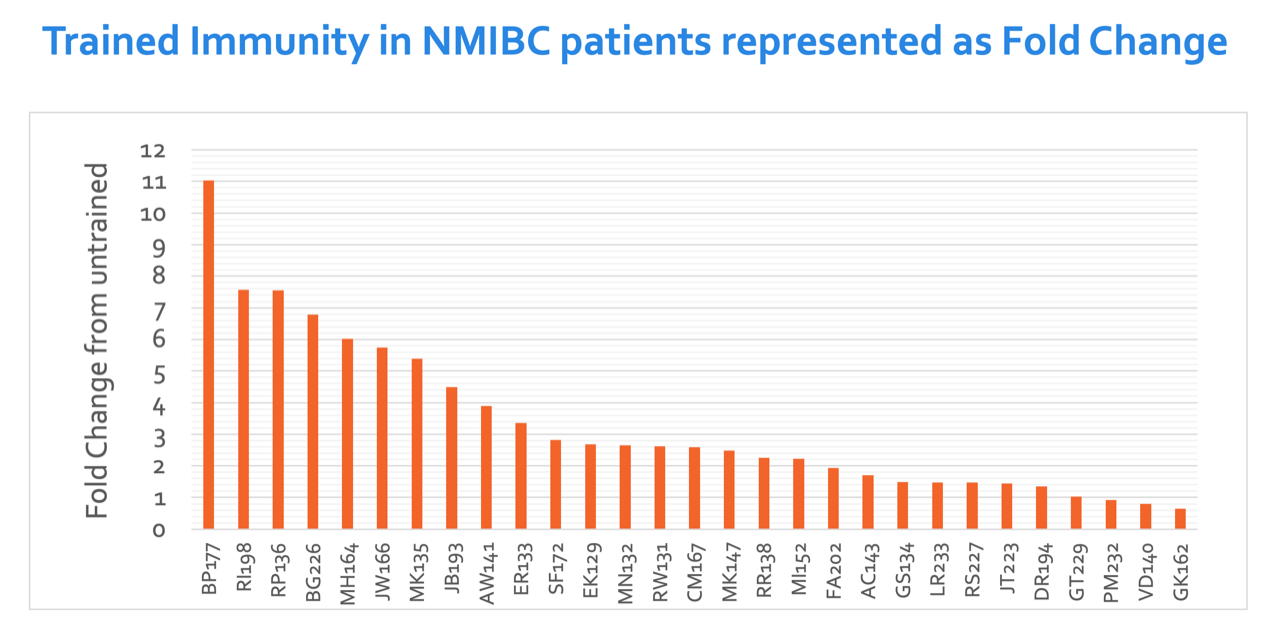
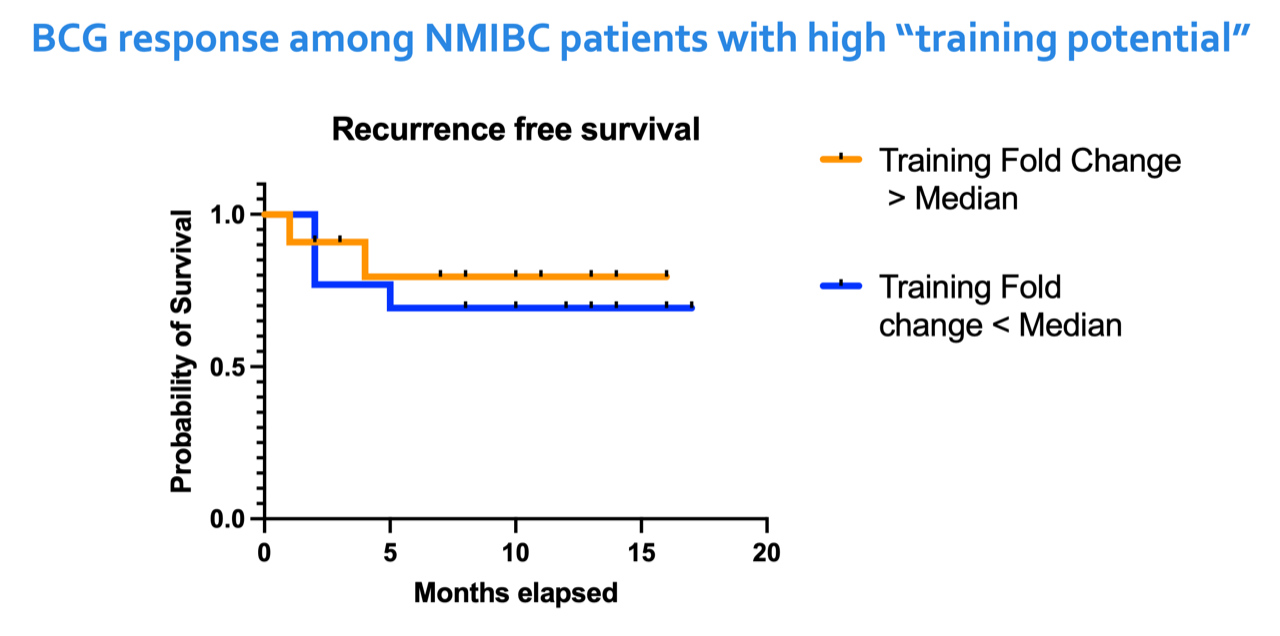
Introduction: Intravesical instillation of the live attenuated mycobacterium Bacillus Calmette-Guerin (BCG) remains the most effective therapy for the treatment of non-muscle invasive bladder cancer. An increasing body of evidence suggests that the innate immune system has characteristics that involve a heterologous memory of past insults through a process thought to involve epigenetic reprogramming, termed trained immunity. We seek to investigate the potential for innate immune training as a predictor of the anti-tumor effects of BCG. Methods: A prospective biospecimen collection was performed on venous blood from non-muscle invasive bladder cancer patients prior to receiving intravesical BCG therapy. An ex vivo training protocol was performed on peripheral blood monocytes as previously described. Subsequently, cells were stimulated with 25 ng/ml lipopolysaccharide (a TLR4 agonist) for 24 hours. Cell free supernatant was measured for TNF-alpha production by enzyme-linked immunosorbent assay. Results: In vitro training of primary monocytes induced an increase in proinflammatory cytokine production upon re-stimulation. In our in vitro training experiments, there was demonstrable interpatient variability seen pre-BCG exposure in a cohort of 30 NMIBC patients (Figure 1). Kaplan Meier analysis of this NMIBC patient cohort demonstrated improved recurrence free survival in individuals with a higher innate immune memory response. Conclusions: We present data on a trained innate immune phenotype on primary monocytes collected from patient samples. We found that innate immune training correlated improved recurrence free survival in NMIBC patients treated with BCG. Such insight will have potential clinical impact on the development of biomarkers and clinical assays that could predict immune responsiveness to BCG a priori, as well as identify possible immunological adjuvants that could enhance the effect of intravesical BCG. SOURCE OF Funding: ASCO YIA NCI SPORE in Bladder Cancer