University Hospitals Cleveland Medical Center / Case Western Reserve University School of Medicine
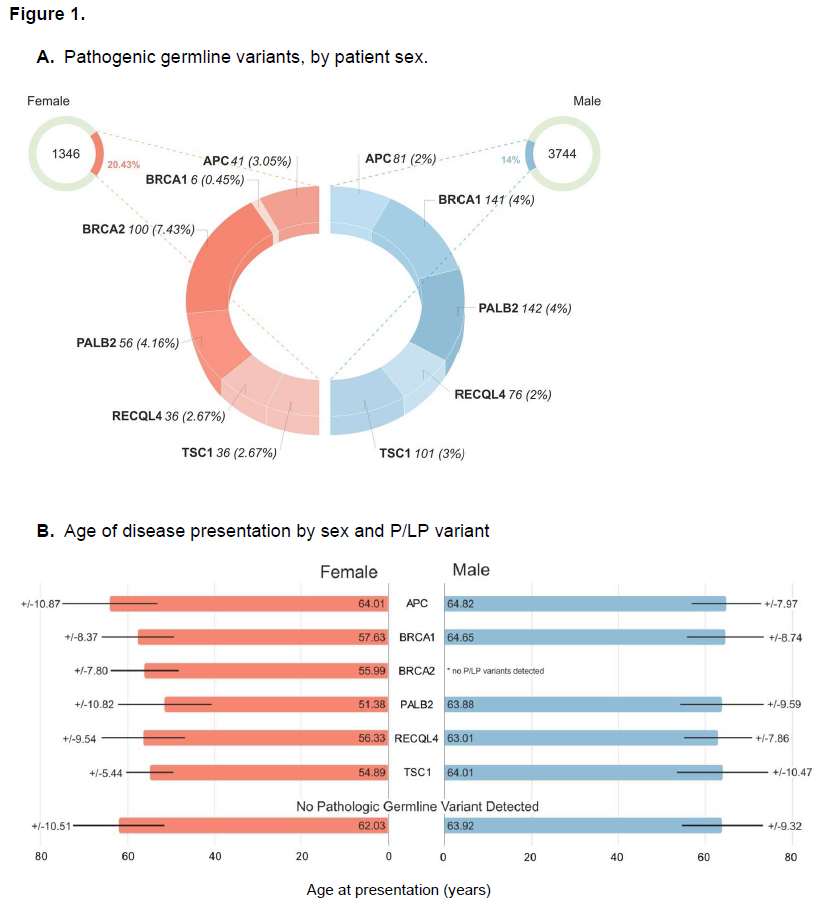
Introduction: Characterizing the impact of germline mutational burden on bladder carcinogenesis has been a challenge. Prior studies implicate genes of unknown pathogenicity and lack cross-population comparisons. In the current study, we sought to evaluate the impact of pathogenic germline mutations in a cohort of bladder cancer (BC) patients compared to a large sample of non-cancer controls. Methods: Using the UK Biobank, a biomedical database containing genetic information on over 500,000 patients from the United Kingdom, we analyzed germline mutations in patients diagnosed with BC. A genome-wide regression approach in REGENIE was used for downstream analysis, combined with individual values for the trait of interest. We restricted our analysis to high and moderate impact variants for initial regression. Utilization of pathologic/likely pathologic (P/LP) germline variants within each respective cohort as defined by REGENIE outputs was then re-defined within each population (BC male/female, CTRL male/female). Results: Of 502,387 database patients, 5,090 were identified with BC and genetic data. Compared to men with BC (n=3744), women with BC (n=1346) exhibited a higher mutational carrier rate (20.4% vs 14.0%, p=0.02, Figure 1A). Males with BC presented with higher rates of P/LP mutations compared to male CTRLs in APC (p=0.019), and RECQL4 (p=0.044). While overall P/LP percentage was higher in females compared to males, no statistically significant difference was seen in specific genes compared to female CTRLs. Despite this, female carriers had younger age at BC diagnosis (56.7yo) compared to women and men without P/LP variants detected, and men with P/LP (62.0, 64.1, and 63.9, respectively; p<0.01; Figure 1B). Conclusions: Our study demonstrates notable differences in germline mutations between male and female bladder cancer cohorts. Specifically, women were noted to harbor a greater frequency of germline mutations and demonstrated associations between germline mutations and early disease onset not seen in men. Further research is needed to determine the interplay between genetic and environmental factors influencing BC pathogenesis. Such investigations will aid in advancing personalized cancer care. SOURCE OF Funding: Society of Women in Urology (SWIU) Elizabeth Pickett Award