Assistant Professor (Education Specialist) The Ohio State University Wexner Medical Center
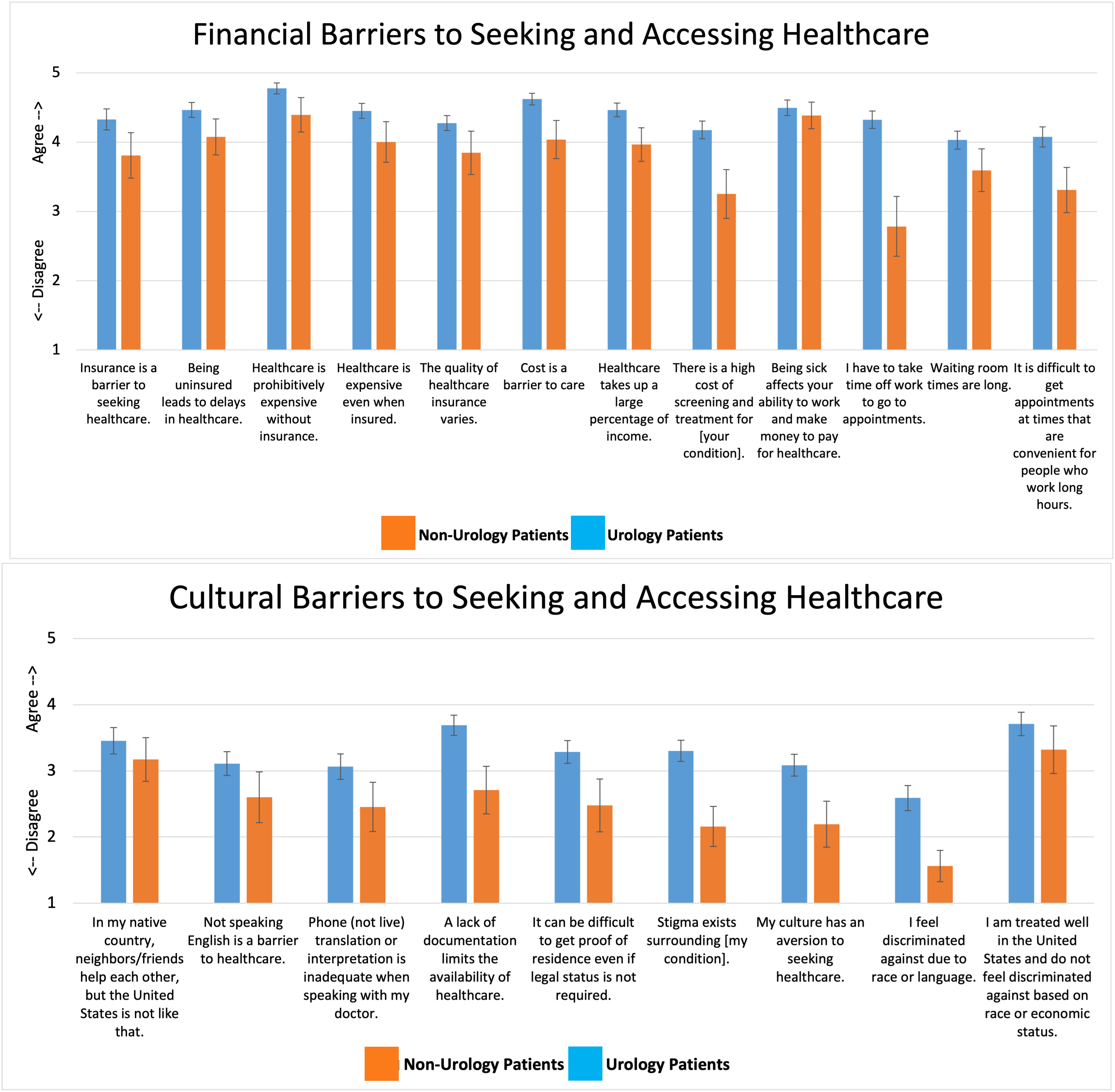
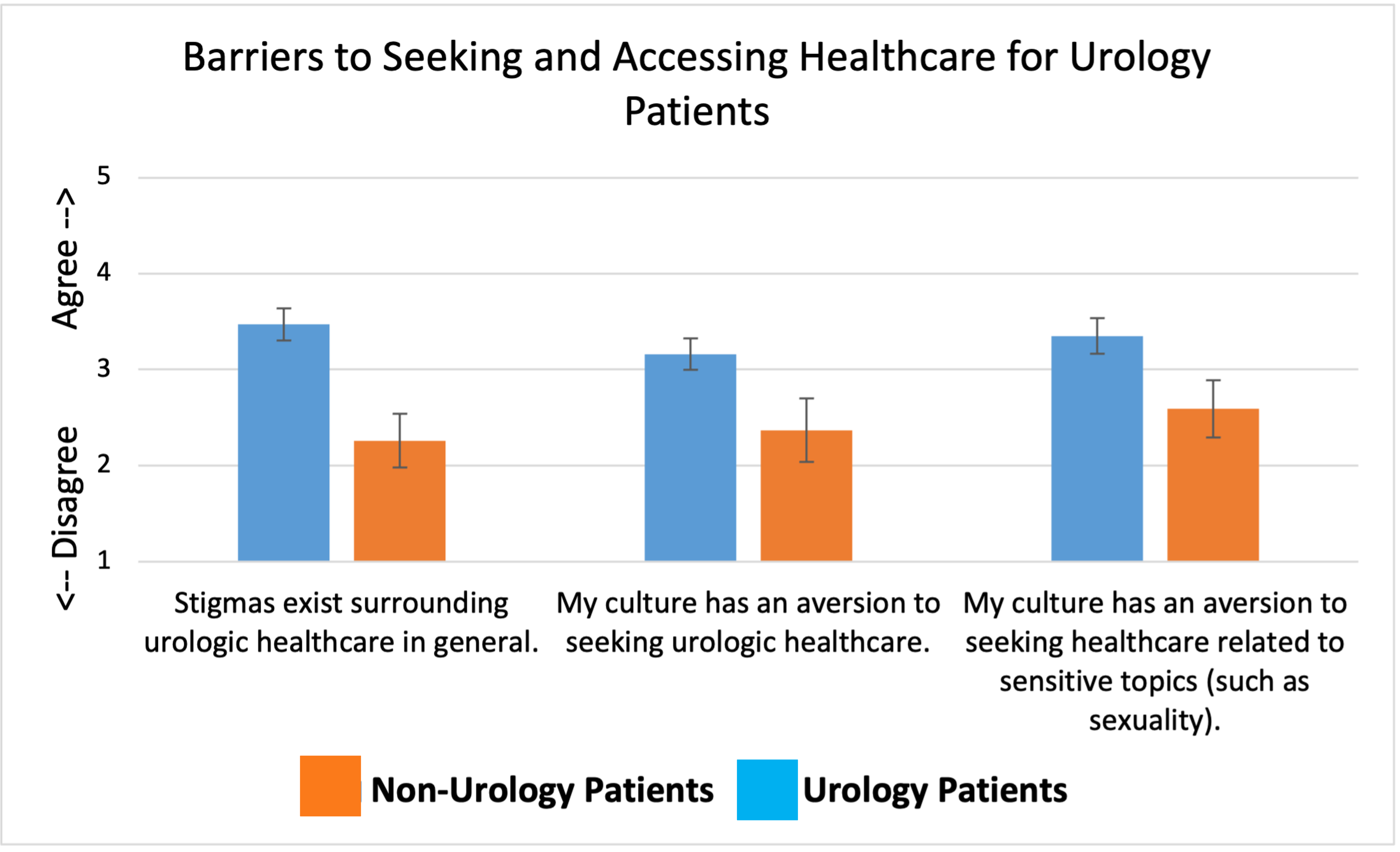
Introduction: Physicians increasingly manage encounters with patients from diverse backgrounds. Given the sensitive nature of Urology as a specialty, whether underserved and underrepresented patients perceive similar barriers to seeking and accessing healthcare for their urologic condition is underreported. Our objective was to assess barriers to seeking/accessing healthcare for underserved patients. Methods: Urology (n=46) and non-Urology (n=137) patients were seen at a local community clinic. 29.3% of patients spoke English as a first-language. Participants completed a short survey (standardized assessments) which asked them to provide demographic information, attitudes towards seeking/accessing healthcare (financial/insurance barriers, cultural/language barriers, health literacy barriers), plus perceived stigmas for their condition. Results: Patients reported that financial/insurance barriers were the greatest obstacles for seeking and accessing healthcare (p < 0.001), with less concern for culture/language and health literacy barriers. Urology patients reported greater financial (p < 0.001) and culture/language (p < 0.001) barriers than non-Urology patients. They also expressed greater perceived stigma (p < 0.002) for seeking treatment for their specific condition. This effect was decreased by additional education (p=0.022). Conclusions: Urology patients seen at local, underserved community clinic boasting a high rate of non-English speaking and immigrants reported perceived stigmas regarding their condition compared to patients seen at the same clinic for non-urologic conditions. Given that health literacy was not associated with increased perceived stigma, our results suggest that cultural factors significantly affect this perception. These barriers and stigmas should be taken into consideration when training students and residents. SOURCE OF Funding: OSU Undergraduate Research Apprenticeship Program, OSUCOM Educational Research Stimulus Grant, AERA Research Service Projects Program, Arnold P. Gold Foundation