MP75-10: Survival outcomes by race following minimally invasive surgical treatment for upper tract urothelial carcinoma: an analysis of the ROBUUST registry
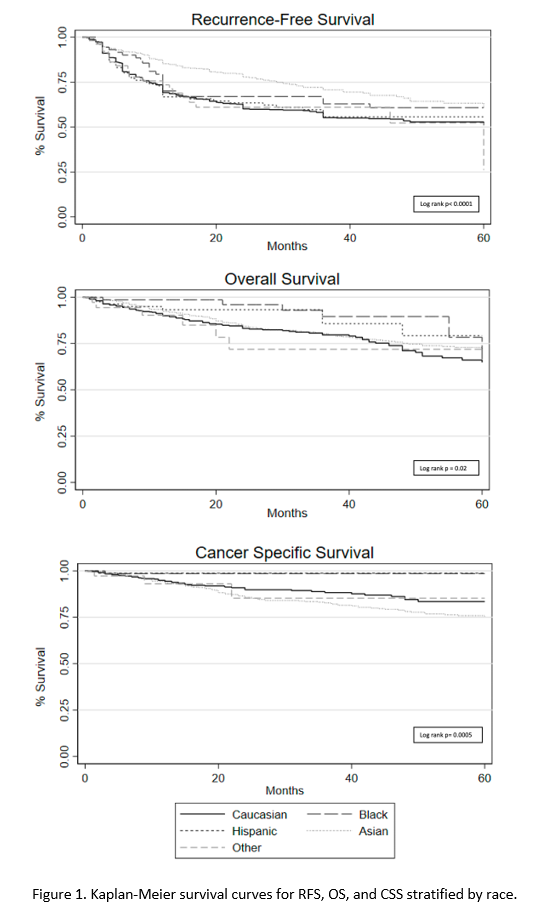
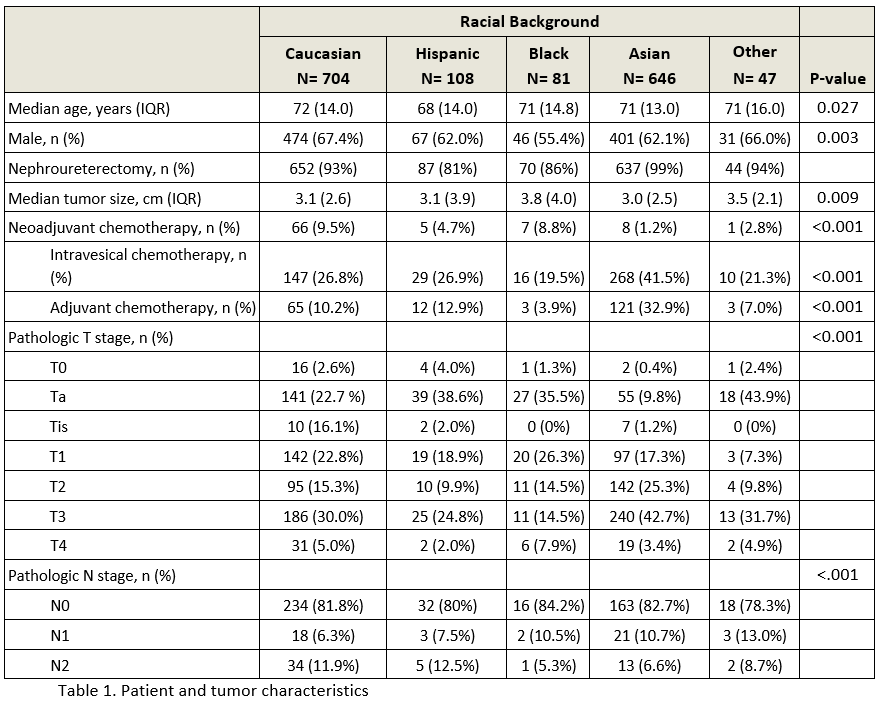
Introduction: We examined outcomes of patients with upper tract urothelial carcinoma (UTUC) following surgical treatment with radical nephroureterectomy (RNU), distal ureterectomy, or ureteroscopic ablation stratified by race. Methods: A multicenter retrospective analysis using the ROBUUST (ROBotic surgery for Upper tract Urothelial cancer Study) registry identified patients undergoing surgical treatment for UTUC between 2015-2022 at 12 centers across the United States, Europe, and Asia. Patients were stratified by race. Cancer-specific survival (CSS), recurrence-free survival (RFS), and overall survival (OS) were assessed using univariate and Kaplan-Meier analyses. Results: 1586 patients were included for analysis. Caucasians represented the largest proportion (44.3%) (Table 1). Tumor size, chemotherapy regimen, clinical stage, and pathological stages were statistically different across all groups. Most patients underwent RNU (Table 1). Blacks had larger tumor size on final pathology (Table 1). Asians were less likely to receive neoadjuvant chemotherapy but more likely to receive intravesical and adjuvant chemotherapy. Asians had significantly improved RFS (HR 0.38, 95% CI 0.30-0.48, p <0.001) and OS (HR 0.70, 95% CI 0.54-0.93, p=0.01) (Figure 1). CSS was better amongst Hispanics (HR 0.12, 95% CI 0.02-0.90, p=0.04) and Blacks (HR 0.13, 95% CI 0.02-0.96, p=0.05) (Figure 1). Median follow up for all patients was 18 months (IQR 3-40). Conclusions: There are racial discrepancies in survival outcomes in patients undergoing surgical treatment for UTUC, which may be due to socioeconomic factors, treatment accessibility, cultural/ethnic differences in pursing healthcare, and differences in management of UTUC across different continents and between centers. Further analysis should be conducted to discern causes for these differences to improve and align survival outcomes across racial groups. SOURCE OF Funding: None