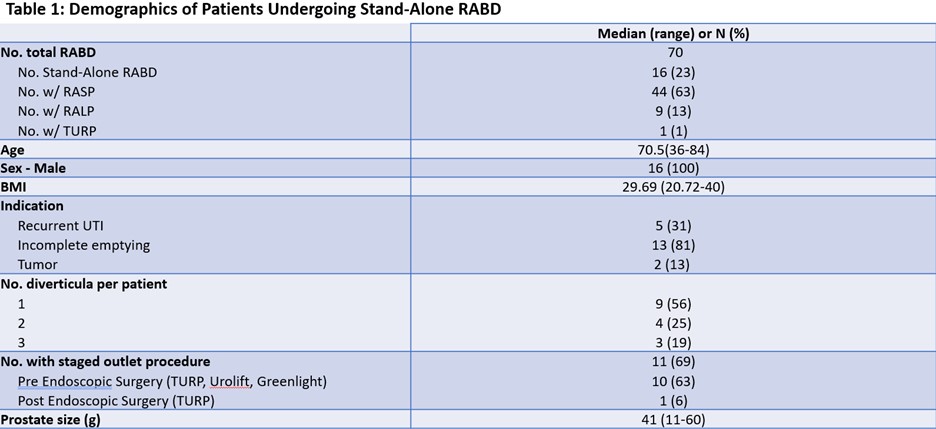
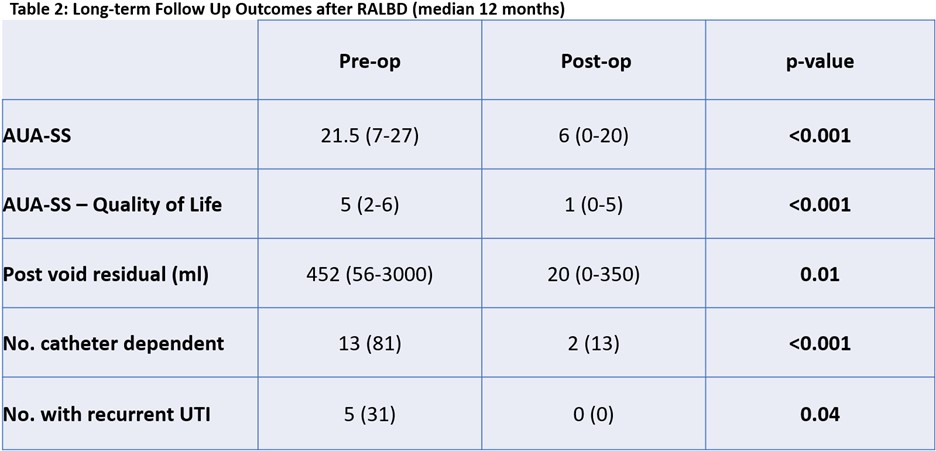
Introduction: Robotic-assisted bladder diverticulectomy (RABD) has recently emerged as a management option for patients with problematic bladder diverticula due to recurrent urinary tract infections (rUTI) or incomplete emptying. Previous literature has shown favorable outcomes for RABD when combined with other procedures such as robotic-assisted simple or radical prostatectomy (RASP/RARP), but none have assessed RABD as a stand-alone procedure. The purpose of this study is to present the largest case series of stand-alone RABD and report perioperative and functional outcomes. Methods: A retrospective analysis of all RABDs at a single institution from 2012-2021 was performed, and the subset of stand-alone RABDs was isolated. The primary outcome of interest was the change in AUA Symptom Score (AUA-SS) and post-void residual (PVR) after stand-alone RABD. Results: A total of 70 patients underwent RABD, 16 of which were stand-alone RABD (23%) (Table 1). Indications for RABD included rUTI (5/16, 31%), incomplete emptying (13/16, 81%), and diverticular tumors (2/16, 13%). The median age was 70.5 and BMI was 29.7. Median operative time was 139 minutes, and none had Clavien 3 or greater complications within 90 days. Eleven patients (69%) had a staged outlet procedure, either before or after RABD. At median 1 year follow up, there were significant improvements in AUA-SS (21.5-6, p <0.001), PVR (452-20, p=0.01), number of patients that were catheter dependent (13-2, p<0.001), and number with UTIs (5-0, p=0.04) (Table 2). Conclusions: RABD is safe and effective as a stand-alone procedure, with long-term improvement in incomplete emptying and reduction of UTIs. SOURCE OF Funding: Temple University Hospital