Session: MP62: Sexual Function/Dysfunction: Surgical Therapy I
MP62-04: Dipping Titan Implants in Irrisept (0.05% Chlorhexidine Gluconate) Solution and Exposure to Various Aerobic, Anaerobic and Fungal Species: In Vitro Study Results from a Novel Kill-Time-Washout Methodology to Evaluate Real World Situations
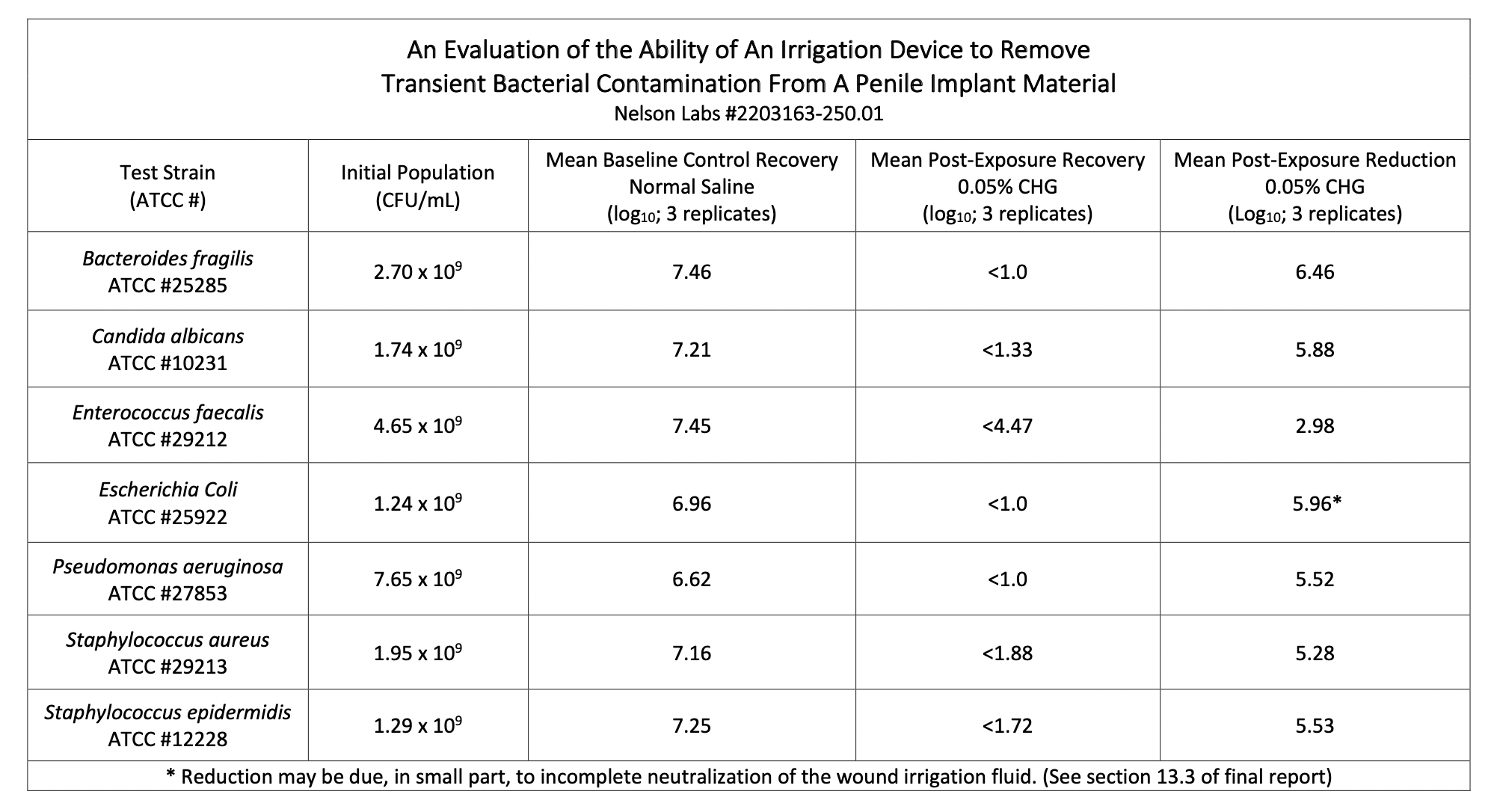
Introduction: The organisms causing penile implant infections are changing from predominantly indolent gram-positive infections to more aggressive gram-negative and fungal infections because of antibiotic selection pressures and novel next generation sequencing DNA data. Our objective is to evaluate the effectiveness of Irrisept® (0.05% chlorhexidine solution) to decrease isolate colony counts off of a Titan implant using a novel kill time washout methodology to mirror real-world usage. Methods: Sterilized Titan discs were dipped in Irrisept® or saline. An inoculum of 109 organisms was placed on the discs. Bacterial and fungal strains tested were Bacteroides fragilis ATCC #25285, Candida albicans ATCC #10231, Enterococcus faecalis ATCC #29212, Escherichia coli #25922, Pseudomonas aeruginosa ATCC #27853, Staphylococcus aureus ATCC# 29213, and Staphylococcus epidermidis ATCC # 12228. The discs were then irrigated 3 times with Irrisept or saline. Microorganisms were sonicated off of the discs and placed on appropriate agar and conditions for each species. The plates were incubated at the temperature and under the conditions appropriate for each species for 48 to 72 hours. Colonies on the plates were hand counted. Results: Irrisept® was shown to effectively decrease microbial colony counts from 3-6 log10 in all species tested. 3 log10 reductions are considered the significant level of performance that would indicate a compound or product has substantial killing activity against an organism of interest. The saline control with bulb syringe irrigation did not demonstrate reduction of microbial colony counts in any of the species tested. Conclusions: Irrisept® is effective against all of the organisms causing modern day infections with penile implant surgery and may decrease clinical infection rates to lower levels. The strength of this study is that we used microbial reduction counts with a real-world kill-time-washout methodology that is superior to zone of inhibition testing, which is the basis of all previous studies on this subject matter. The limitation is that this is an in vitro study and the clinical implications of our findings are not yet known. SOURCE OF Funding: Irrimax Corporation, Coloplast Corporation