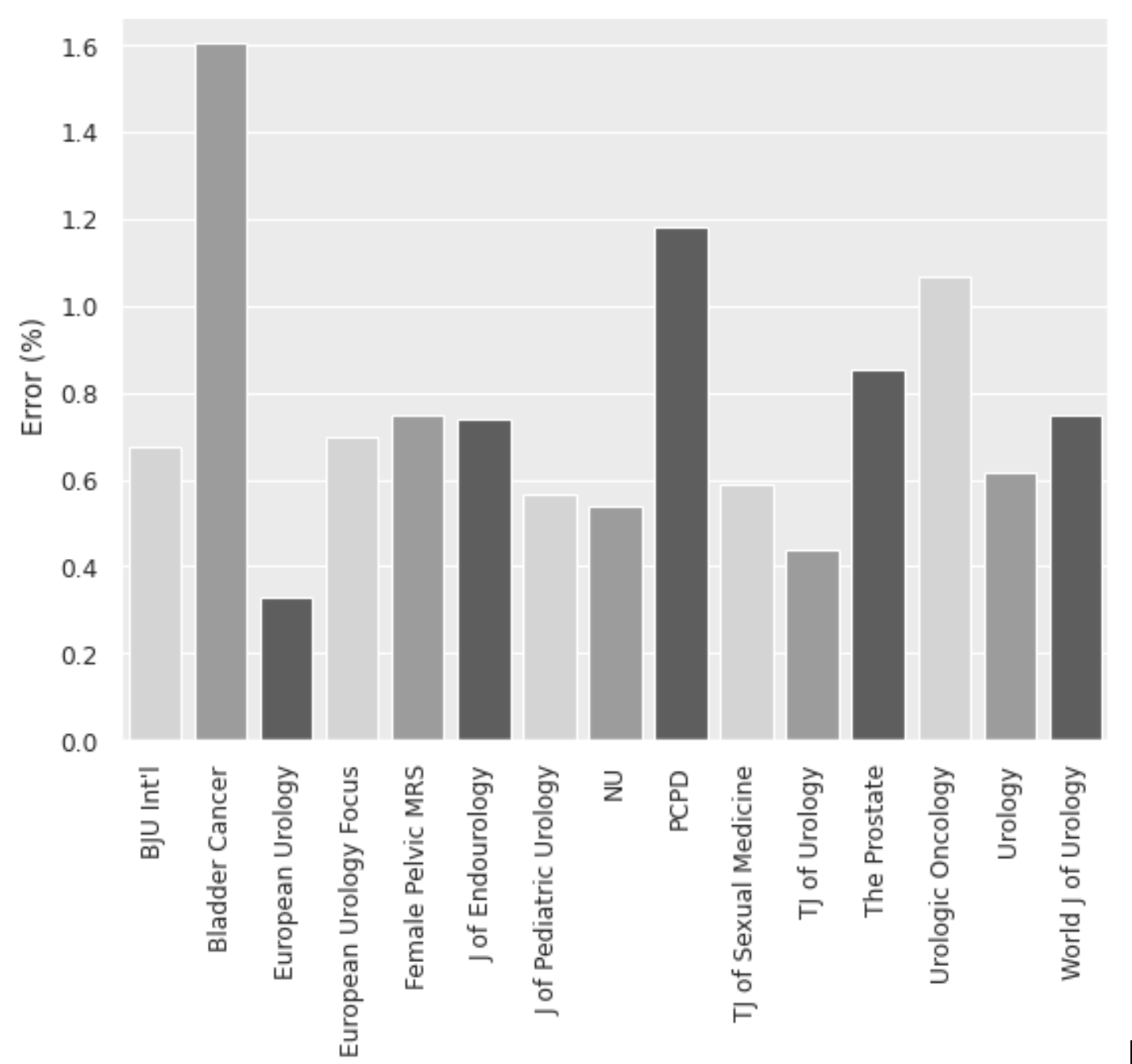
Introduction: The outcome of a statistical test is to accept or reject a null hypothesis. Reporting a metric as “trending toward significance” is a misinterpretation of the p-value. Studies highlighting the prevalence of statistical errors in the urologic literature remain scarce. The objective of this study was to evaluate abstracts from 15 urology journals published between the years 2000-2021 and provide a quantitative measure of a common statistical mistake—misconstruing the function of null hypothesis testing by reporting “a trend toward significance.” Methods: We performed an audit of 15 Urology journals, looking at articles published from January 1st, 2000 to January 1st, 2022. A word recognition function in Microsoft Excel was utilized to identify the use of the word “trend” in the abstracts. Each use of the word “trend” was manually investigated by two authors to determine whether it was improperly used in describing non-statistically significant data as trending toward significance. Statistics and data analysis were performed using Python libraries: pandas, SciPy. Stats, and seaborn. Results: This study included 101,134 abstracts from 15 urology journals. Within those abstracts, the word “trend” was used 2,509 times, 572 uses of which were describing non-statistically significant data as trending toward significance. There was a statistically significant difference in the rate of errors between the 15 journals (p < 0.01) (Figure 1). The highest rate of improper use of the word “trend” was found in Bladder Cancer with a rate of 1.6% (p < 0.01) of articles. The lowest rate of improper use was found in European Urology with a rate of 0.3% (p < 0.01). Our analysis found a moderate correlation between the number of articles published and the number of misuses of the word trend within each journal and across all journals every year (r = 0.61 and 0.70 respectively). Conclusions: The overall rate of p-value misinterpretation never exceeded 2 percent of articles in each journal. There is significance in the difference in misinterpretation rates between the different journals. Authors' utilization of the word “trend” describing non-significant p-values as being near significant should be used with caution. SOURCE OF Funding: NA