Session: MP67: Prostate Cancer: Localized: Surgical Therapy III
MP67-12: First Look: Laser Speckle Imaging Is A Novel Method to Identify and Preserve Neurovascular Bundle during Robotic Assisted Laparoscopic Radical Prostatectomy
Resident The Smith Institute for Urology at Northwell Health
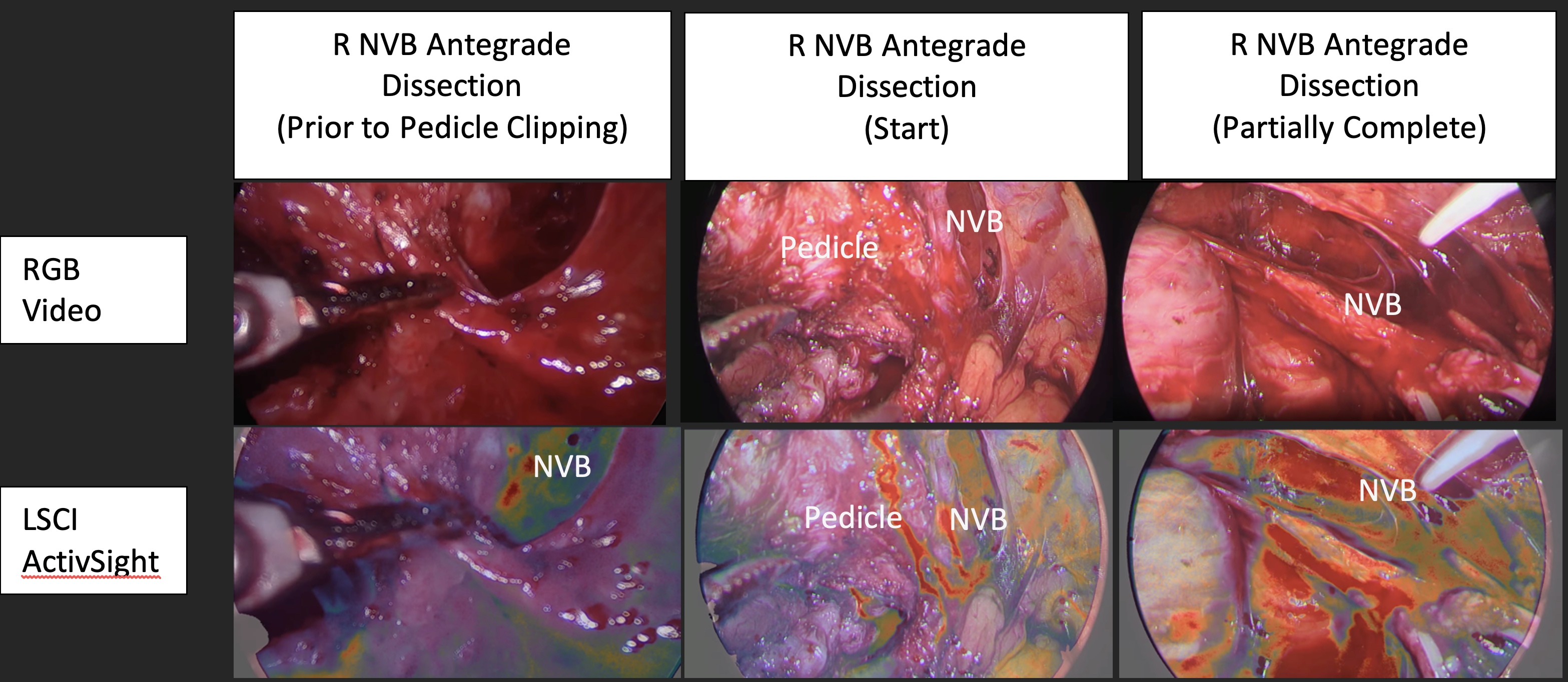
Introduction: Preserving neurovascular bundle (NVB) is been previously identified as an important factor in maintaining erectile function and urinary continence after prostatectomy. Current approaches for visualizing blood flow/perfusion in real-time are: suboptimal (lack objectivity), cumbersome (need for dye preparation and injection), and lack cost-effective utility (need for large capital equipment). Laser-Speckle-Contrast-Imaging (LSCI) LSCI displays tissue blood flow via coherent laser light scatter from red blood cells without intravenous dye. Herein, we present our initial multi-center experience and feasibility with utilizing this novel technology to identify NVB during robotic assisted laparoscopic radical prostatectomy (RALP). Methods: RALP was performed in surgeon’s respective institutions (Global Robotics Institute, FL and Northwell Health, NY) with either multiport (Da Vinci Xi) or single port (Da Vinci SP) robotic equipment. ActivSight is an FDA cleared LSCI-based endoscopic imaging module positioned between any endoscope and camera to visualize real-time perfusion. During RALP, a 10mm laparoscope with the ActivSight module was introduced on-demand through an accessory port at key points throughout the case via assistant. Results: In both antegrade and retrograde nerve dissection, ActivSightTM was able to visualize NVB and demonstrate perfusion through dissection (n =15/15). Surgeons did not express any significant workflow alterations or difficulty with using ActivSight during dissection. Conclusions: To our knowledge, this is the first clinical experience describing laser speckle imaging in real-time visualization of the critical structures during RALP. LSCI provided in all cases the ability to identify and additional confidence in preserving the NVB even to highly experienced surgeons. While information presented here demonstrates some early potential promise, further research and development will be required to validate utility in the NVB preservation. SOURCE OF Funding: None