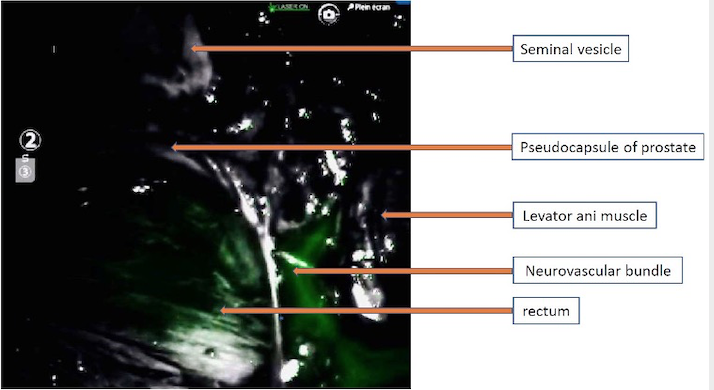
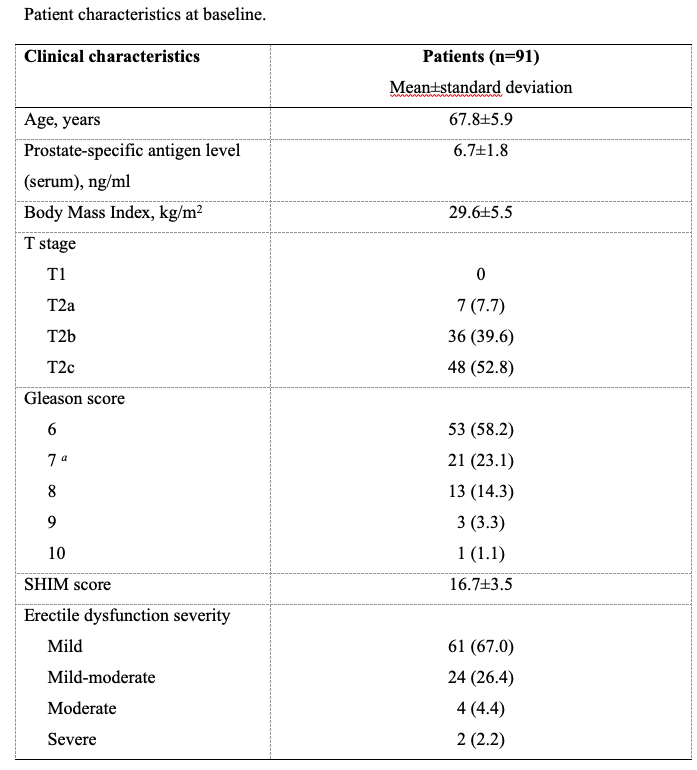
Introduction: Based on current knowledge of the surgical anatomy of the prostate we investigated the value of intraoperative angiography of the neurovascular bundle (NVB) using indocyanine green (ICG) and near-infrared fluorescence (ICG-NIRF) during robot-assisted radical prostatectomy (RARP) to provide a better dissection and preservation of the NVB. Methods: Retrospective, unicentric study of 91 consecutive patients from 2016 to 2021. In patients who met the inclusion criteria (stage T1 and T2 (stage T3 excluded), mild-moderate ED (assessed using the Sexual Health Inventory for Men scores or SHIM Score), prostate specific antigen <10 ng/ml), we used intraoperative ICG-NIRF angiography (using the built-in Firefly fluorescence imaging system). All patients provided signed informed consent for inclusion in our study. We evaluated the proportion (%) of bilateral NVB identified to optimise and facilitate the dissection, as well as any ICG-related complications that occurred (assessed using the Clavien-Dindo classification). All patients were followed up at 3, 6, 9, and 12 months after surgery to evaluate their erectile function using the SHIM score. Results: Ninety-one patients received intraoperative angiography. The NVB was identified in all cases, without difficulties. No ICG-related complications or allergies were observed.There was no significant difference in the SHIM score at 9 months compared with baseline(p=0.331), and erectile dysfunction returned to baseline levels in almost all patients. Conclusions: Intraoperative, real-time ICG-NIRF angiography is simple, non-invasive, and improves identification of key anatomical landmarks to optimise micropreservation of the NVB during RARP and preserve erectile function. Larger clinical studies should confirm preliminary results. SOURCE OF Funding: none