Baylor College of Medicine/Texas Children's Hospital
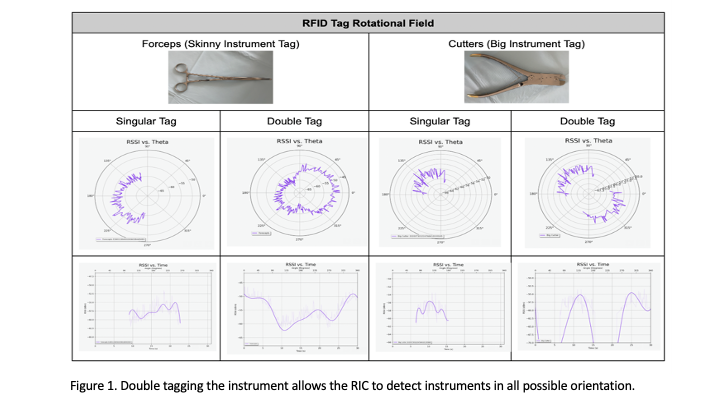
Introduction: Retained sponges and surgical instruments with urologic procedures can have significant consequences on patient outcomes such as increased morbidity, long term disabilities, as well as medicolegal ramifications. The traditional method of ensuring accurate counts for sponges and surgical instruments is manual counting by surgical assistants (i.e. nurses and surgical technicians). However, this method is time-consuming and prone to systemic and human errors which can lead to unidentified retention of instruments. Current technologies for sponge and instrument tracking are limited by cost and accuracy issues. In collaboration with the engineering teams at local engineering schools, we sought to develop an automated surgical instrument counter to increase the accuracy of surgical equipment counts. Methods: We developed a prototype for the Reliable Instrument Counter (RIC) which performs continuous and automatic counting of surgical instruments using RFID technology. The device consists of a hard polymer tabletop for RFID transparency with three RFID antennas and one multichannel RFID reader. RFID tags were placed on each surgical instrument (7.8mm x 6.8mm x 2.7mm) that were compatible with all methods of instrument sterilization Figure 1). Java-based software was used to automate the count of surgical instruments with a user-friendly interface. Benchtop testing was performed to identify the number of tags needed per instrument and the accuracy of the RIC to count the instruments. Results: The prototype table was developed with the surface divided into zones. The accuracy of detecting tagged instruments averaged 99.03% readability across all zones with only three small areas on the edges of the table that had less than 100% accuracy. Further modifications will involve adjust the mounted location of the RFID reader for improved accuracy. Conclusions: The RIC can accurately track surgical instruments in real time for urologic procedures, thereby reducing overall OR time and risk of miscounts which translates into reducing overall cost and increasing the safety of patients undergoing urologic surgeries. SOURCE OF Funding: FDA grant #1P50FD006428