Department of Urology, Osaka University Graduate School of Medicine
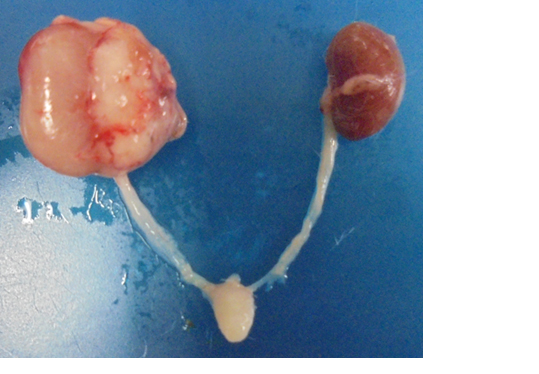
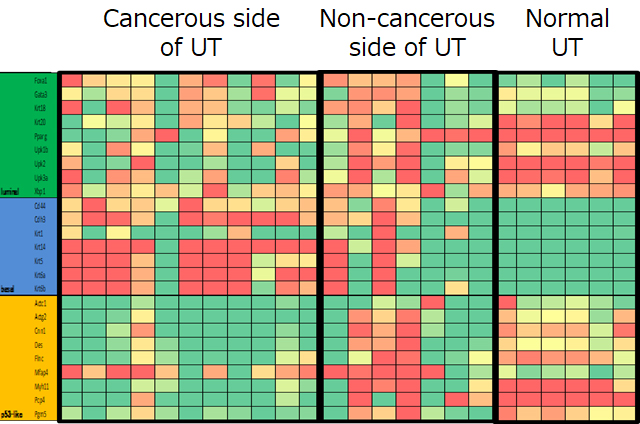
Introduction: Upper urinary tract (UT) and bladder are known to differ from the embryology stage. There have been numerous reports of mouse models of bladder carcinogenesis, but there are few reports of mouse models of upper tract urothelial carcinogenesis. The aim of this study is to establish a novel mouse model of upper tract urothelial carcinogenesis. Methods: We used two strains including C57/BL6 of male and female mice. We fed 0.05% N-butyl-N-(4-hydro-oxybutyl) nitorosamine (BBN) from 6 weeks old to the harvest day. The harvested organs were diagnosed by two different pathologists with histopathological evaluation using Hematoxylin and Eosin staining. Both sides of UT from mouse drinking BBN were subjected to whole transcriptome sequencing (WTS). In human samples, 74 upper tract urothelial carcinoma (UTUC) tissues and 73 adjacent normal (AN) tissues also subjected to WTS from 74 UTUC patients. Results: Female mice of certain strain showed early weight loss compared to the others. They showed high incidence of UTUC with less incidence of bladder cancer (Fig.1), while the others rarely had UTUC. The total incidence of UTUC in this mouse strain was 83.3%, with the earliest UTUC observed at 8 weeks after the start of BBN drinking. The incidence of bilateral UTUC was 22.2%, and these individuals showed weight loss relatively early after the start of BBN drinking. The cancerous side of UT expressed a basal type of mRNA expression profile, with increased expression of Cd44, Cdh3, and Krt14, similar to previous reports of bladder carcinogenesis mouse model (Fig.2). We detected 593 differential expressed genes between cancerous side and non-cancerous side of UT in this mouse model, which could also classify human UTUC and AN samples. In pathway enrichment analysis of these genes, several pathways associated with DNA replication were commonly upregulated in cancer tissues between mouse and human samples. Conclusions: We have established the novel animal model developing UTUC with high probability. This model could reflect the human UTUC. SOURCE OF Funding: This work was supported by a KAKENHI grant (21K20968, 22K09523).