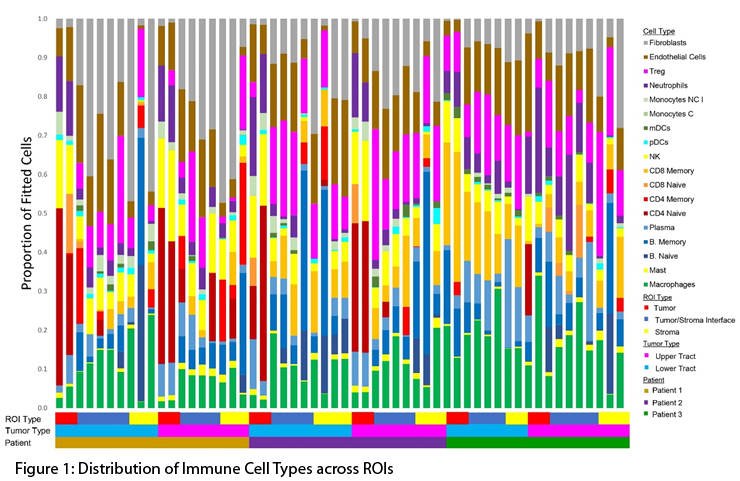
Introduction: Despite histologic similarities between upper-tract urothelial carcinoma (UTUC) and urothelial carcinoma of the bladder (UCB), there are differences in the clonal types, mutations, and immune landscape between these tumors. In this study, we performed multiplex spatial profiling of RNA on tumor samples from patients with concomitant UTUC and UCB in the evaluation of the tumors using the GeoMx™ Digital Spatial Profiling platform. Methods: Three patients with concomitant high grade non-invasive UTUC and UCB were identified. Six FFPE samples from cystectomy and nephroureterectomy for the three patients were identified. A pathologist selected 18 regions of interest (ROIs), including tumor, tumor-stroma interface, and stroma area on each specimen. Multiplex IHC was performed on each sample with stains for DNA, Pan-CK, CD20 (B cells), and CD45 (immunocytes). The GeoMx™ Digital Spatial Profiling platform was used to sequence the RNA from the ROIs on each FFPE slide. Spatial deconvolution was used to determine ROI cellular composition. Results: Multiplex IHC images demonstrated the increased infiltration of CD20 and CD45 immune cells in the UCB in compared to UTUC tumors; however, the proportion of inflammatory cells (i.e. T-cells, B-cells, plasma cells, T-regulatory cells, macrophages) are similar in different ROIs within each tumor and in UCB and UTUC tumors in each patient and even in samples from same sites among all patients. From the 11000+ genes identified through GeoMx analysis, we identified variable expression among UTUC and UCB samples. Notably, UNC5B, a gene that codes for a netrin receptor that is correlated with bladder cancer recurrence, was highly expressed in UCB. Additionally, UTUCs showed higher expression of histone regulatory genes (H1-3, H2BC5, H2BC8), which may lead to tumorigenesis and progression to muscle-invasive UC. Conclusions: UTUC demonstrates lower immune cells infiltration, consistent with previous UTUC studies; however, the proportion of inflammatory cells component is similar in different foci of the tumor and in concomitant UCB and UTUC tumors in each patient and even among all tumor samples from the same site. UNC5B, which has been associated with tumor recurrence, is highly expressed in UCB. UTUC patients showed higher expression of histone regulatory genes. SOURCE OF Funding: Moffitt Cancer Center