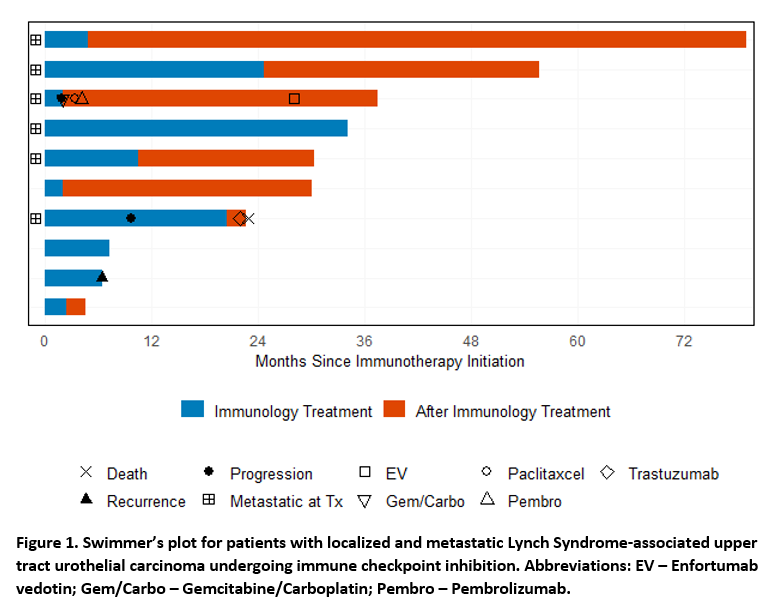
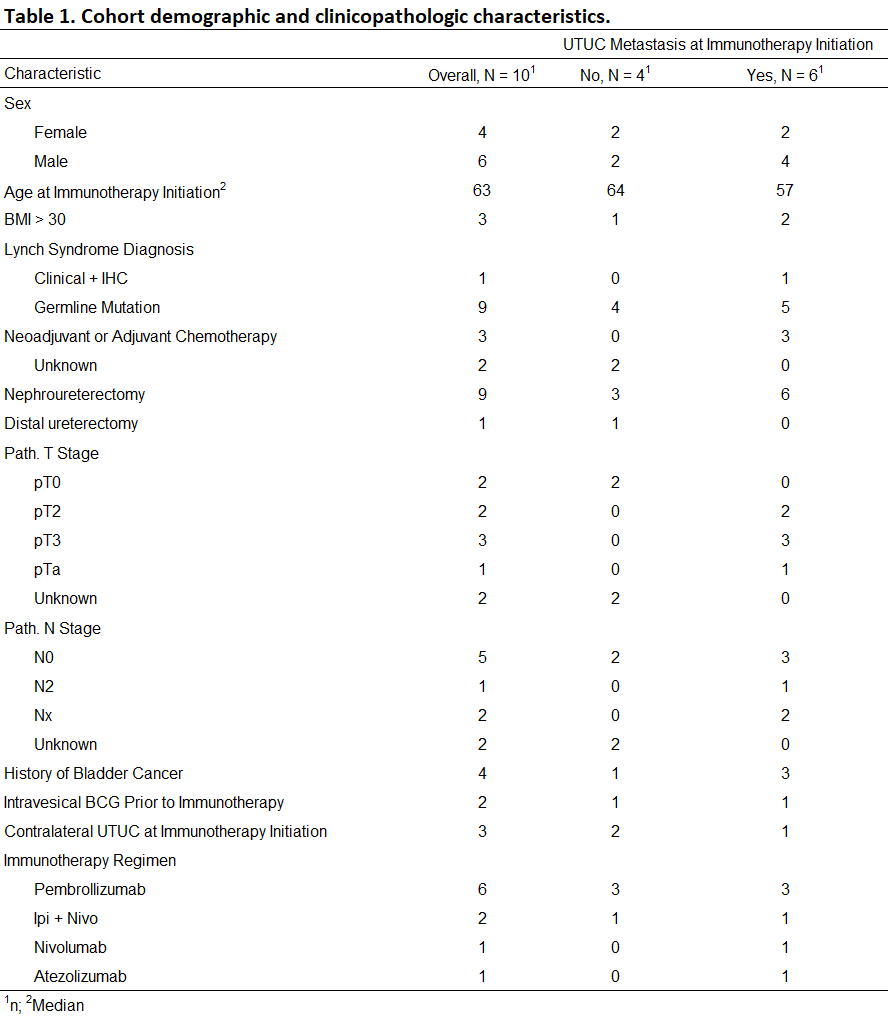
Introduction: Immune checkpoint inhibition (ICI) has shown effective results in treating Lynch Syndrome (LS)-associated and microsatellite instability-high (MSI-H) malignancies. However, there is a paucity of information evaluating its use in patients with LS-associated upper tract urothelial carcinoma (UTUC). Our objective was to describe our clinical experience in treating LS-associated UTUC with checkpoint blockade. Methods: All patients with LS-associated or MSI-H UTUC who received treatment with ICI at Memorial Sloan Kettering were retrospectively identified. Demographic and clinicopathological characteristics were collected. Patient outcomes were illustrated using a swimmer’s plot beginning at the initiation of ICI. For patients with metastatic disease, response to therapy was assessed by radiographic progression. For localized disease, pathologic response and time to urothelial recurrence were summarized. Results: We identified 10 patients with LS-associated UTUC, 6 with metastatic and 4 with localized disease, who were treated with ICI (2015 to present). Seven patients had solitary kidneys [prior nephroureterectomy (NU)]. Two patients received ICI as neoadjuvant treatment prior to NU. Of the 4 patients with localized disease, 75% (3/4) had a complete response, including ypT0 after NU (2) and clinically pT0 based on endoscopic, cytologic, and radiographic findings. Median follow-up of the localized cohort was 5.6 months. One patient had urothelial recurrence at 6 months that was successfully treated with endoscopic ablation. Of the 6 patients with metastatic disease, 67% (4/6) were progression-free at 24-months. Conclusions: These preliminary findings provide supporting evidence for prospective studies to further assess the safety and efficacy of ICI for LS-associated UTUC in settings such as neoadjuvant therapy and as an organ-sparing option for patients with a solitary kidney. SOURCE OF Funding: MSKCC Sidney Kimmel Center for Prostate and Urologic Cancers